

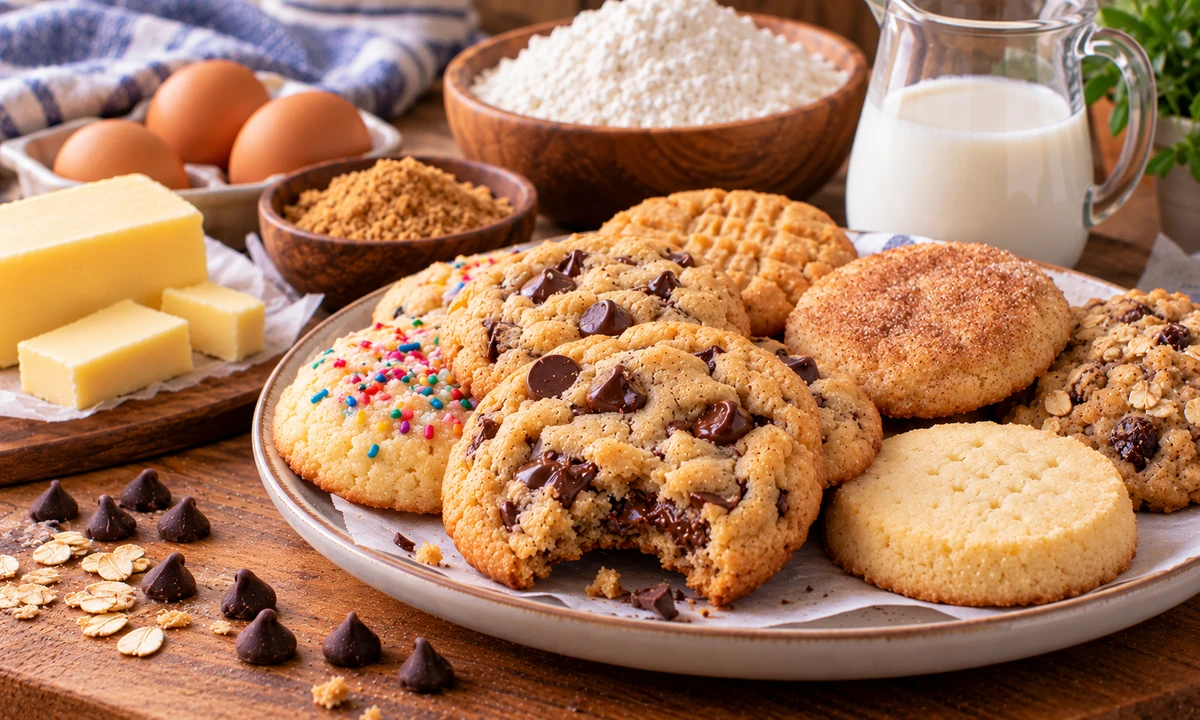
Do cookies need milk? No, most cookies don’t. Butter and eggs already provide the moisture and fat that a standard cookie dough needs, which is why classic chocolate chip, sugar, and oatmeal cookie recipes leave milk out entirely. Milk earns a place in only a handful of situations, such as mix-based doughs and very soft or cake-like cookies, and even then it’s rarely irreplaceable.
If you’re halfway through a recipe and realize you’re out of milk, this guide explains when milk matters, when it doesn’t, and what to use instead.
What Does Milk Do in Cookie Dough?
Milk adds moisture and contributes to browning, but butter and eggs already handle much of the moisture and fat in traditional cookie dough. Here is what milk contributes, and why butter and eggs cover most of it:
- Moisture: milk is mostly water, roughly 87%. Butter also contains some water, and whole eggs are about three-quarters water. Together, butter and eggs usually give the flour enough moisture to hydrate and the dough to come together without extra milk.
- Fat: whole milk has some fat, but far less than butter. Butter’s fat is what makes cookies rich and helps them spread and brown, and milk’s fat is too diluted to replace that.
- Sugar (lactose) and protein: milk contains lactose and milk proteins, which can contribute slightly to browning through the Maillard reaction, the same process that colors bread crust and roasted meat. This is the one thing milk does that butter and eggs don’t fully replicate, but the effect is small and not structural.
So milk’s jobs, moisture, a little fat, and minor browning, are already handled by butter and eggs in a standard cookie recipe. That’s the reason most classic cookie recipes never call for it.
Why Do Some Cookie Recipes Call for Milk?
- To loosen a dry dough: if a dough feels too stiff after the flour goes in, a tablespoon or two of milk can bring it back together. It’s a quick fix rather than a core ingredient.
- To help a mix-based dough come together: recipes that use pancake mix, biscuit mix, or cake mix as a shortcut often use milk instead of measuring several separate wet ingredients. For one example, see our pancake mix cookie recipe.
- For a specific texture: very soft, cake-like, or bakery-style cookies sometimes use milk for extra tenderness, the same logic used in cake batter.
In each case, milk is a supporting ingredient added in small amounts, not a structural one like flour, butter, or eggs.
Which Cookies Use Milk, and Which Don’t?
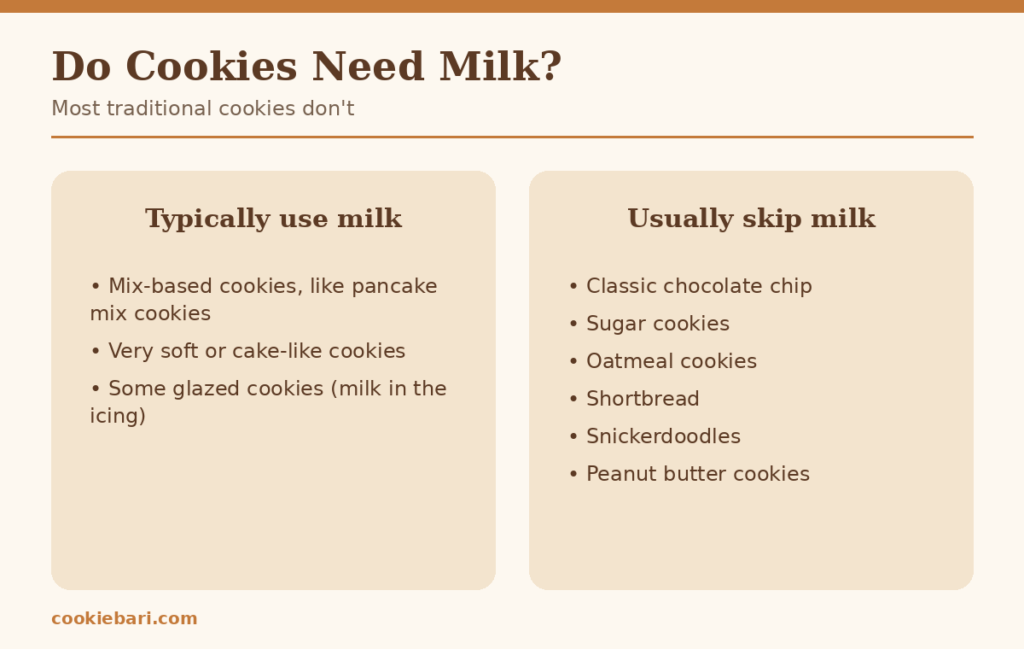
Cookies That Typically Use Milk
- Mix-based cookies, such as pancake mix cookies, where milk helps bind the dough
- Very soft or cake-like cookies, where extra moisture helps a tender crumb
- Some frosted or glazed cookies, where milk goes into the icing rather than the dough
Cookies That Don’t Need Milk
Most traditional cookies skip milk because butter and eggs already provide enough fat and moisture. That includes:
- Classic chocolate chip cookies
- Sugar cookies
- Oatmeal cookies
- Shortbread
- Snickerdoodles
- Peanut butter cookies
If a recipe already includes butter and eggs, milk is rarely necessary for the dough to bind and bake properly.
Milk vs. No Milk: Does It Change the Texture?
Adding a small amount of milk can slightly affect spread, browning, and crumb, but the overall difference is usually subtle. As a general guide, a tablespoon of milk in an otherwise identical dough tends to do the following:
| Trait | With milk | Without milk |
|---|---|---|
| Spread | Slightly more spread | Holds shape slightly better |
| Browning | Slightly deeper browning | Slightly lighter edges |
| Crumb | Marginally softer | Slightly denser |
These are general tendencies rather than test results, and they will vary with the recipe. The difference is small compared with the effect of butter temperature, sugar type, or bake time.
What Happens If You Skip the Milk?
If a recipe calls for a tablespoon or two of milk and you leave it out, the most likely result is a slightly firmer or drier dough, not a failed batch. You can usually fix it by:
- adding an extra teaspoon of melted butter or oil,
- using a splash of water instead, or
- letting the dough rest for a few minutes so the flour fully hydrates.
For recipes where milk plays a bigger role, such as mix-based cookies, replace it with a similar liquid rather than skipping it.
Does Milk Matter More in Egg-Free or Vegan Cookies?
Yes. In a standard recipe, eggs and butter cover most of milk’s usual jobs. Take the eggs out and the dough loses moisture and binding power, which is why many egg-free and vegan cookie recipes lean more heavily on a liquid such as plant-based milk, applesauce, or a flax egg. If you’re baking egg-free, the question is less “do I need milk” and more “what’s replacing the egg”, because the liquid and the binder need to work together. For an edible no-egg option, see our dairy free cookie dough.
What to Use Instead of Milk in Cookies
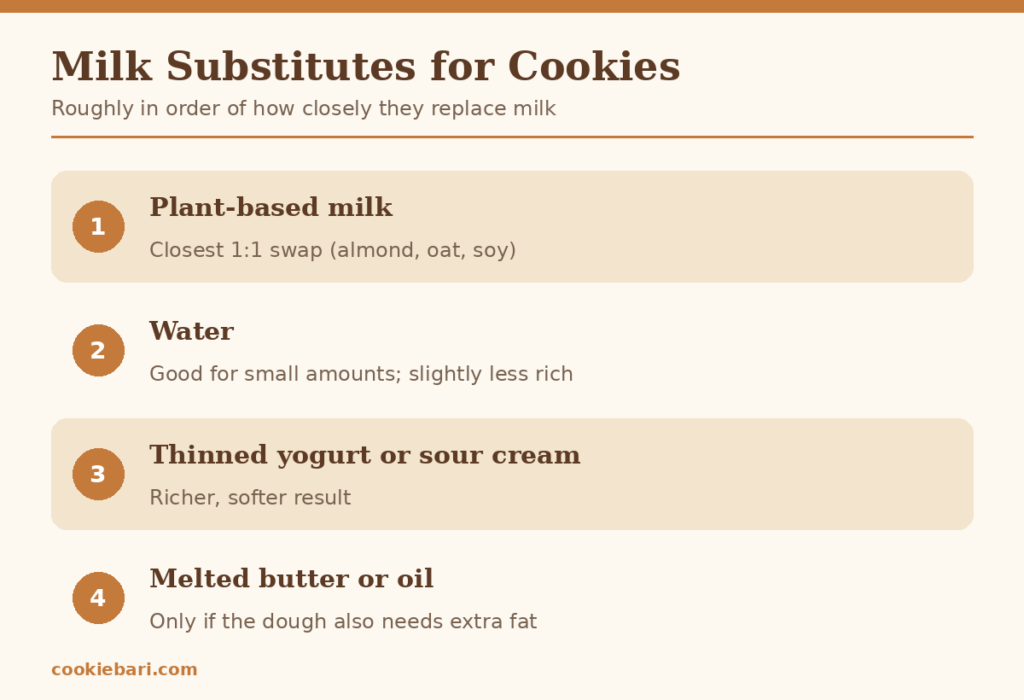
If you don’t have milk on hand, these work best, roughly in order of how closely they replace it:
| Substitute | Why it works |
|---|---|
| Plant-based milk (almond, oat, soy) | The closest 1:1 replacement, with minimal change to the recipe |
| Water | A simple stand-in for small amounts; cookies may be very slightly less rich |
| Yogurt or sour cream (thinned slightly) | A richer, softer result, useful when a recipe leans on milk for tenderness |
| Melted butter or oil | Not a direct liquid swap; use only if the dough also needs extra fat |
Plant-based milk is the easiest option because it swaps in at the same ratio as regular milk. For a recipe built around this, see our lactose free cookies.
Buttermilk, Powdered Milk, and Condensed Milk
These differ enough from regular milk that they deserve separate mention when a recipe names one of them:
- Buttermilk is thicker and acidic, which can react with baking soda for extra lift and a slightly tangy flavor. It isn’t a 1:1 stand-in for regular milk in every recipe, but it suits soft, cake-like cookies.
- Powdered (dry) milk is sometimes added in small amounts as a dry ingredient to boost browning and chewiness, a trick used in some bakery-style chocolate chip cookies. It isn’t interchangeable with liquid milk, so reconstitute it or adjust the other liquids if a recipe calls for it.
- Sweetened condensed milk is a completely different ingredient: thick, very sweet, and used in specific recipes where it also replaces some of the sugar. It can’t be swapped for regular milk without changing the whole recipe.
If a recipe simply says “milk” without specifying a type, regular dairy milk or an unsweetened plant-based milk is almost always the safe assumption.
Do You Need Milk for Dairy-Free or Lactose-Free Cookies?
No. This is one of the easier dietary swaps in baking. Because milk plays a minor role in cookie dough, dairy-free and lactose-free cookies are simple to make with plant-based milk or without milk at all. If you’re baking for someone with a dairy sensitivity, check out these recipes:
For milk allergy, remember that many baking ingredients contain milk. The FDA has an overview of food allergies and labeling.
The One Myth Worth Clearing Up
Many people assume that because milk and cookies are culturally paired, milk must be a core baking ingredient the way it is in cakes or pancakes. It isn’t. The pairing is about serving, not baking. Cookies are traditionally a butter-and-egg-based dough, while cakes and pancakes are batters that depend on milk for their liquid structure. Once you separate what you dip your cookie in from what’s in the dough, the confusion mostly clears up.
Frequently Asked Questions
Do cookies need milk?
No, most cookie recipes don’t require milk. Butter and eggs typically provide the fat and moisture the dough needs.
Do you need milk to make chocolate chip cookies?
No. Classic chocolate chip cookie recipes use butter, sugar, eggs, and flour without milk.
What if I don’t have milk for my cookie recipe?
If the recipe calls for a small amount, you can substitute water, plant-based milk, or a little extra melted butter without major changes to the result.
Can I use water instead of milk in cookies?
Yes, in most recipes that call for a small amount of milk. The cookies may be very slightly less rich.
Does milk make cookies softer?
Milk can add a small amount of moisture, which may help keep cookies soft, but butter, sugar type, and bake time affect softness far more.
Why do pancakes and cakes need milk, but cookies don’t?
Pancakes and cakes are batters that rely on a specific ratio of liquid to flour, and milk is usually the main liquid. Cookie dough has much less liquid overall, and butter and eggs already supply what’s needed.
Is it true that cookies never contain milk?
No. Some recipes include a small amount, especially mix-based cookies such as pancake mix cookies and very soft, cake-style cookies. It just isn’t a universal requirement.
Final Thoughts
For the vast majority of cookie recipes, milk is optional at best. Butter and eggs already do the jobs that milk would otherwise contribute, which is why classic chocolate chip, sugar, and oatmeal cookies leave it out. If your recipe does call for milk, such as a mix-based dough, a plant-based milk or water swap will get you to the oven without a trip to the store, and the texture difference will usually be too subtle to notice.