

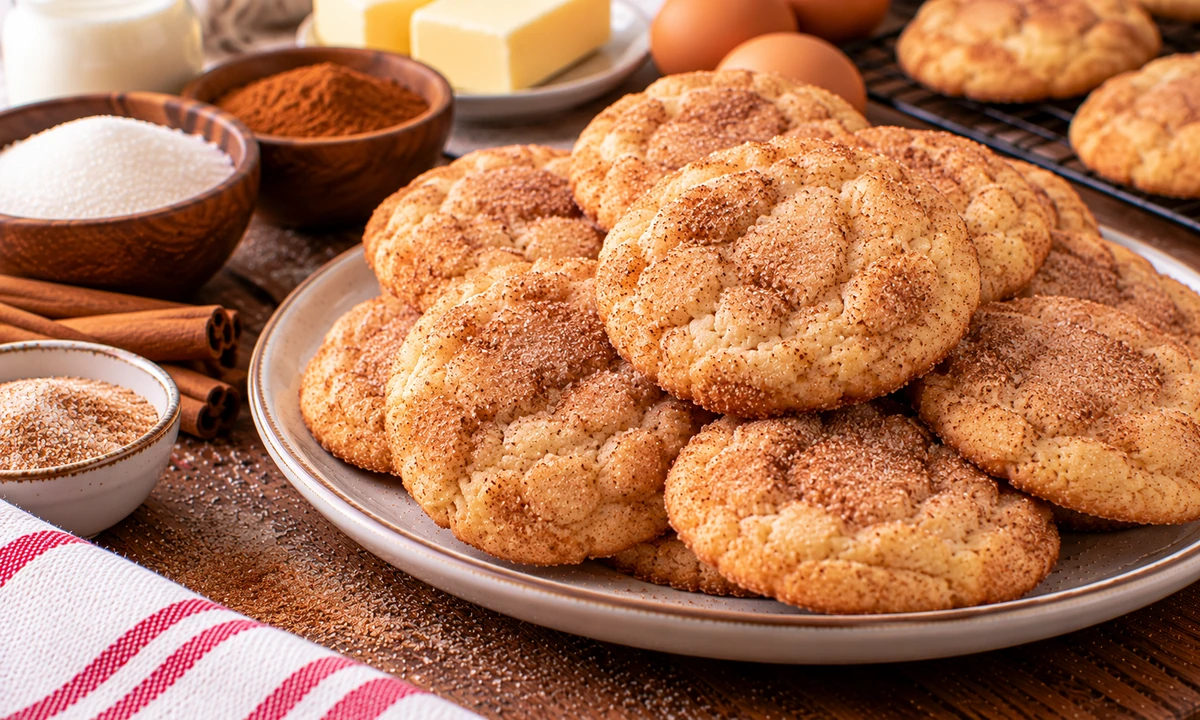
A warm snickerdoodle has a soft, buttery middle, lightly crisp edges, and an unmistakable cinnamon-sugar shell with a gentle tang you won’t find in a plain sugar cookie. This recipe makes soft and chewy snickerdoodles, explains why each step matters, and shows how to tweak the texture if you prefer them crisp.
What Are Snickerdoodle Cookies?
Snickerdoodles are soft, buttery cookies rolled in cinnamon sugar before baking, which gives them a crinkled top and warm, spiced flavor. What sets them apart from an ordinary sugar cookie is a subtle tang, traditionally from cream of tartar. It reacts with baking soda to leaven the dough while adding a slightly sour note. The combination of tender crumb and cinnamon shell is a big reason they feel cozy in colder months, though they’re good year-round.
Recipe at a Glance
- Prep time: 15 minutes
- Bake time: 9–12 minutes at 350°F (175°C)
- Rest time: 5 minutes on the baking sheet
- Yield: about 24 medium cookies
Ingredients
This recipe makes about 24 medium cookies. Knowing what each ingredient does makes troubleshooting easier.
The Cookie Dough
- 1 cup (226 g) unsalted butter, softened
- 1½ cups (300 g) granulated sugar
- 2 large eggs
- 2 teaspoons vanilla extract
- 2¾ cups (345 g) all-purpose flour
- 2 teaspoons cream of tartar
- 1 teaspoon baking soda
- ½ teaspoon salt
The Cinnamon-Sugar Coating
- ¼ cup (50 g) granulated sugar
- 1½ teaspoons ground cinnamon
Why Each Ingredient Matters
- Butter: it’s the flavor and texture base. Softened, not melted, butter creams with sugar to trap air, which keeps the cookies tender and helps them hold their shape.
- Granulated sugar: it adds sweetness and crackly edges. Traditional snickerdoodles use white sugar rather than brown, which is part of the classic look and bite.
- Eggs: they bind the dough and add richness. The yolks bring fat for a soft crumb.
- Flour: it gives structure. Spoon and level it, or weigh it, because too much flour is the top cause of dry, dense snickerdoodles. King Arthur Baking explains how to measure flour.
- Cream of tartar and baking soda: cream of tartar is an acid. It reacts with the baking soda for a gentle rise and a soft texture, and it adds the tang that defines a snickerdoodle.
- Salt: it balances the sweetness and sharpens the cinnamon.
Freshly ground cinnamon gives a warmer aroma, but any good ground cinnamon works.
Equipment You’ll Need
- Kitchen scale, for flour and even dough balls
- Stand or hand mixer, to cream the butter and sugar properly
- Cookie scoop, for uniform cookies that bake at the same rate
- Light-colored baking sheets, since dark pans over-brown the bottoms
- Parchment paper and a wire cooling rack
How to Make Snickerdoodle Cookies
1. Preheat and Prepare
Heat the oven to 350°F (175°C) and line your baking sheets with parchment. Let the oven fully preheat so the cookies spread and brown evenly.
2. Cream the Butter and Sugar
Beat the softened butter and granulated sugar for 2 to 3 minutes, until creamy and slightly lighter in color. The butter should be soft but never oily.
3. Mix in the Eggs and Vanilla
Beat in the eggs one at a time, then the vanilla. Scrape the bowl so everything is evenly combined and smooth.
4. Whisk the Dry Ingredients
In another bowl, whisk the flour, cream of tartar, baking soda, and salt. This distributes the leaveners and salt evenly before they meet the dough.
5. Combine the Dough
Gradually mix the dry ingredients into the butter mixture, stopping as soon as a soft dough forms. Overmixing develops gluten and toughens the cookies.
6. Coat and Shape
Stir the coating sugar and cinnamon together. Scoop equal portions of about 2½ tablespoons (roughly 40 g), roll each into a smooth ball, then roll it through the cinnamon sugar until fully coated. Place the balls about 2 inches apart.
7. Bake and Rest
Bake for 9 to 12 minutes, until the edges are set but the centers still look slightly soft. Let the cookies rest on the sheet for 5 minutes before moving them to a rack, since they finish setting as they cool.
The Baking Science: Why These Steps Work
- Why cream of tartar matters: it’s an acid that reacts with baking soda to leaven the dough, and it contributes the mild tang of a true snickerdoodle. Without it you essentially have a cinnamon sugar cookie, which is still good but not the same.
- Why you cream the butter instead of melting it: creaming softened butter with sugar beats in tiny air pockets that expand in the oven and keep the cookies tender and lifted. Melted butter has no trapped air, so the dough flows outward and bakes flat.
- Why flour measurement matters: too much flour turns the cookies dry and dense. Weighing, or spooning and leveling, keeps the ratio right.
- Why you pull them out early: the centers are meant to look underdone. Residual heat from the pan finishes them during the five-minute rest, leaving a soft middle instead of a hard, overbaked cookie.
- Why the tops crinkle: as the dough spreads and rises, the cinnamon-sugar shell cracks across the surface, creating the classic crinkled look.
Soft vs. Crisp: How to Control the Texture
You can steer this recipe either way. For soft and chewy snickerdoodles, pull them when the edges are just set and the centers still look underdone, and measure the flour carefully. For crisp edges, bake toward the longer end of the range (closer to 12 minutes) and let the cookies cool completely, which firms up the exterior. Either way, don’t let them go deeply brown, because snickerdoodles should stay light golden. For noticeably thicker cookies, chill the shaped dough balls for 20 to 30 minutes before baking, since firmer butter spreads less.
Pro Tips for Perfect Snickerdoodles
- Weigh your flour for the most consistent results.
- Soften the butter just enough. If it turns oily, chill it briefly before mixing.
- Stop mixing as soon as the flour disappears.
- Roll even dough balls so they finish baking at the same time.
- Coat generously for consistent flavor.
- Use light-colored sheets and rotate the pan halfway through for even browning.
Common Snickerdoodle Mistakes
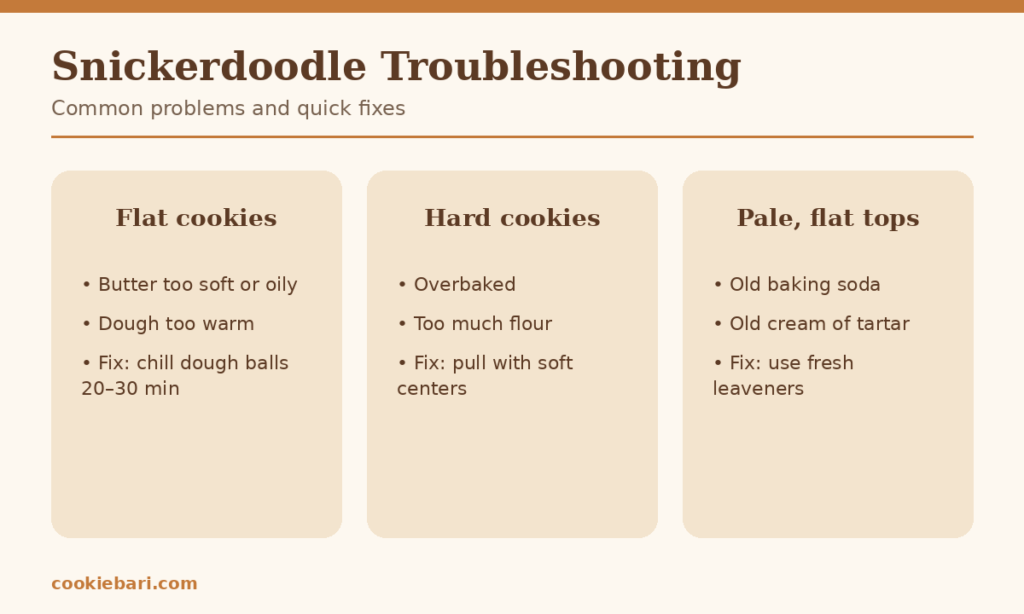
- Melted or overly soft butter: it’s the top reason snickerdoodles spread thin and greasy.
- Too much flour: packing the cup instead of spooning and leveling makes them dry.
- Overmixing: it develops gluten and toughens the crumb.
- Overbaking: they should look slightly soft in the center when they come out.
- Uneven coating: patchy cinnamon sugar means patchy flavor.
- Old leaveners: stale baking soda or cream of tartar gives flat, pale cookies.
Easy Snickerdoodle Variations
- Chocolate chip snickerdoodles: fold a cup of chocolate chips into the dough. For more chocolate chip ideas, see our thick chocolate chip cookies.
- Chai-spiced snickerdoodles: add a pinch each of ginger, cardamom, and nutmeg to the coating for a warmer, more complex spice.
- Extra cinnamon: bump up the cinnamon in the coating for a bolder spice hit.
If you prefer a plain, rolled cookie without cinnamon, try our easy homemade sugar cookies.
How to Store Snickerdoodle Cookies
Let the cookies cool completely, then store them in an airtight container at room temperature, where they stay soft for several days. If you stack them, make sure they’re fully cool first, otherwise trapped steam softens the coating.
Can You Freeze Snickerdoodles?
Yes, both the dough and the baked cookies freeze well. For dough, shape the balls, freeze them firm on a tray, then bag them. Roll the frozen balls in cinnamon sugar and bake straight from frozen, adding a couple of minutes. For baked cookies, layer them with parchment in a freezer-safe container and thaw at room temperature.
Food safety: The dough contains raw flour and eggs, so don’t eat it unbaked. The FDA explains the risks of raw flour, and the CDC explains why you shouldn’t eat raw dough.
Frequently Asked Questions
Why are my snickerdoodles flat?
Usually the butter was too soft or the dough too warm, so the cookies spread before they set. A very hot baking sheet can do it too. Chilling the shaped dough for 20 to 30 minutes helps a lot.
Why are my snickerdoodles hard?
Overbaking is the most common cause. They should look slightly soft in the center when they come out. Too much flour also makes them dense, so measure carefully, ideally by weight.
Can I make snickerdoodles without cream of tartar?
You can, but you’ll lose the traditional tang and some of the soft texture. Instead of leaving it out of this recipe, use a recipe designed without it so the leavening still balances correctly.
Why do snickerdoodles have a crinkled surface?
As the dough spreads and rises, the cinnamon-sugar coating cracks across the top, creating the signature crinkled look.
Can I use salted butter?
Yes, but reduce or omit the added salt so the cookies don’t turn out too salty.
Final Thoughts
Easy homemade snickerdoodles show how far simple ingredients and a little technique go. The details that matter most are softened (not oily) butter, accurately measured flour, mixing only until combined, a generous cinnamon-sugar coating, and pulling the cookies from the oven before they firm up. Cream of tartar gives them their tang, and once the base recipe feels familiar, you can try chocolate chip or chai-spiced versions.