

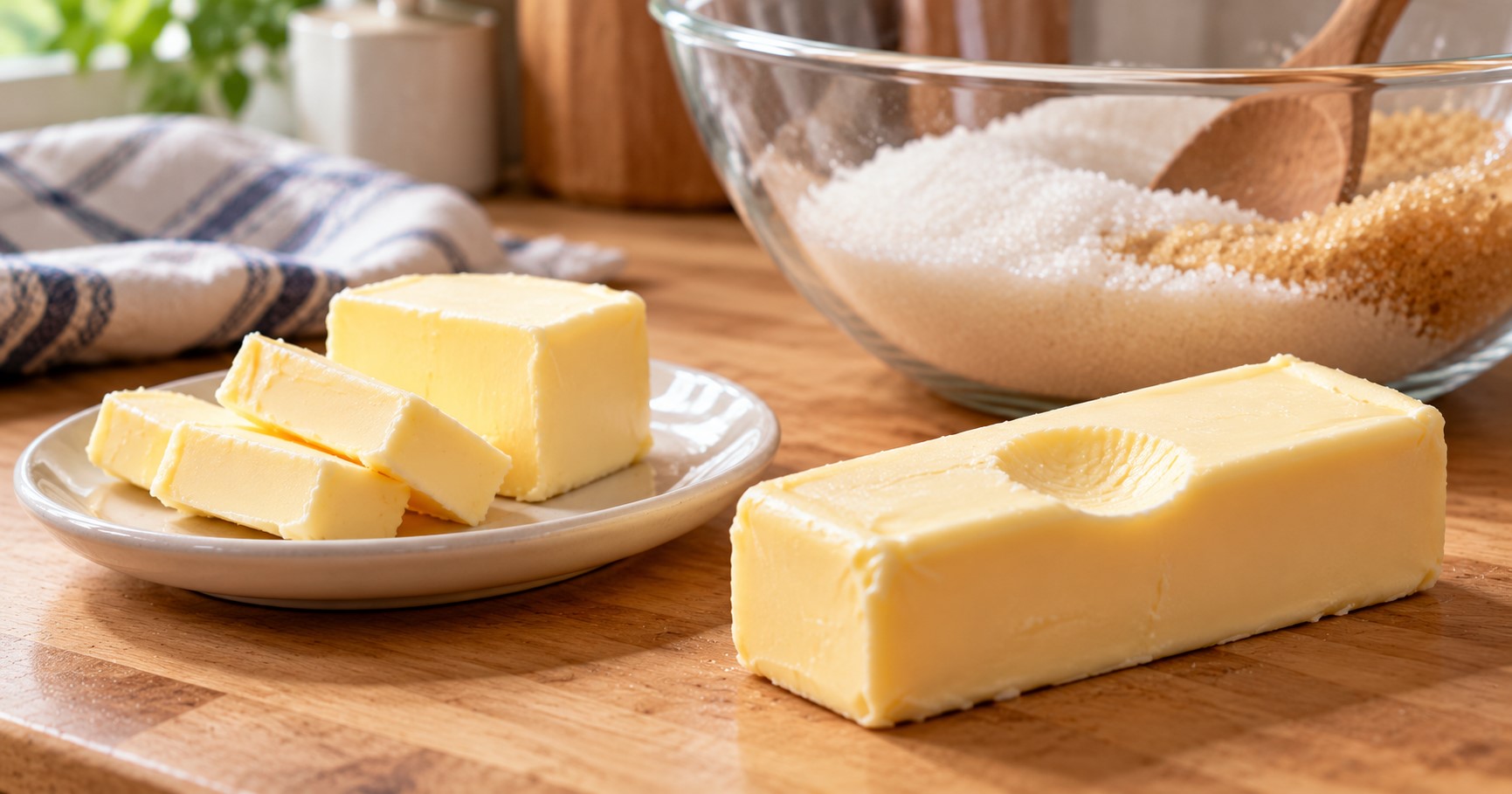
Knowing how to soften butter is one of the small skills that makes a big difference in cookies. Butter that is too cold will not cream properly, and butter that is too soft makes greasy dough, so the right texture sets up everything that comes after.
This guide shows how to soften butter for cookies, what “softened” really means, five ways to do it quickly, and what to do if the butter gets too soft.
The Short Version
- Softened butter should feel like clay. You can press an indent, but it still has some resistance.
- The easiest method: Slice the butter and leave it on a plate for about 30 minutes.
- The fastest method: Microwave a stick standing on end in short bursts, flipping it once.
- Avoid melting. Greasy butter cannot hold air.
Why Softened Butter Matters in Cookies
Most cookie recipes start by creaming butter with sugar. Creaming works air into the butter, and that air helps cookies rise and bake with a good texture. King Arthur Baking explains that butter that is too cold does not cream well, while butter that is too soft cannot hold air pockets, which leads to dense results.
The temperature of the butter also affects how the cookies behave in the oven. Warm, greasy dough tends to spread more, so a dough made with butter that is too soft can bake up flat. If that sounds familiar, read why cookies spread too much for other causes and fixes.
How Soft Should Butter Be?
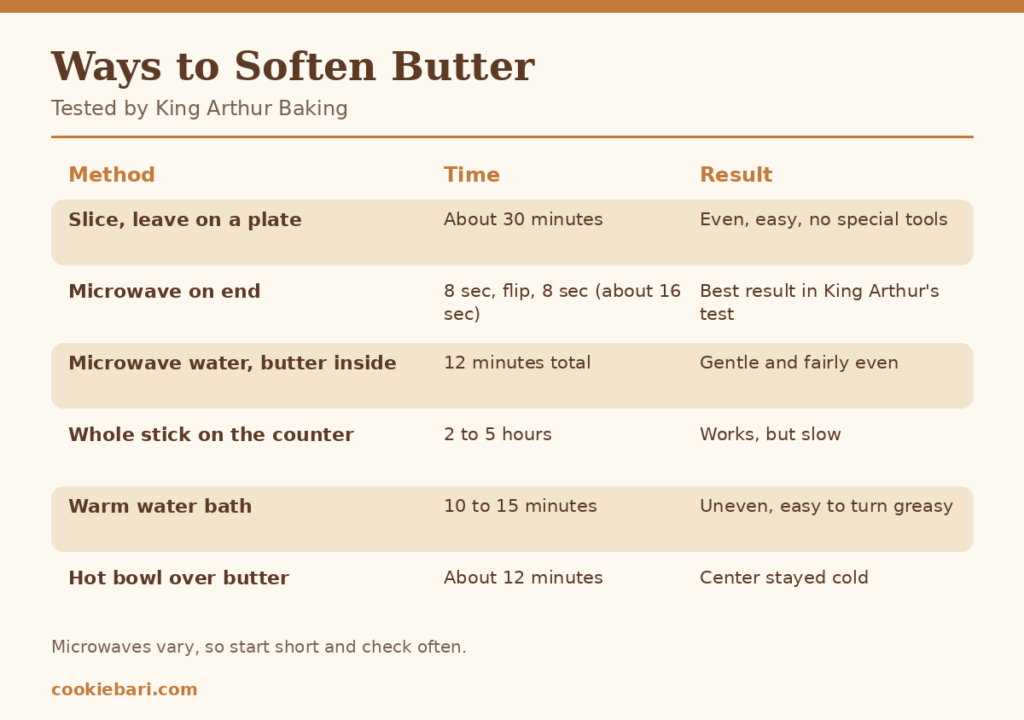
King Arthur Baking describes the right texture this way: it should feel like clay, so you can easily press an indent, but it still has some resistance. Use the finger test:
- Too cold: The butter resists and may crack when you press it.
- Just right: Your finger leaves a clear dent, and the butter is not greasy.
- Too soft: Your finger slides all the way through to the surface beneath, or the butter looks shiny and greasy.
Recipes often say “room temperature,” but a warm kitchen can make butter far softer than the recipe intends. The texture matters more than the clock.
How to Soften Butter: Methods Compared
King Arthur Baking tested several ways to soften butter in its guide on how to soften butter quickly. Here is how the main methods compare.
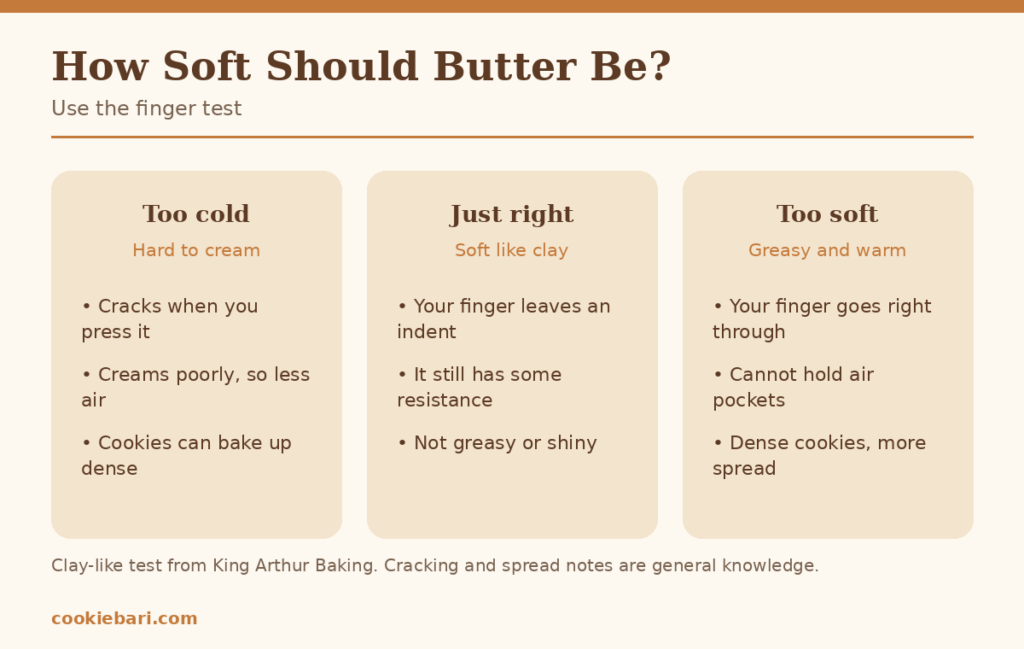
| Method | Time | Result |
|---|---|---|
| Slice and leave on a plate | About 30 minutes | Even and easy |
| Microwave a stick on its end | 8 seconds, flip, 8 more seconds | Best result in King Arthur’s test |
| Warm the microwave with water | About 12 minutes in total | Gentle and fairly even |
| Leave the whole stick out | 2 to 5 hours | Works, but slow |
| Warm water bath | 10 to 15 minutes | Uneven, and easy to make greasy |
| Hot bowl over the butter | About 12 minutes | The center stayed cold |
Method 1: Slice It and Wait
- Cut the cold butter into thin slices or small cubes.
- Spread them on a plate in a single layer.
- Leave them at room temperature for about 30 minutes.
- Check with the finger test, and wait a few minutes more if the butter is still firm.
Cutting the butter gives it more surface area, so it softens far faster than a whole stick and stays even. This is the method to use whenever you can plan ahead a little.
Method 2: Microwave the Stick on Its End
In King Arthur’s test, this method gave the best results. Standing the stick on its end lets the heat reach it more evenly than laying it flat.
- Unwrap the stick and stand it on one end on a microwave-safe plate.
- Microwave for 8 seconds.
- Flip the stick onto its other end and microwave for 8 more seconds.
- Check the texture with your finger.
Microwaves vary, so use these times as a starting point. King Arthur’s tester noted that the first attempt was slightly too soft and suggested trying 7 seconds per side next time. Start short, and add time in small steps.
Method 3: Warm the Microwave With Water
If you do not want to heat the butter directly, microwave a cup of water for 2 minutes, then place sliced butter in the microwave, which is turned off. Leave it there for about 10 minutes. It takes about 12 minutes in total, and the warm air softens the butter gently.
Methods to Skip
- A hot bowl over the butter: The outside softens but the center can stay hard and cold.
- A warm water bath: The butter softens unevenly, and water that is a little too hot makes it greasy.
- Leaving a whole stick out: It works, but it can take 2 to 5 hours, and the butter can end up softer than you want if the kitchen is warm.
What If the Butter Gets Too Soft?
If your butter is too soft or starts to melt, you do not have to throw it away. Here are two options:
- Chill it briefly. Put the butter in the fridge for 10 to 15 minutes, then check it again. This timing is a general baking tip and not from a test, so check often.
- Use it in a recipe that calls for melted butter. King Arthur Baking suggests that butter that goes too far can still be used in recipes that call for melted butter.
Bear in mind that some cookies are made with melted or browned butter on purpose. Our brown butter chocolate chip cookies are one example.
Tips for Perfect Softened Butter
- Use the finger test, not the clock. Kitchens are warmer or cooler than recipes assume.
- Cut butter into pieces first. Smaller pieces soften faster and more evenly.
- Keep other ingredients ready. Measure the sugar and flour while the butter softens, so you can start right away.
- Do not rush the creaming step. Creaming softened butter with sugar until it looks lighter is what gives cookies their texture.
- Chill the dough if it feels warm. Our guide to chilling cookie dough explains how long to rest it.
Cookie Recipes That Start With Softened Butter
- Classic chocolate chip cookies
- Easy homemade sugar cookies
- Snickerdoodle cookies
- Buttery shortbread cookies
Check each recipe’s own instructions, since some call for cold, melted, or browned butter instead.
Frequently Asked Questions
How long does it take to soften butter at room temperature?
A whole stick can take 2 to 5 hours, depending on how warm the kitchen is. Slicing it into pieces cuts that time to about 30 minutes.
What is the fastest way to soften butter for cookies?
Standing a stick on its end and microwaving it for 8 seconds, flipping it, and microwaving for 8 more seconds gave the best results in King Arthur’s test. Microwaves differ, so start with shorter bursts.
How do I know if butter is soft enough?
It should feel like clay. Your finger can press an indent, but the butter still has some resistance and is not greasy.
Can I use melted butter instead of softened butter?
Not as a simple swap. Melted butter changes the dough, and cookies can turn out flatter. Use melted butter only when the recipe calls for it.
What happens if the butter is too cold?
Cold butter does not cream well with sugar, so less air gets into the dough. The cookies can be denser as a result.
What happens if the butter is too soft?
Too-soft butter cannot hold air pockets, which can make cookies dense. Also, the warm dough can spread more in the oven.
Final Thoughts
Learning how to soften butter comes down to texture. Aim for butter that feels like clay, slice it for a quick soften on the counter, and use short microwave bursts only when you are in a hurry. Get this one step right, and your cookies will cream, bake, and taste better.