

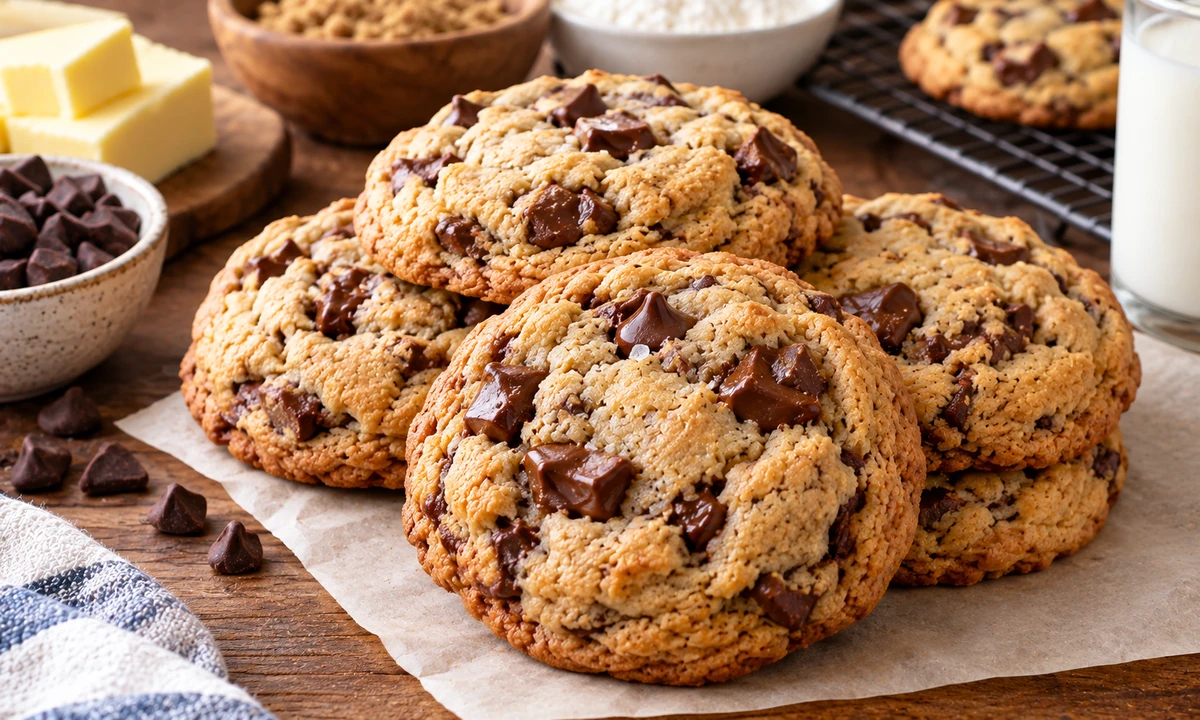
A thick chocolate chip cookie has crisp golden edges, a soft center that is just barely set, and big pools of melted chocolate. Thin, flat cookies are usually the result of a few small mistakes rather than a bad recipe: butter that is too warm, too little flour, and dough that goes into the oven without chilling.
This recipe is built around fixing those three things. It makes 12 large cookies and includes a bakery-style method, a larger “Levain-style” variation, and a vegan option. It also answers a common question: do you really need cornstarch for thick cookies? No, you don’t.
Recipe at a Glance
- Yield: 12 large cookies
- Prep time: 15 minutes
- Chill time: at least 1 hour (up to 48 hours)
- Bake time: 11–13 minutes at 375°F (190°C)
- Rest time: 10 minutes on the baking sheet
Why Cookies Come Out Flat
Most flat, thin cookies come down to three common causes:
- Warm or melted butter. Butter that has been microwaved to “soften” often ends up half melted, and melted butter spreads before the cookie has time to set.
- Too little flour. Scooping flour straight from the bag can pack it, which leads some bakers to cut back and end up without enough structure. Spooning and leveling, or weighing, avoids the guesswork.
- No chilling. Dough that goes straight into the oven warm spreads faster than dough with firm, cold fat.
Everything in this recipe is designed around fixing those three points.
The Four Secrets Behind Thick Chocolate Chip Cookies
- Use cold butter, not melted. Cold, cubed butter creamed with sugar creates structure that holds its shape in the oven. Melted butter flows outward before the cookie sets.
- Use enough flour. A slightly higher flour ratio does much of the work some recipes give to cornstarch. Cornstarch is optional, not essential.
- Chill the dough for at least 1 hour. Chilling firms up the fat and gives the flour time to absorb moisture, so the cookies rise instead of spreading. Overnight is even better, but one hour already makes a visible difference.
- Shape tall dough balls and don’t flatten them. Roll the dough into tall, rough mounds. Height going into the oven helps keep thickness coming out.
Ingredients
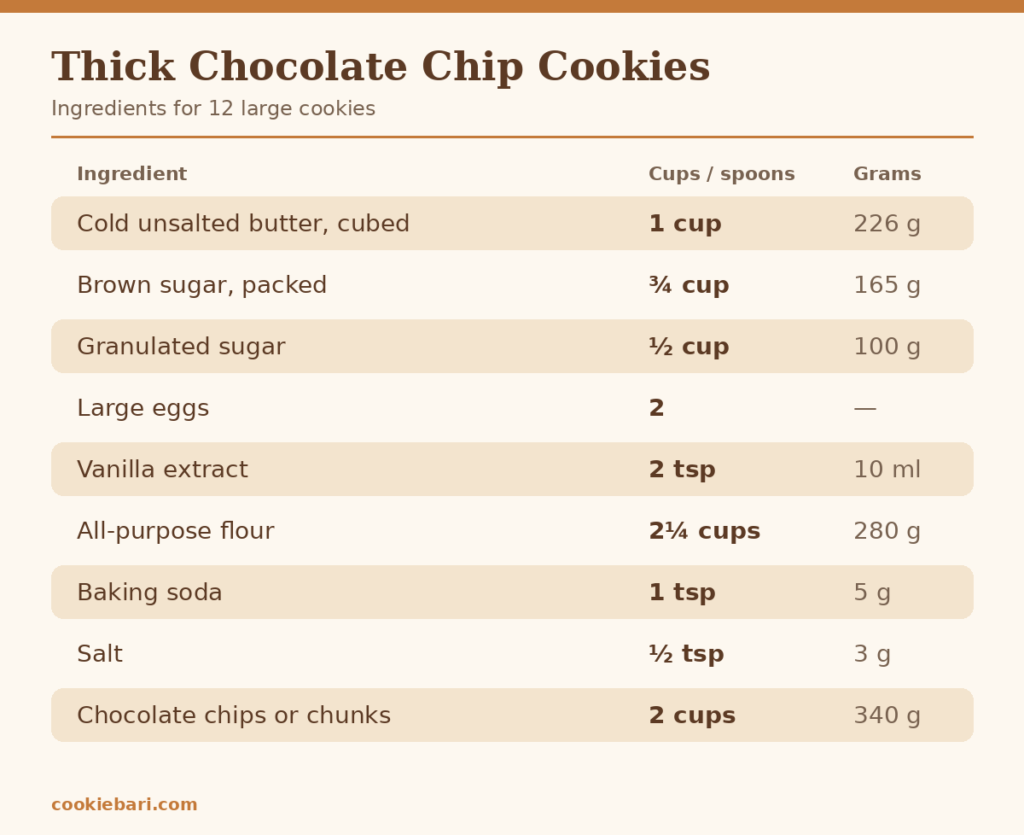
Ingredient measurements at a glance.
- 2¼ cups (280 g) all-purpose flour, spooned and leveled
- 1 cup (226 g) cold unsalted butter, cubed
- ¾ cup (165 g) packed brown sugar
- ½ cup (100 g) granulated sugar
- 2 large eggs
- 2 teaspoons vanilla extract
- 1 teaspoon baking soda
- ½ teaspoon salt
- 2 cups (340 g) chocolate chips or chopped chocolate
Ingredient Notes
Flour: Flour gives thick cookies their structure. Spoon it into the cup and level it off, or better, weigh it. King Arthur Baking explains the difference between measuring methods, and why a packed cup can hold much more flour than a fluffed-and-leveled one.
Cold butter: Use it straight from the refrigerator, cut into cubes. Cold butter creamed with sugar traps air and stays solid longer in the oven, so the cookie sets before it flattens.
Brown sugar: Brown sugar contains molasses, which holds moisture and gives a chewier, softer cookie. If you’ve run out, see our guide to chocolate chip cookies without brown sugar.
Granulated sugar: White sugar encourages spreading and gives the crisp, golden edges that contrast with the soft middle.
Eggs: Eggs bind the dough. The yolks add richness and the whites add a little structure. Cold eggs are fine here.
Baking soda: It gives a gentle rise and helps with browning. Old baking soda loses its strength, so replace it every few months.
Chocolate: Semi-sweet is a classic choice. Chopped chocolate bars melt into uneven pools and thin shards, which gives a bakery-style look.
Equipment
- Kitchen scale: for weighing flour and portioning even dough balls.
- Stand or hand mixer: to cream the cold butter properly.
- Large cookie scoop: for tall, uniform portions.
- Light-colored baking sheets: dark pans can brown the bottoms before the centers set.
- Parchment paper or silicone mats: for even baking and easy release.
- Wire cooling rack: so the bottoms don’t steam.
How to Make Thick Chocolate Chip Cookies
1. Cream the Cold Butter and Sugars
Beat the cubed cold butter with both sugars for 2–3 minutes, until combined and slightly fluffy. It won’t be as smooth as room-temperature butter, and that’s intended. This step traps air, which helps the cookies hold their height.
2. Add the Eggs and Vanilla
Mix in the eggs one at a time, then the vanilla, just until combined.
3. Add the Dry Ingredients
Whisk the flour, baking soda, and salt together, then mix them into the wet ingredients until barely combined. Stop as soon as the flour disappears. Overmixing develops gluten and can make cookies tough.
4. Fold in the Chocolate
Fold in the chocolate. Use a generous amount; bakery-style cookies are loaded with it. If you want the opposite of a big, thick cookie, try our mini chocolate chip cookies.
5. Shape Tall Dough Balls and Chill
Portion the dough into 12 large balls, about 100 g (3½ oz) each. Keep them tall and rough rather than smooth and round. Chill, covered, for at least 1 hour and up to 48 hours.
6. Bake Hot and Short
Heat the oven to 375°F (190°C). Bake for 11–13 minutes, until the edges are golden but the centers still look slightly underdone. Pull the cookies out when they look about two minutes short of done; they keep cooking on the hot pan.
7. Rest on the Tray
Let the cookies sit on the baking sheet for 10 minutes. Residual heat finishes setting the center, which gives the contrast between crisp edges and a soft middle. Then move them to a wire rack.
The Baking Science: Why These Steps Work
Why chilling matters. Chilling firms the butter so it melts more slowly in the oven, which slows spreading and gives taller cookies. It also gives the flour time to absorb moisture, which improves flavor and chew.
Why cold butter beats melted butter. When cold butter is creamed with sugar, the sugar crystals cut small air pockets into the fat. Those pockets expand in the oven and help hold the cookie’s height. Melted butter has no such structure and flows outward.
Why brown sugar makes cookies chewier. Molasses in brown sugar attracts and holds moisture, so doughs with plenty of brown sugar bake into softer, chewier cookies.
Why you shouldn’t overmix. Flour proteins form gluten when worked. A little gluten gives structure; too much can make cookies tough.
Why resting on the tray matters. The center of a thick cookie is still soft when it leaves the oven. Heat from the pan keeps setting it over the next several minutes without overbaking the edges.
Why oven temperature matters. A hotter oven sets the outside faster, locking in height before the middle spreads. That’s the idea behind the larger variation below.
Tips for the Best Thick Cookies
- Weigh your flour. Too much flour is a common cause of cakey cookies.
- Use chopped chocolate instead of chips for pools and shards of melted chocolate.
- Don’t overmix once the flour goes in.
- Use light-colored baking sheets.
- Rotate the pan halfway through baking, since many home ovens have hot spots.
- Underbake slightly. The centers firm up as they rest.
Common Mistakes to Avoid
- Melted or warm butter: the most common reason cookies spread thin.
- Expired baking soda: old soda can give dense, pale cookies.
- Overbaking: thick cookies should look slightly underdone when they come out.
- Overmixing: develops gluten and toughens the cookie.
- Skipping the chill: the quickest route to flat cookies.
- Packing the flour: too much flour makes cookies cakey and dry.
Levain-Style Variation (Extra Thick, Gooey Center)
Very large, bakery-style cookies take the same ideas further. You don’t need a new recipe, just three changes:
- Make the dough balls much bigger: about 6 ounces (170 g) each. With this recipe that gives roughly 7 cookies instead of 12.
- Fold in 1 cup of roughly chopped walnuts along with the chocolate.
- Bake hotter: 400°F (205°C) for 10–12 minutes. Check early, since oven strength varies.
The cold butter, chilling, and tall shaping all stay the same. This is our own take on the style, not a copy of any bakery’s recipe.
Vegan Thick Chocolate Chip Cookies
To make a vegan version, swap:
- Butter: cold vegan block butter (block style, not tub spread, which contains more water)
- Eggs: 2 flax eggs (2 tablespoons ground flaxseed mixed with 6 tablespoons water, rested for 10 minutes)
- Chocolate: dairy-free chocolate chips
Vegan butter can soften faster than dairy butter, so chill the dough for at least 2 hours. Texture may differ slightly from the dairy version. For a recipe developed specifically for dairy-free baking, see our soft and chewy dairy-free chocolate chip cookies, and for more on baking without milk, read do cookies need milk?
Troubleshooting: Quick Fixes
| Problem | Fix |
|---|---|
| Cookies spread too much | Dough wasn’t cold enough. Chill longer and check your flour measurement. |
| Cookies are cakey | Too much flour or overmixing. Level your cups (or weigh) and mix minimally. |
| Raw center | Dough balls may be too tall or large for the bake time. Add 1–2 minutes, or flatten the tops very slightly. |
| Dry and crumbly | Overbaked. Pull them out while the centers still look soft. |
Storage and Make-Ahead Tips
Freezer: Freeze the shaped dough balls on a tray, then transfer them to a freezer bag. They keep for up to 3 months and can be baked straight from frozen. Add 2–3 minutes to the bake time.
Baked cookies: Store in an airtight container at room temperature for up to 4 days. A slice of bread in the container can help keep them soft.
Food safety: Raw dough contains uncooked flour and eggs and shouldn’t be eaten before baking. The FDA explains why raw flour can carry risk, not just the eggs, and the CDC has advice on why you shouldn’t eat raw dough. If you want a dough you can eat safely, try our dairy-free cookie dough.
Frequently Asked Questions
What makes chocolate chip cookies thick instead of flat?
Cold butter, enough flour, chilled dough, and tall dough balls. Cold fat and chilled dough spread slowly, so the cookie sets before it flattens. Warm or melted butter is a very common reason cookies turn out thin.
Can I make thick chocolate chip cookies without cornstarch?
Yes. Cornstarch can add tenderness, but it isn’t what makes cookies thick. A slightly higher flour ratio, cold butter, and chilled dough get you there, and this recipe uses no cornstarch.
How are Levain-style cookies so thick?
They use very large dough balls (around 6 ounces), cold dough, and a hot oven. The size and heat set the outside quickly while the center stays soft. You can use the variation above to make a similar style at home.
Can vegan cookies be thick and gooey?
Yes. Use cold block-style vegan butter and flax eggs, and chill for at least 2 hours. The texture can differ a little from the dairy version.
Do I really have to chill the dough?
For thick cookies, yes. Even one hour helps: the fat firms up and the flour absorbs moisture, so cookies rise rather than spread.
Final Thoughts
Thick chocolate chip cookies don’t depend on special ingredients. They depend on cold butter, patience with chilling, and pulling the tray out a little earlier than feels natural. Weighing your flour instead of scooping with cups is one of the simplest ways to get consistent results. If you try the recipe, leave a comment and tell us how your batch turned out.