

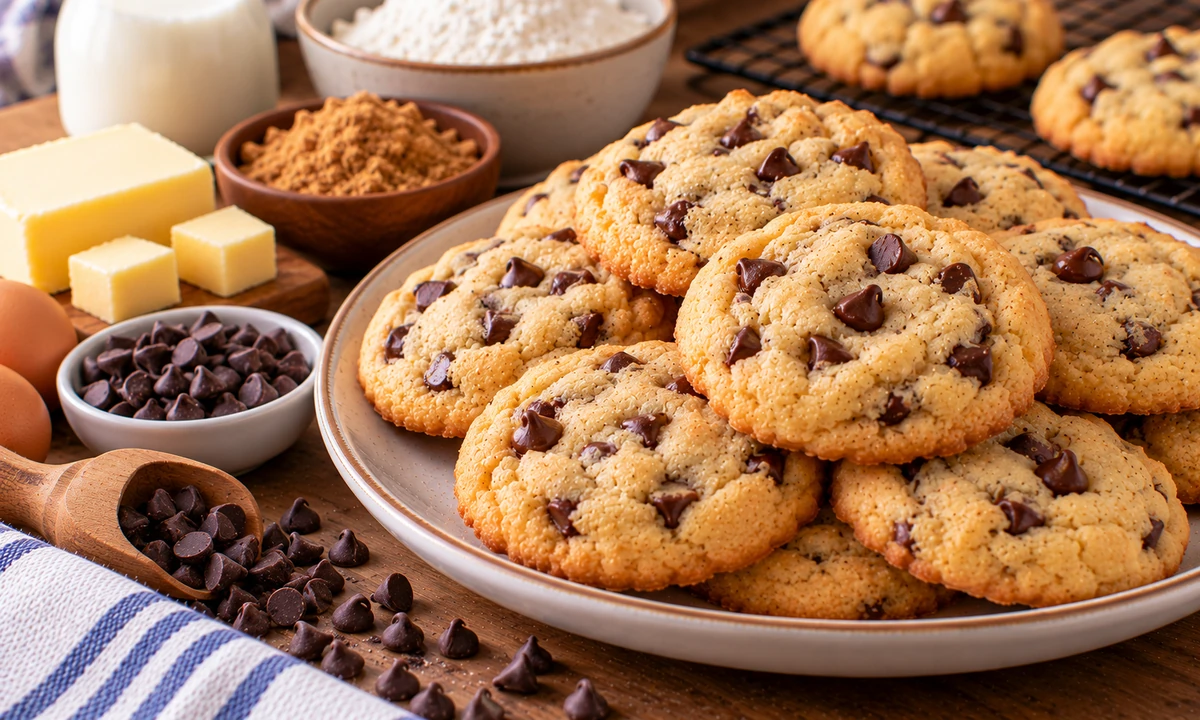
These lactose free cookies are soft, tender, and lightly golden around the edges, with a simple buttery flavor and a satisfying texture. They are made without regular milk, which makes them a useful option when you want to reduce or avoid lactose but still enjoy homemade cookies.
It’s worth remembering that lactose free and dairy free are not the same thing. Some lactose-free ingredients still come from milk, so the right ingredients depend on whether you are avoiding lactose specifically or all dairy products.
Recipe at a Glance
- Prep time: 15 minutes
- Chill time: 20–30 minutes, if needed
- Bake time: 10–12 minutes at 350°F (175°C)
- Total time: 45–55 minutes
- Yield: about 24 cookies
- Difficulty: easy
What Are Lactose Free Cookies?
Lactose free cookies are made without lactose, the natural sugar found in milk and many dairy products. A lactose-free cookie doesn’t have to be completely dairy free. Lactose-free butter, for example, is still made from dairy, while plant-based butter contains no traditional dairy ingredients.
That distinction matters when you choose ingredients. If you’re avoiding lactose, lactose-free dairy ingredients may work for you. If you need to avoid all dairy, choose dairy-free alternatives and check packaged ingredients carefully.
People with a milk allergy should take extra care, because lactose-free does not automatically mean milk-free. Milk proteins can still be present in lactose-free products. For more information, see the FDA’s guidance on food allergies and labeling, and talk to a doctor or dietitian about your own needs.
Lactose Free vs. Dairy Free Cookies
The two terms are often used interchangeably, but they describe different dietary requirements.
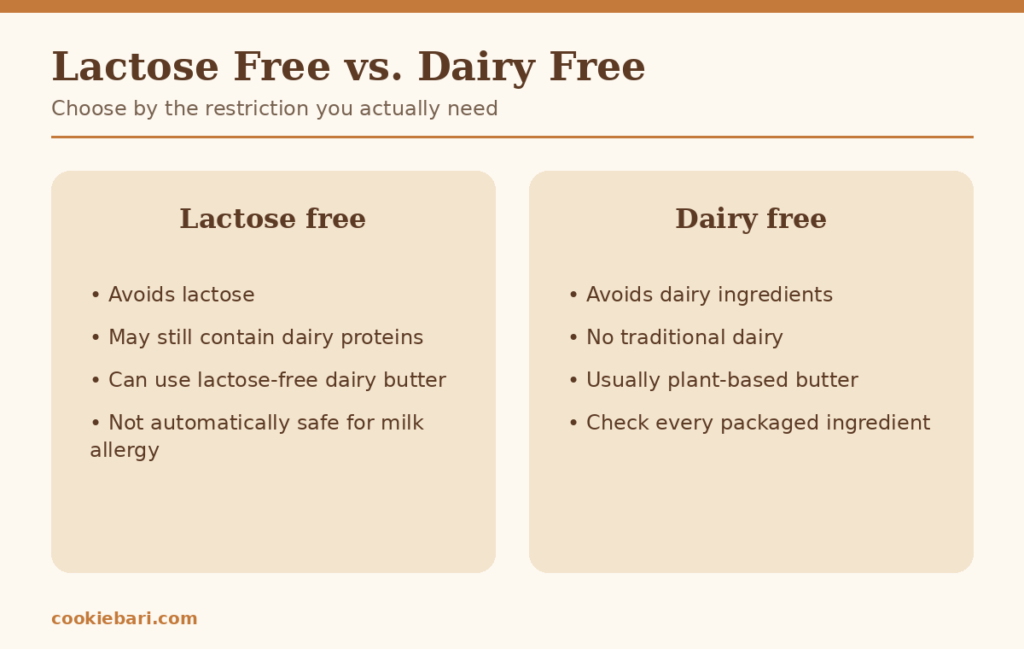
| Lactose Free | Dairy Free |
|---|---|
| Avoids lactose | Avoids dairy ingredients |
| May contain dairy proteins | Does not contain traditional dairy ingredients |
| Can include some lactose-free dairy products | Usually uses plant-based alternatives |
| May work for people avoiding lactose | Often needed when avoiding milk due to allergy |
If you only need to avoid lactose, lactose-free butter is an option. If you need a completely dairy-free recipe, use a dairy-free fat and check every packaged ingredient. For a fully dairy-free cookie, see our soft and chewy dairy-free chocolate chip cookies.
Ingredients
This recipe makes about 24 cookies.
- 2 cups (240 g) all-purpose flour
- 1 teaspoon (4 g) baking powder
- ½ teaspoon (2.5 g) baking soda
- ½ teaspoon (3 g) salt
- ½ cup (113 g) unsalted lactose-free butter, softened
- ¾ cup (150 g) granulated sugar
- ½ cup (100 g) packed brown sugar
- 1 large egg
- 2 teaspoons (10 ml) vanilla extract
Optional add-ins: 1 cup lactose-free or dairy-free chocolate chips, ½ cup chopped walnuts or pecans, 1 teaspoon ground cinnamon, or a small pinch of flaky sea salt for topping.
If you need the cookies to be completely dairy free, use a dairy-free butter alternative instead of lactose-free butter, and make sure your chocolate chips are dairy free too.
Choosing the Right Fat
The fat affects the cookies’ texture and spread. Lactose-free butter gives a familiar buttery flavor while keeping the recipe lactose free. For a dairy-free version, a suitable dairy-free butter alternative can work, but brands contain different amounts of water and fat, so the texture may vary. Coconut oil is used in some cookie recipes, but it doesn’t behave exactly like butter. For the most predictable result, use the fat listed in the recipe.
How to Make Lactose Free Cookies
1. Preheat the Oven
Heat the oven to 350°F (175°C) and line one or two baking sheets with parchment paper.
2. Combine the Dry Ingredients
In a medium bowl, whisk the flour, baking powder, baking soda, and salt. Set the mixture aside.
3. Cream the Butter and Sugars
In a large bowl, beat the softened lactose-free butter, granulated sugar, and brown sugar until light and creamy, about 2 to 3 minutes. This step helps create a lighter cookie texture.
4. Mix in the Egg and Vanilla
Beat in the egg until fully incorporated, then stir in the vanilla and scrape down the bowl if needed.
5. Stir in the Dry Ingredients
Gradually mix the dry ingredients into the butter mixture, just until a soft dough forms. Overmixing once the flour is in makes the cookies less tender.
6. Fold in Optional Mix-Ins
If you’re using chocolate chips, chopped nuts, or another add-in, fold them gently into the dough.
7. Chill the Dough if Needed
If the dough feels very soft or sticky, refrigerate it for 20 to 30 minutes. Chilling firms the butter and makes the dough easier to portion, which helps in a warm kitchen.
8. Shape the Cookies
Scoop the dough into about 24 portions, roughly 1½ tablespoons (about 27 g) each, and place them on the prepared baking sheets with about 2 inches between them so they can spread.
9. Bake
Bake for 10 to 12 minutes, until the edges are lightly golden and the centers still look slightly soft. Don’t wait for the centers to firm up, because the cookies keep setting as they cool.
10. Cool
Let the cookies cool on the baking sheet for about 5 minutes, then move them to a wire rack to cool further before serving.
Tips for Better Lactose Free Cookies
- Measure flour carefully: too much makes cookies dry, thick, or crumbly. Spoon the flour into the cup and level it, or weigh it. King Arthur Baking explains how to measure flour.
- Don’t overmix: stop once the flour is incorporated.
- Chill soft dough: 20 to 30 minutes helps control spreading and makes portioning easier.
- Don’t overbake: remove the cookies when the edges are lightly golden but the centers still look soft.
- Check packaged ingredients: if you’re avoiding lactose carefully, check chocolate chips, flavorings, and other mix-ins for milk or lactose. If you’re avoiding all dairy, look for products suitable for a dairy-free diet.
Common Problems and How to Fix Them
- Cookies too flat: very soft butter or warm dough makes cookies spread. Chill the dough for 20 to 30 minutes and use a cool baking sheet.
- Cookies dry: too much flour and overbaking are common causes. Measure the flour carefully and remove the cookies while the centers still look slightly soft.
- Cookies hard: overbaking makes cookies hard instead of tender. Start checking around 10 minutes and remove them when the edges are lightly golden.
- Cookies crumbly: too much flour makes the dough dry and crumbly. Check your flour measurement first and avoid adding extra flour while mixing.
Can You Make Lactose Free Cookies Without Butter?
Yes, but the substitution depends on what you need to avoid. If you avoid lactose but can eat dairy, lactose-free butter is a convenient option. If you need to avoid all dairy ingredients, use a suitable dairy-free butter alternative instead. Changing the fat can affect the spread, flavor, and texture. For a dairy-free make-ahead option, see our dairy-free cookie dough.
Easy Lactose Free Cookie Variations
- Chocolate chip: add about 1 cup (170 g) of lactose-free or dairy-free chocolate chips. Always check the label, since chocolate chips can contain milk ingredients.
- Cinnamon: add 1 teaspoon ground cinnamon to the dry ingredients for a warm, lightly spiced cookie.
- Nutty: fold in ½ cup chopped walnuts or pecans. If you’re baking for someone with a nut allergy, leave the nuts out and check your other packaged ingredients.
- Oatmeal: you can add oats to cookie dough, but oats change the structure and moisture balance of the recipe, so this base recipe needs adjusting.
How to Store Lactose Free Cookies
Let the cookies cool completely, then keep them in an airtight container at room temperature to protect their texture. For longer storage, freeze the baked cookies in a freezer-safe container or bag. You can also freeze dough portions: freeze them on a tray until firm, then move them to a freezer-safe container. Baking frozen dough takes a little extra time, so check the cookies near the end.
Food safety: The dough contains raw egg and flour, so don’t eat it before baking. The FDA explains the risks of raw flour, and the CDC explains why you shouldn’t eat raw dough.
Frequently Asked Questions
Are lactose free cookies dairy free?
Not necessarily. A lactose-free cookie can still contain dairy ingredients, including milk proteins. If you need to avoid all dairy, choose ingredients labeled or formulated as dairy free.
Are lactose free cookies suitable for a milk allergy?
Not necessarily. Lactose-free products can still contain milk proteins. If you have a milk allergy, follow your doctor’s allergen guidance and check ingredient labels carefully.
Can I make lactose free cookies without butter?
Yes. A suitable dairy-free butter alternative works if you also need to avoid dairy, though changing the fat can affect the texture.
Are chocolate chips lactose free?
Not always. Some chocolate chips contain milk ingredients, so check the label before adding them.
Can I freeze lactose free cookies?
Yes. Fully cooled baked cookies can be frozen in a freezer-safe container or bag, and portions of dough can be frozen for later baking.
Final Thoughts
Lactose free cookies are straightforward once you understand the difference between lactose-free and dairy-free ingredients. For the best texture, measure the flour carefully, avoid overmixing, chill soft dough when necessary, and take the cookies out while the centers still look slightly soft. Most importantly, choose ingredients that match the dietary restriction you actually need to follow. Lactose intolerance and milk allergy are different concerns, so a lactose-free ingredient isn’t automatically suitable for someone who needs to avoid all dairy.