

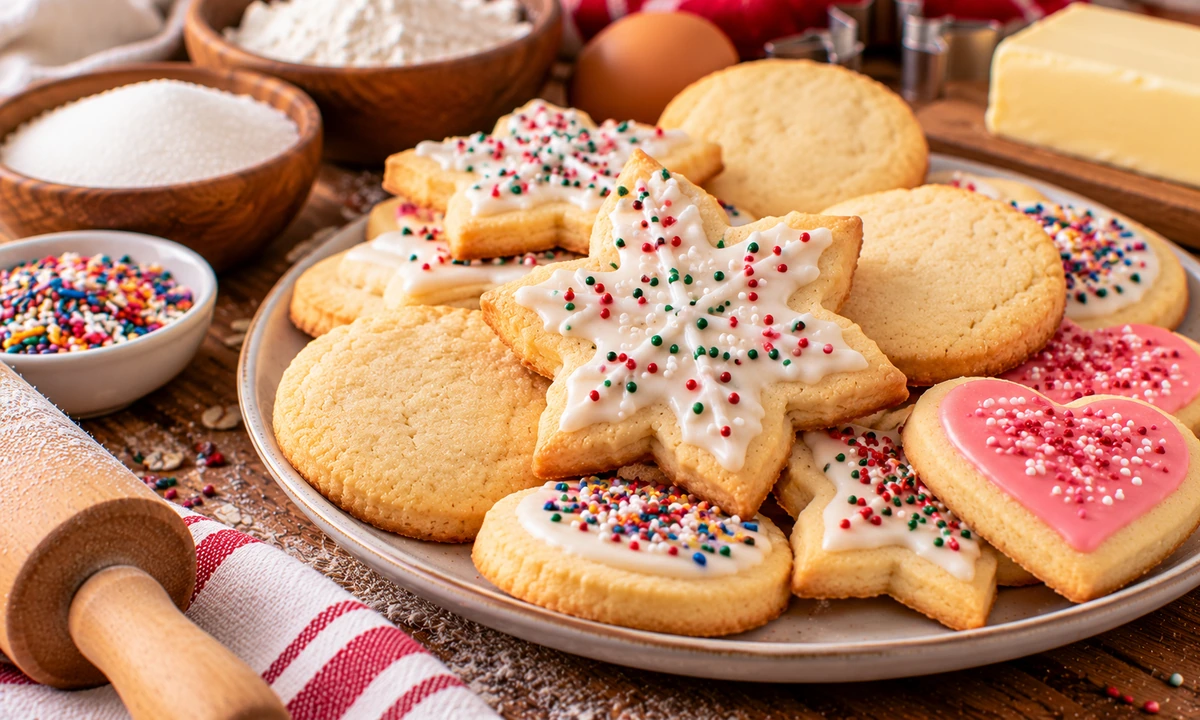
These easy homemade sugar cookies are soft, tender, buttery, and lightly crisp around the edges. They use simple ingredients, butter, sugar, flour, egg, and vanilla, so they work for everyday baking as well as holidays, birthdays, and special occasions.
The dough is simple to roll and cut into shapes, and because you control the thickness and baking time, you can make the cookies softer or crispier to suit your taste. If you’re baking for just two people, our small batch cookies for two are another good option.
Why You’ll Love These Homemade Sugar Cookies
- Soft, tender centers with lightly crisp edges
- Simple ingredients you probably already have
- Easy dough for rolling and cutting
- Great for decorating
- No unusual equipment required
- Easy to customize for holidays and celebrations
The same dough works for simple round cookies or festive cut-out shapes.
Recipe at a Glance
- Yield: about 24 cookies
- Chill time: optional, about 30 minutes (helpful for cut-outs)
- Bake time: 8–11 minutes at 350°F (175°C)
Ingredients
This recipe makes about 24 cookies.
- 1 cup (226 g) unsalted butter, softened
- 1 cup (200 g) granulated sugar
- 1 large egg, at room temperature
- 2 teaspoons vanilla extract
- 2¾ cups (345 g) all-purpose flour
- 1 teaspoon baking powder
- ½ teaspoon salt
Optional decorating ingredients: colored sugar, sprinkles, powdered sugar icing, royal icing, melted chocolate, or other edible decorations.
Use softened rather than melted butter for the best texture. Accurate flour measurement matters too, since too much flour makes the cookies dry.
How to Make Easy Homemade Sugar Cookies
1. Prepare the Baking Sheets
Heat the oven to 350°F (175°C) and line one or two baking sheets with parchment paper. If you don’t have parchment, grease the sheets lightly. Give the oven time to preheat fully, because a properly heated oven bakes the cookies more evenly.
2. Cream the Butter and Sugar
Beat the softened butter and granulated sugar in a large bowl until the mixture is pale, creamy, and fluffy. The butter should be soft enough to press easily with a finger but still hold its shape. Melted butter makes the dough too soft and encourages spreading.
3. Mix in the Egg and Vanilla
Beat in the egg until fully incorporated. Add the vanilla and mix until combined, scraping down the bowl so everything is even.
4. Whisk the Dry Ingredients
In a separate bowl, whisk the flour, baking powder, and salt. The baking powder gives the cookies a gentle lift while keeping them tender, and mixing it with the flour first spreads it evenly through the dough.
5. Combine the Dough
Gradually mix the dry ingredients into the butter mixture until a soft dough forms, then stop. Overmixing develops gluten and makes the cookies tougher. If the dough is too soft or sticky to roll, chill it for about 30 minutes.
Rolling and Cutting the Cookie Dough
For classic cut-out cookies, lightly flour your work surface and rolling pin. Roll the dough to about ¼ inch thick, keeping the thickness even so the cookies bake at the same rate. Cut shapes with your favorite cutters and carefully move them to the prepared baking sheet.
If the dough sticks to the cutter, dip the cutter in flour between cuts. Gather the scraps, press them together gently, and re-roll once or twice if needed. Repeated kneading makes the cookies tougher.
For simple round cookies, skip the cutters. Roll the dough into balls, place them on the baking sheet, and flatten them gently with the bottom of a glass or your palm. A ball of about 2 tablespoons (roughly 35 g) gives about 24 cookies.
Should Sugar Cookie Dough Be Chilled?
Chilling is optional for simple round cookies but especially helpful for cut-outs. Cold dough has firmer butter, so the cookies spread less in the oven and keep sharper shapes. If the dough turns sticky while you roll, refrigerate it for about 30 minutes. Dividing it into two portions before chilling makes it easier to handle. For detailed shapes such as stars or snowflakes, chilled dough preserves the edges best.
Food safety: The dough contains raw egg and flour, so don’t taste it before baking. The FDA explains the risks of raw flour, and the CDC explains why you shouldn’t eat raw dough.
How to Bake Sugar Cookies
Bake for about 8 to 11 minutes, depending on the size and thickness of the cookies. The edges should turn lightly golden while the centers stay relatively pale. Sugar cookies don’t need to brown deeply. Ovens vary, so watch the first batch closely, since thinner cookies finish sooner. Let the baked cookies rest on the sheet for a few minutes until they firm up slightly, then move them to a wire rack to cool completely.
Soft vs. Crisp Sugar Cookies
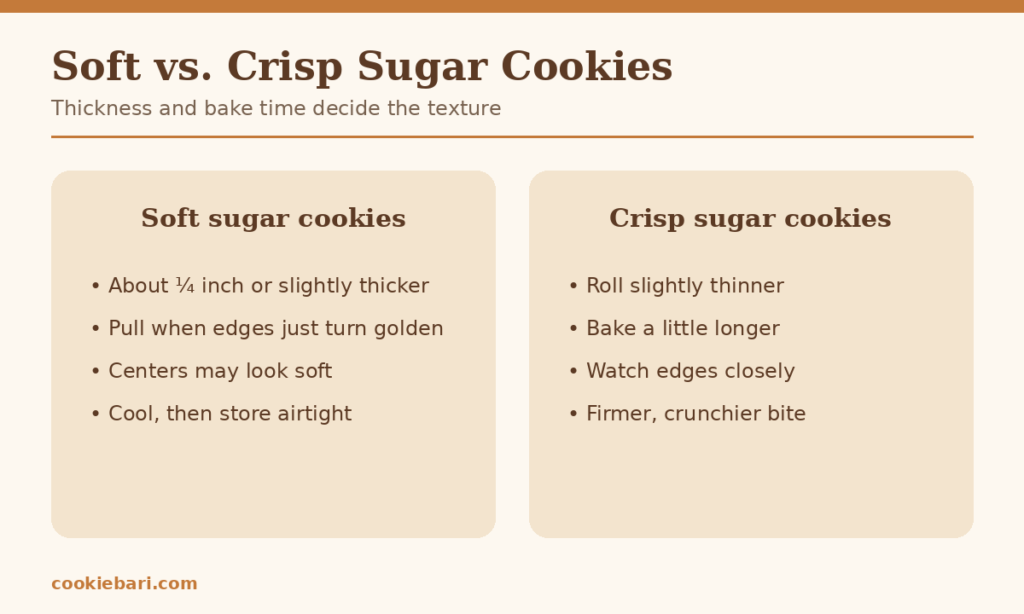
For Soft Sugar Cookies
Avoid overbaking. Remove the cookies as soon as the edges start turning lightly golden. The centers may still look soft but will keep setting as they cool. Slightly thicker cookies hold more moisture, which keeps the centers tender, and measuring the flour carefully prevents a dense, dry result. Store completely cooled cookies in an airtight container.
For Crisp Sugar Cookies
Roll the dough slightly thinner and bake a little longer. The extra time removes more moisture, giving a firmer, crunchier cookie. Watch the edges closely, because sugar cookies can go from lightly golden to overbaked quickly.
Decorating Homemade Sugar Cookies
For a quick finish, add colored sugar or sprinkles before baking. For more detailed decorations, let the cookies cool completely first.
Simple Powdered Sugar Icing
Mix powdered sugar with a small amount of milk or water and a little vanilla, adding the liquid gradually until the icing reaches the consistency you want. Thicker icing works well for outlining and piping, while thinner icing spreads more easily across the surface.
Royal Icing
For detailed designs with piped outlines and smooth centers, royal icing is a good choice. For holidays and special occasions, divide the icing into several bowls and tint each with gel food coloring.
Common Sugar Cookie Mistakes
- Melted butter: it makes the dough too soft and the cookies spread. Use softened butter.
- Too much flour: it’s one of the most common reasons sugar cookies turn dry. Weigh the flour, or spoon it into the cup and level the top rather than scooping from the bag. King Arthur Baking explains how to measure flour.
- Overmixing: extra mixing develops gluten and makes the cookies tough instead of tender.
- Skipping the chill when needed: you don’t always need to chill, but if the dough is too soft to roll or the cut-out shapes lose their edges, chilling makes a big difference.
- Overbaking: sugar cookies should stay fairly pale. Deeply brown edges mean they baked too long, especially if you want a soft texture.
How to Store Homemade Sugar Cookies
Let the cookies cool completely, then keep them in an airtight container at room temperature. If they’re decorated, put parchment between the layers so the icing doesn’t stick. Properly stored, they stay good for about 5–7 days. Keep the container away from heat and humidity, both of which affect texture and decorations.
Can Sugar Cookie Dough Be Frozen?
Yes. For cut-out cookies, shape the dough into a flat disk, wrap it tightly, and place it in a freezer-safe bag or container. Thaw it in the refrigerator before rolling and cutting. You can also freeze individual portions if you’d rather bake smaller amounts later.
Easy Sugar Cookie Variations
- Lemon: add a small amount of finely grated lemon zest for bright citrus flavor.
- Almond: replace part of the vanilla with almond extract, which pairs well with the buttery base.
- Cinnamon sugar: add ground cinnamon to the dough, or roll shaped cookies in cinnamon sugar before baking. For another cinnamon cookie, try our easy homemade snickerdoodle cookies.
- Chocolate-dipped: dip one side of cooled cookies in melted chocolate and let it set before serving.
- Holiday: use seasonal cutters and decorations for Christmas, birthdays, Valentine’s Day, Easter, or other celebrations.
- Old-fashioned: for a different classic style, try our Amish sugar cookie recipe. For a buttery, less sweet option, see our buttery shortbread cookies.
Frequently Asked Questions
Why are my sugar cookies spreading?
Usually the butter is too warm, the dough is too soft, or the flour was measured inaccurately. Chilling the dough helps it hold its shape.
Why are my sugar cookies hard?
Overbaking is a common cause, and too much flour can also make them dry and firm. Remove the cookies when the edges are just lightly golden.
Do I have to chill sugar cookie dough?
Not always, but chilling is especially useful for cut-out cookies because it makes the dough easier to handle and reduces spreading.
Can I make sugar cookies without a mixer?
Yes. A hand or stand mixer makes it easier, but you can mix the dough by hand with a sturdy spoon.
How thick should sugar cookies be?
About ¼ inch is a good starting point for cut-outs. Thinner cookies get crispier, while thicker ones keep softer centers.
Can I decorate sugar cookies before baking?
Yes, with colored sugar and sprinkles. For icing and detailed decorations, wait until the cookies have cooled completely.
Final Thoughts
These easy homemade sugar cookies show that you don’t need complicated ingredients or special equipment for a great batch. Use properly softened butter, measure the flour accurately, avoid overmixing, and watch the baking time. For soft cookies, keep them slightly thicker and don’t overbake. Thinner dough and a little extra time give a crispier result. Once you have the basic recipe down, the same dough turns into holiday shapes, decorated cookies, chocolate-dipped treats, or simple everyday cookies.