

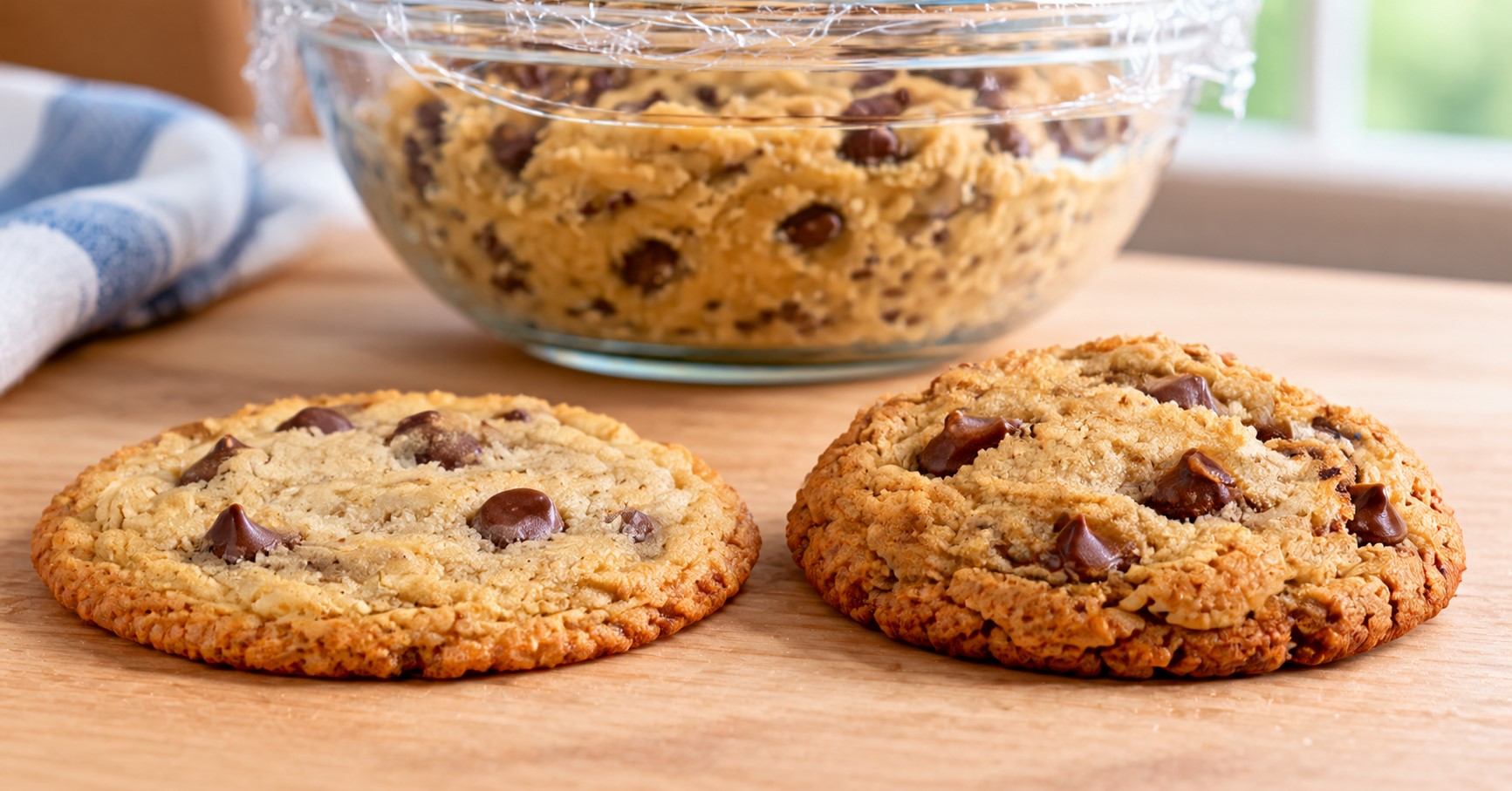
Chilling cookie dough is the step many bakers skip because the recipe feels long enough already. It is also one of the easiest ways to bake better cookies, because a rest in the fridge changes how the dough spreads, how it browns, and how the finished cookie tastes.
This guide explains whether chilling cookie dough really matters, what it does inside the dough, how long to chill it, and when you can skip it.
The Short Answer
- Yes, it matters for most drop cookies. Chilled dough spreads less and bakes up thicker.
- Even 30 minutes helps. You do not need to wait overnight.
- Longer rests add flavor. The cookies brown more and taste richer, though the changes get smaller over time.
Chilled vs Unchilled Dough: Side by Side
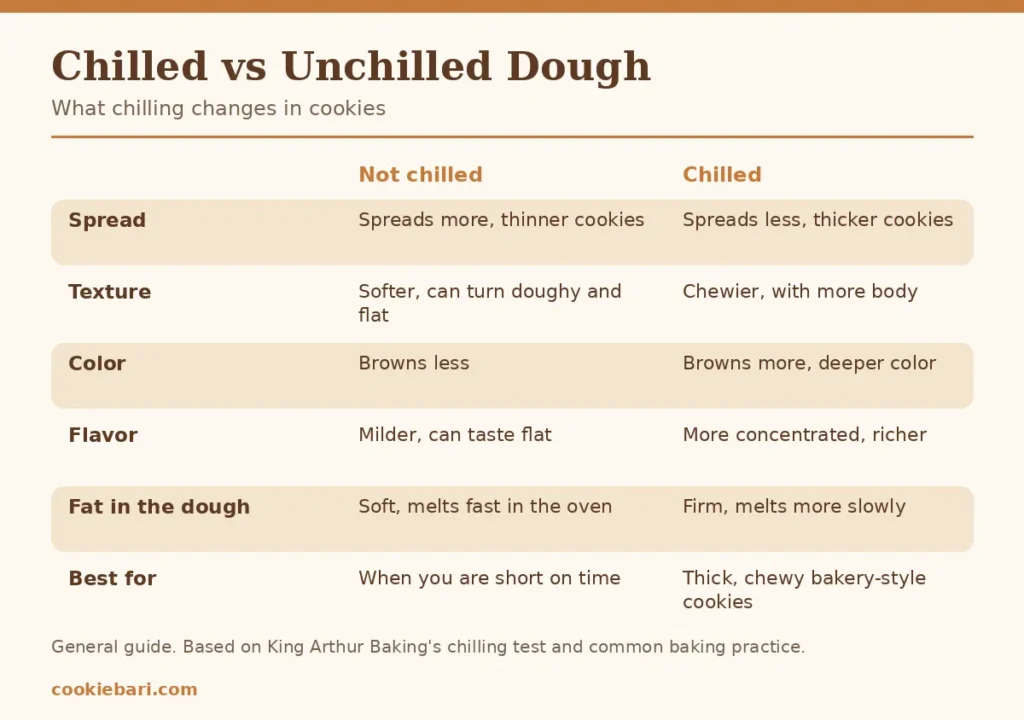
| Not chilled | Chilled | |
|---|---|---|
| Spread | Spreads more, thinner cookies | Spreads less, thicker cookies |
| Texture | Softer, can turn doughy and flat | Chewier, with more body |
| Color | Browns less | Browns more, with a deeper color |
| Flavor | Milder, can taste flat | More concentrated and rich |
What Chilling Does to the Dough
King Arthur Baking tested this by baking chocolate chip dough right away and then baking more batches over 10 days. Its findings, in the chilling cookie dough test, show that the benefits come from more than cold alone.
- Less spread. Solid fat takes longer to melt in the oven, so the cookie sets before it flattens. The resting dough also absorbs some of its free liquid, which cuts down on spread.
- Deeper flavor. As the dough rests, it dries slightly and the flavors concentrate. King Arthur also notes that some flour breaks down into sugars, which adds sweetness.
- More browning. Chilled cookies browned more than the cookies baked from fresh dough.
- Chewier texture. Fresh dough made soft, doughy cookies, while rested dough gave a chewier bite.
How Long Should You Chill Cookie Dough?
King Arthur found that just 30 minutes makes a big difference, and that longer chilling keeps changing the cookie, but in smaller steps. In its test, cookies baked after 10 days spread less, browned more, and tasted stronger.
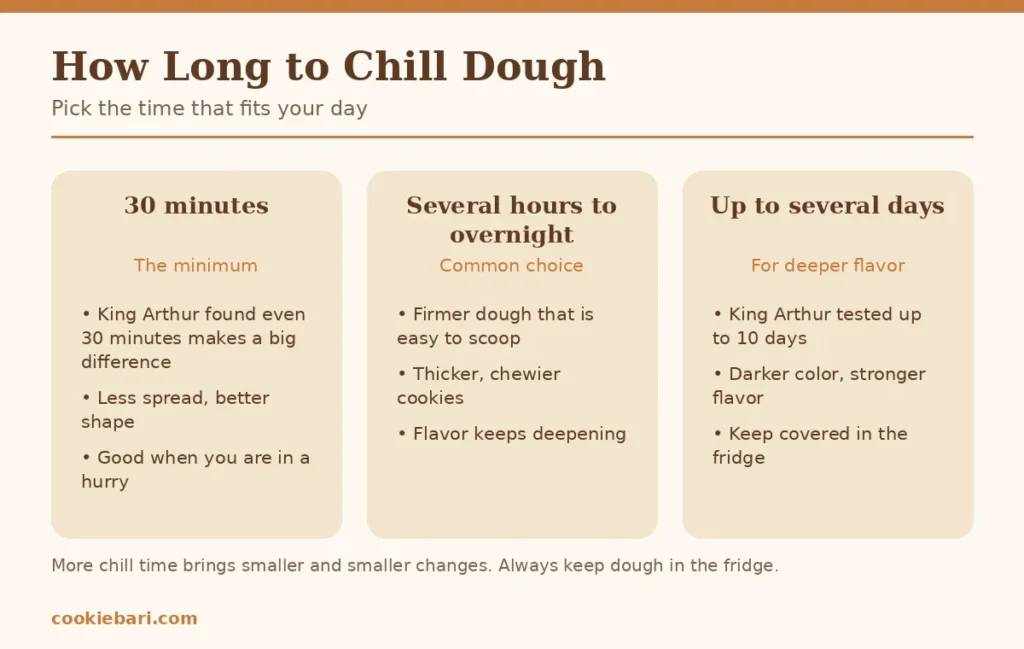
- 30 minutes: The minimum. Use it when you are short on time.
- Several hours to overnight: A practical choice for thick, chewy cookies, and easy to fit into a busy day.
- Up to several days: This gives the deepest flavor. Keep the dough covered in the fridge, and bake it within the time your recipe suggests.
The hours-to-overnight range is a common baking habit rather than a tested figure, so treat it as a starting point and adjust to your own recipe.
How to Chill Cookie Dough
- Mix the dough as your recipe says.
- Cover the bowl tightly with plastic wrap or a lid, so the dough does not pick up fridge odors.
- Refrigerate for at least 30 minutes.
- If the dough is very firm, let it sit at room temperature for a few minutes before scooping.
- Scoop onto a lined baking sheet and bake as directed.
You can also scoop the dough first and chill the balls on a tray. That makes baking quick, because the dough is already portioned.
When You Can Skip Chilling
- The recipe says not to chill. Some doughs are already firm or are written for no rest.
- You want a thin, crisp cookie. Unchilled dough spreads more, which suits crisp cookies.
- The dough is very stiff. Some shortbread doughs are cold and firm from the start.
If you skip chilling and your cookies spread too much, read why cookies spread too much for other causes and easy fixes.
Chilling Cookie Dough vs Freezing It
Chilling is a short rest in the fridge. Freezing is for storing dough for weeks. If you want to bake later, our guide on how to freeze cookie dough shows how to portion it and bake it from frozen.
Recipes That Benefit From Chilling
- Classic chocolate chip cookies
- Thick chocolate chip cookies
- Brown butter chocolate chip cookies
- Snickerdoodle cookies
Food Safety Note
Chilling does not make raw dough safe to eat. Raw flour and raw eggs can carry germs, so bake the dough before eating it. The FDA explains how to handle flour safely, and the CDC advises not to eat raw dough.
Frequently Asked Questions
Do you really need to chill cookie dough?
For most drop cookies, it is worth doing. Chilled dough spreads less, browns more, and tastes richer. A recipe that says not to chill is the exception.
How long should cookie dough chill before baking?
At least 30 minutes. King Arthur Baking found that this short rest makes a big difference, and that longer rests keep improving flavor and color in smaller steps.
Can you chill cookie dough too long?
Past a few days, the dough dries out and the gains are small. King Arthur tested up to 10 days, but follow your recipe, and freeze the dough if you need longer storage.
Why are my cookies flat even after chilling?
Other causes include warm butter, too little flour, or a hot baking sheet. Our guide on why cookies spread too much covers each one.
Do I need to chill sugar cookie dough?
King Arthur says its results apply to simple drop doughs such as sugar cookies and snickerdoodles. Cut-out dough is usually chilled so it rolls and holds its shape.
Can I bake cookies straight from the fridge?
Yes. Scoop firm dough while cold, or let it sit for a few minutes if it is too hard to scoop, then bake as directed.
Is chilling the same as freezing cookie dough?
No. Chilling is a short rest in the fridge before baking, while freezing is for long-term storage.
Final Thoughts
Chilling cookie dough takes very little effort and gives you thicker, chewier, better-tasting cookies. Start with 30 minutes, try an overnight rest when you can plan ahead, and compare a chilled batch with an unchilled one to see the difference in your own kitchen.