

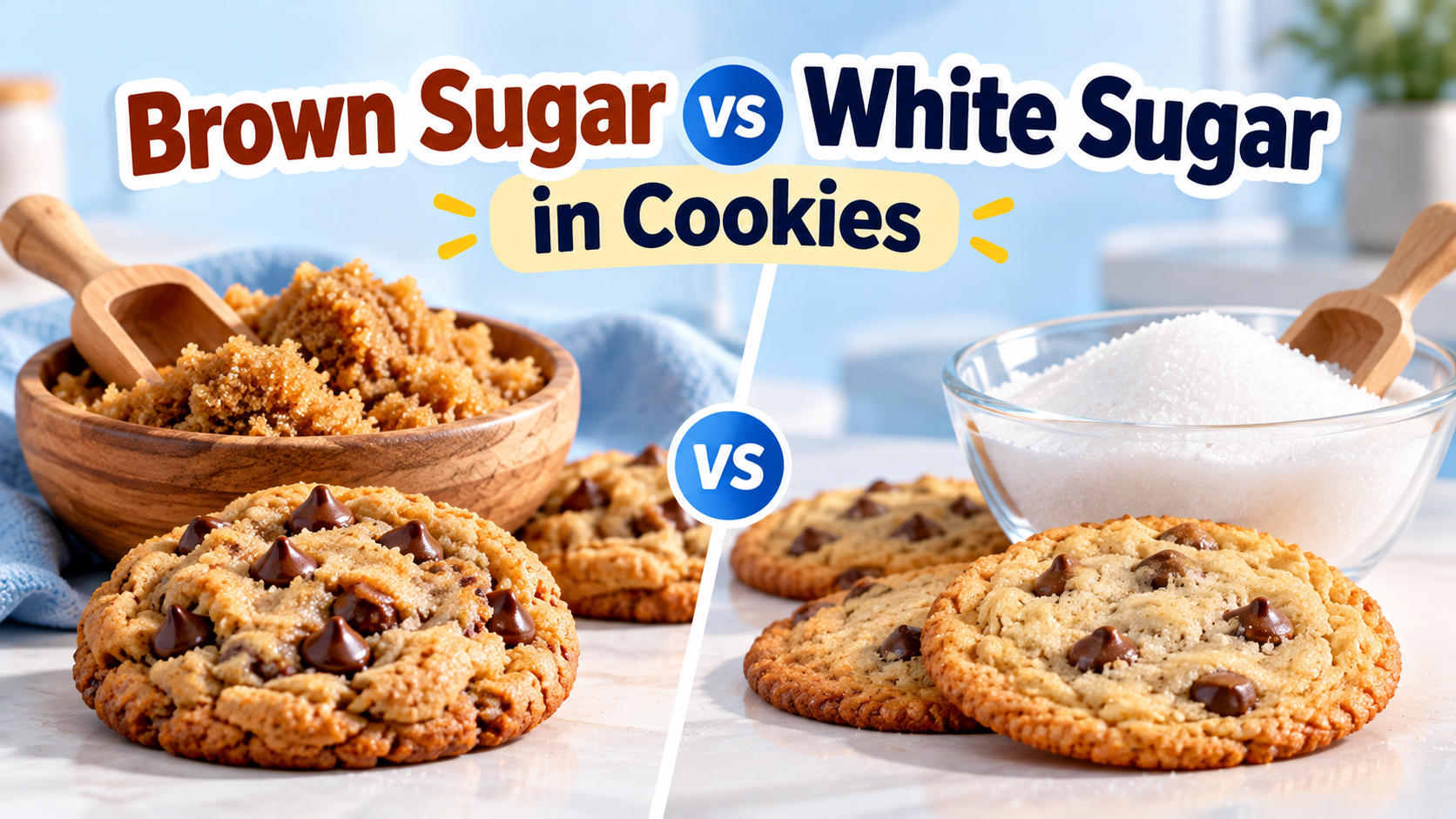
Brown sugar vs white sugar is a choice that quietly shapes every cookie you bake. Both are sweet, but they behave differently in dough, so the sugar you use changes the spread, the texture, the color, and even the flavor of the finished cookie.
This guide explains the difference between brown sugar vs white sugar in cookies, what each one does, how to substitute one for the other, and how to make brown sugar at home if you run out.
The Short Version
- White sugar gives cookies crisper edges, more spread, and a lighter color.
- Brown sugar gives cookies a softer, chewier texture and a deeper caramel flavor.
- Most classic cookies use both, because the mix gives soft centers and crisp edges.
Brown Sugar vs White Sugar: Side by Side
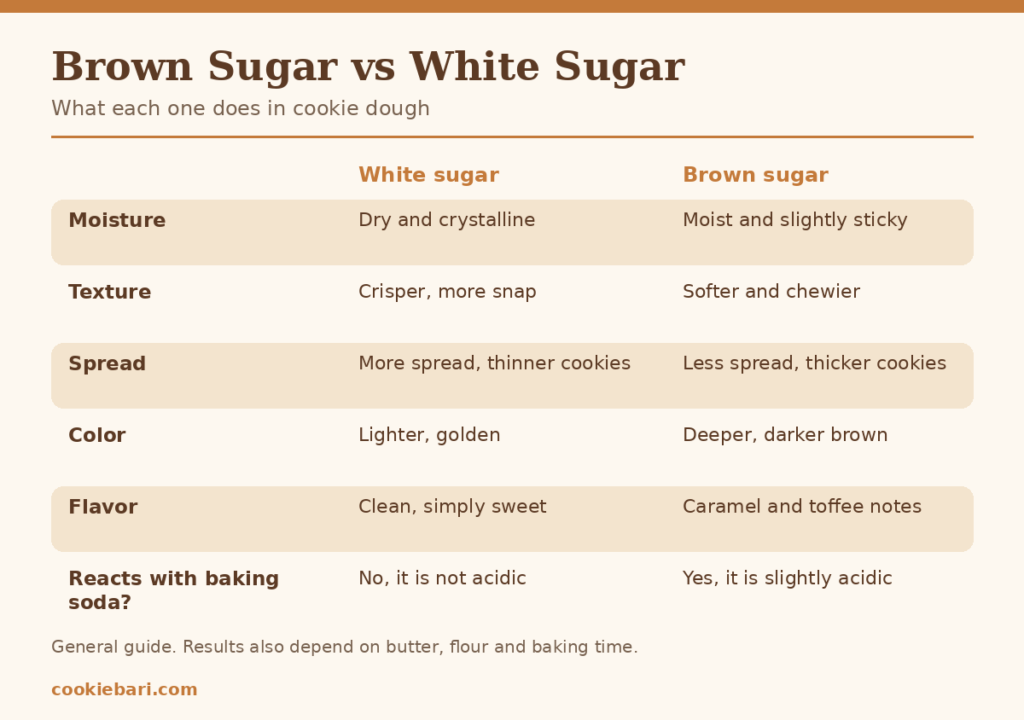
| White sugar | Brown sugar | |
|---|---|---|
| Moisture | Dry and crystalline | Moist and slightly sticky |
| Texture | Crisper, with more snap | Softer and chewier |
| Spread | More spread, thinner cookies | Less spread, thicker cookies |
| Color | Lighter, golden | Deeper, darker brown |
| Flavor | Clean and simply sweet | Caramel and toffee notes |
| Acidity | Not acidic | Slightly acidic, from the molasses |
What Is White Sugar?
White sugar, also called granulated sugar, is plain refined sugar with the molasses removed. It is dry and fine, and it dissolves and melts as the cookie bakes. As a result, the dough loosens and spreads, and the cookie sets with a thin, crisp edge.
White sugar also lets the butter and vanilla flavors come through, because it has no flavor of its own beyond sweetness.
What Is Brown Sugar?
Brown sugar is white sugar with molasses added. The molasses gives it moisture, a soft, damp texture, and a caramel flavor. Dark brown sugar contains more molasses than light brown sugar, so it tastes stronger and makes cookies a little deeper in color.
Because it holds more moisture, brown sugar helps cookies stay soft and chewy. It also tends to give a thicker cookie with less spread.
Why Brown Sugar and Baking Soda Work Together
Brown sugar is slightly acidic. Baking soda needs an acid to work, so cookies made with brown sugar and baking soda rise and brown well. This is one reason chocolate chip cookies, which use both, turn out so well.
If you switch all the brown sugar to white, the dough has less acid for the baking soda to react with. King Arthur Baking notes that swapping white sugar for brown can give unpredictable results, including a change in how the cookies spread.
How Each Sugar Changes the Cookie
- Texture: More white sugar gives crisp cookies. More brown sugar gives chewy cookies.
- Spread: White sugar encourages spread. Brown sugar helps cookies stay thicker.
- Color: Brown sugar gives a darker, richer color.
- Flavor: Brown sugar adds caramel and toffee notes. White sugar tastes cleaner.
- Shelf life: Cookies made with more brown sugar usually stay soft longer.
Most classic recipes combine the two for balance. Our classic chocolate chip cookies are a good example of how a mix of sugars gives crisp edges and a soft center.
Can You Substitute One for the Other?
You can, but the cookies will change. Keep these points in mind:
- White sugar instead of brown sugar: Expect crisper, thinner cookies with a lighter color and less caramel flavor.
- Brown sugar instead of white sugar: Expect softer, chewier, thicker cookies with a deeper flavor.
- Light vs dark brown sugar: You can usually swap them one for one. Dark brown sugar gives a stronger molasses taste.
To test a swap, change only part of the sugar at first, and bake a single cookie before baking the whole tray. When you are out of brown sugar completely, see our chocolate chip cookies without brown sugar, which are built for that situation.
How to Make Brown Sugar at Home
If you run out of brown sugar, you can make it from white sugar and molasses. King Arthur Baking gives these amounts for each cup of brown sugar needed:
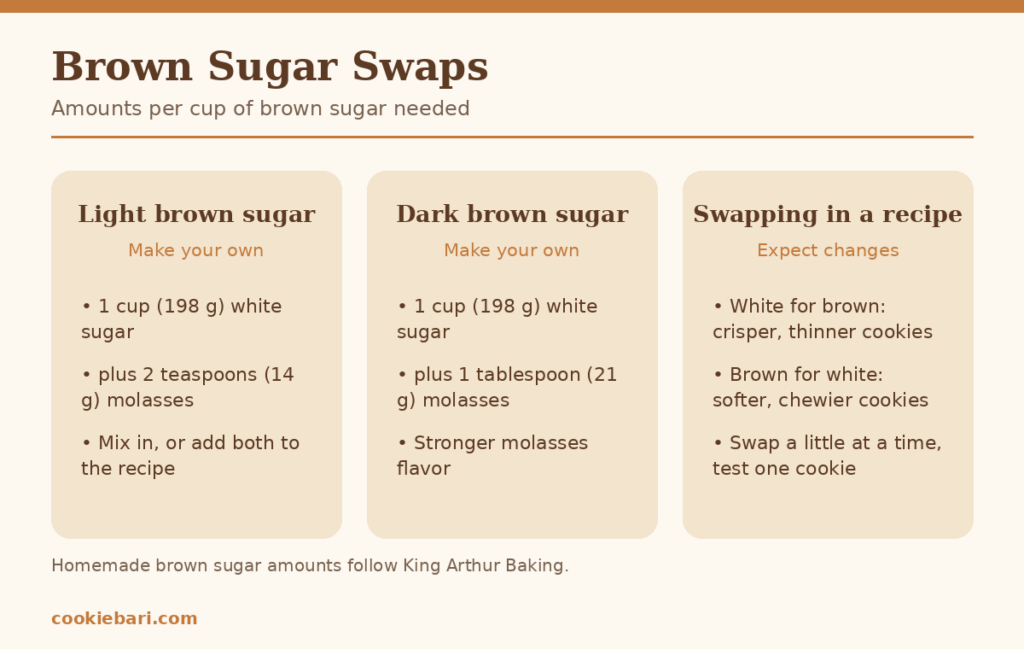
- Light brown sugar: 1 cup (198 g) white granulated sugar plus 2 teaspoons (14 g) molasses.
- Dark brown sugar: 1 cup (198 g) white granulated sugar plus 1 tablespoon (21 g) molasses.
You do not need to mix the molasses into the sugar first, since you can add both to the recipe together.
Measuring Brown Sugar
Most recipes call for brown sugar that is packed into the measuring cup. Press it down firmly until it holds the shape of the cup when you tip it out. A kitchen scale is more reliable, because it avoids differences in how tightly each person packs the sugar.
White sugar does not need packing. Spoon it into the cup and level it off.
How to Keep Brown Sugar Soft
Brown sugar hardens when its moisture escapes. To prevent it:
- Store it in an airtight container or a tightly sealed bag.
- Keep it in a cool, dry cupboard.
- Do not leave the bag open, even for a short time.
If it has already hardened, a common trick is to seal it in a container with a slice of bread or a damp paper towel for a day, which lets the sugar take the moisture back. This is a kitchen tip rather than a tested rule, so check the sugar after several hours.
Which Sugar Should You Use?
- Chewy, soft cookies: Use more brown sugar, such as in oatmeal and chocolate chip cookies.
- Crisp, snappy cookies: Use more white sugar, such as in sugar cookies and shortbread.
- Balance: Use both, and keep the recipe’s amounts.
For example, our soft and chewy oatmeal cookies lean on brown sugar for chew, while our easy homemade sugar cookies are built around white sugar.
If your cookies are spreading more than you like, read why cookies spread too much. To see how brown sugar works with leavening, read baking soda vs baking powder in cookies.
Frequently Asked Questions
What is the difference between brown sugar and white sugar in cookies?
White sugar makes cookies crisper and thinner, while brown sugar makes them softer, chewier, and thicker. Brown sugar also adds a caramel flavor.
Can I use all white sugar instead of brown sugar?
Yes, but expect crisper, flatter cookies with less caramel flavor, and the dough may behave a little differently with baking soda.
Can I use all brown sugar instead of white sugar?
Yes. The cookies will be softer, chewier, and darker. They may also spread less.
Is dark brown sugar better than light brown sugar for cookies?
It depends on your taste. Dark brown sugar has a stronger molasses flavor and a deeper color. Light brown sugar is milder.
How do I make brown sugar if I do not have any?
Mix 1 cup of white sugar with 2 teaspoons of molasses for light brown sugar, or 1 tablespoon for dark brown sugar.
Why are my cookies flat when I use more white sugar?
White sugar melts and loosens the dough as it bakes, which lets the cookie spread. Chilling the dough and measuring carefully can help.
Why does brown sugar make cookies chewy?
Brown sugar holds more moisture, because of its molasses. That moisture keeps the cookie soft and chewy.
Final Thoughts
The brown sugar vs white sugar question comes down to texture. White sugar gives crisp, thin cookies, and brown sugar gives soft, chewy ones with a deeper flavor. Most recipes mix the two for balance, so follow the recipe the first time, then adjust the ratio to match the cookie you like best.