

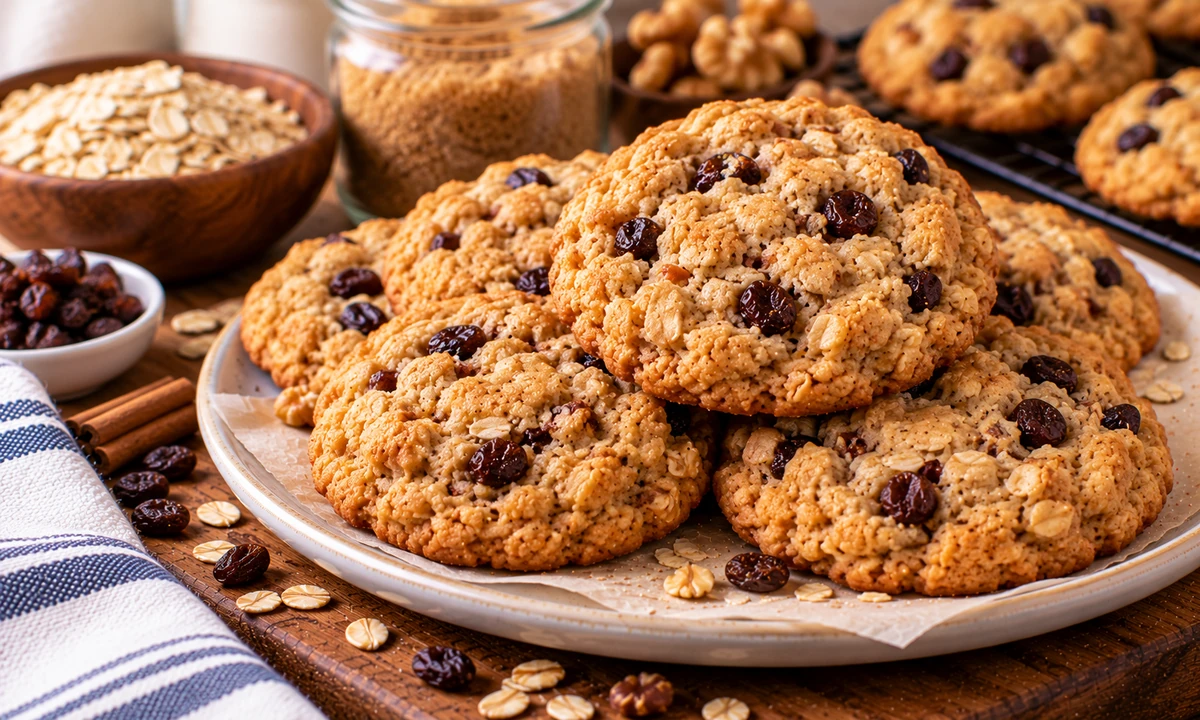
This soft and chewy oatmeal cookie recipe makes tender cookies with lightly golden edges, soft centers, buttery flavor, and plenty of old-fashioned rolled oats. Brown sugar keeps them moist and chewy, and cinnamon adds a warm, classic flavor.
The cookies are easy to customize with raisins, chocolate chips, nuts, dried cranberries, or coconut, and the dough uses simple pantry ingredients, so it suits beginners and experienced bakers alike.
The key to soft oatmeal cookies is simple: measure the flour carefully, use softened butter, and take the cookies out of the oven while the centers still look slightly underdone. They keep setting on the hot baking sheet as they cool.
Recipe at a Glance
- Yield: about 24 medium cookies
- Chill time: optional, about 30 minutes
- Bake time: 10–12 minutes at 350°F (175°C)
- Rest time: 5 minutes on the baking sheet
What Makes This Oatmeal Cookie Recipe Work?
A few ingredients and techniques make the biggest difference to the texture:
- Brown sugar keeps the cookies moist and chewy because it contains molasses. The smaller amount of granulated sugar adds sweetness and helps the edges turn golden.
- Softened butter adds richness and a tender texture. It should be soft enough to cream with the sugars but not melted.
- Old-fashioned rolled oats give the classic oatmeal-cookie texture. They stay noticeable after baking and add a satisfying chew.
- Baking time matters. Overbaking is one of the easiest ways to turn a chewy oatmeal cookie dry.
Ingredients
This recipe makes about 24 medium cookies.
- 1 cup (226 g) unsalted butter, softened
- 1 cup (200 g) packed brown sugar
- ½ cup (100 g) granulated sugar
- 2 large eggs, at room temperature
- 2 teaspoons vanilla extract
- 1½ cups (190 g) all-purpose flour
- 1 teaspoon baking soda
- ½ teaspoon salt
- 1 teaspoon ground cinnamon
- 3 cups (240 g) old-fashioned rolled oats
- 1 cup raisins (optional)
- ½ cup chopped walnuts or pecans (optional)
Ingredient Notes
Butter: Use softened, not melted, butter. Melted butter makes the dough spread too much.
Oats: Old-fashioned rolled oats give the best chew. Quick oats can work, but the cookies will have a softer, less distinct oat texture.
Gluten-free: If you need gluten-free cookies, choose oats labeled certified gluten-free, since regular oats can be processed on shared equipment with wheat.
Mix-ins: Raisins and nuts are optional. You can swap the raisins for chocolate chips or chopped chocolate.
How to Make Soft and Chewy Oatmeal Cookies
1. Prepare the Oven and Baking Sheets
Heat the oven to 350°F (175°C) and line baking sheets with parchment paper. If you’re baking several batches, let the sheet cool before adding more dough, because a hot sheet melts the butter too quickly and causes excess spreading.
2. Cream the Butter and Sugars
In a large bowl, beat the softened butter, brown sugar, and granulated sugar until smooth and creamy. Properly softened butter gives you better control over the cookies’ shape and texture.
3. Mix in the Eggs and Vanilla
Beat in the eggs one at a time, mixing well after each. Stir in the vanilla and scrape down the bowl so everything is evenly combined.
4. Mix the Dry Ingredients
In a separate bowl, whisk together the flour, baking soda, salt, and cinnamon. This spreads the baking soda and other dry ingredients evenly through the flour.
5. Combine the Wet and Dry Ingredients
Gradually stir the dry ingredients into the butter mixture, just until the flour is incorporated. Too much mixing can make the cookies tougher.
6. Fold in the Oats and Mix-Ins
Fold in the rolled oats, plus raisins, nuts, chocolate chips, or other mix-ins if you’re using them. Mix just until everything is evenly distributed. The dough should be thick and slightly sticky.
Should You Chill Oatmeal Cookie Dough?
Chilling is optional but helpful if the dough feels very soft. About 30 minutes in the refrigerator firms the butter and gives the oats more time to absorb moisture. Chilled dough generally spreads less, so the cookies come out thicker. If the dough is already easy to scoop and holds its shape, you can bake it right away.
How to Shape the Cookies
Use a cookie scoop or large spoon to portion the dough into balls of about 3 tablespoons (roughly 45 g) each, placed about 2 inches apart on the baking sheet. Don’t flatten them. Rounded portions spread naturally and help the centers stay soft. Keep the sizes similar, because smaller cookies finish baking sooner than larger ones.
How Long to Bake Oatmeal Cookies
Bake for about 10 to 12 minutes. Look for lightly golden edges, soft-looking centers, and a slightly underdone appearance in the middle. Don’t wait for the centers to look completely set, because the cookies finish cooking from the heat of the baking sheet. For slightly crispier cookies, bake another minute or two.
Let the cookies rest on the baking sheet for about 5 minutes, then move them to a wire rack to finish cooling.
Best Oats for Chewy Oatmeal Cookies
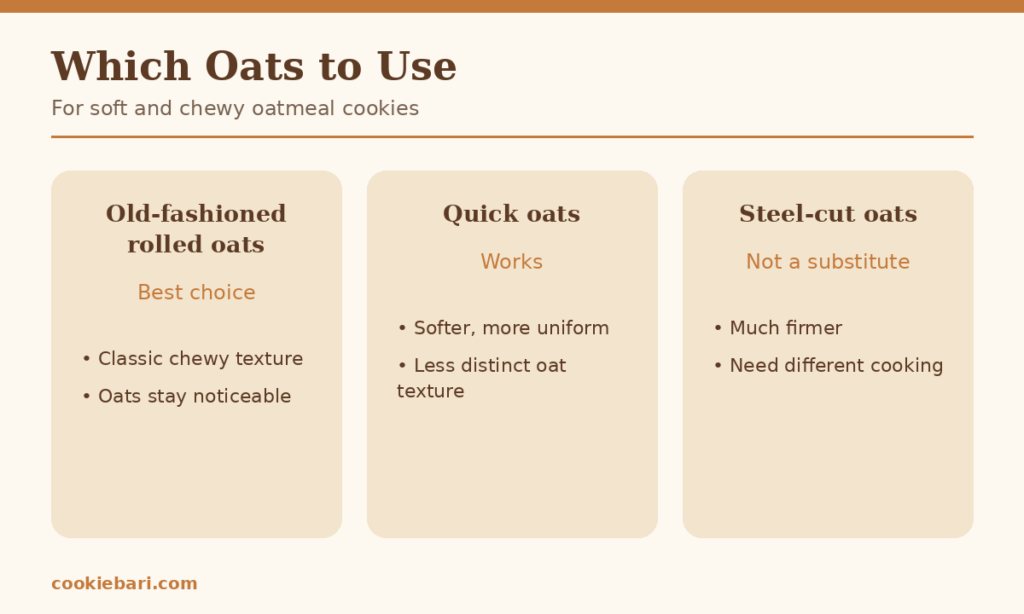
Old-fashioned rolled oats are the best choice here. They give the classic texture and stay pleasantly chewy after baking. Quick oats also work, but they’re thinner and smaller, so the cookies come out softer and more uniform.
Steel-cut oats aren’t a direct substitute. They’re much firmer and need a different cooking process, so they won’t give the expected texture in this recipe.
Oatmeal Cookie Variations
- Oatmeal raisin: keep the classic raisins, brown sugar, and cinnamon. For extra-plump raisins, soak them briefly in warm water, then drain and dry them thoroughly. For a recipe built around this combination, try our easy oatmeal raisin cookies.
- Chocolate chip: swap the raisins for semisweet chips or chopped chocolate, or use chocolate with nuts.
- Coconut: stir in unsweetened shredded coconut for extra texture and a subtle coconut flavor.
- Nuts: walnuts and pecans both work. Toasting them lightly first gives a deeper nutty flavor.
- Cranberry: use dried cranberries instead of raisins for a slightly tart contrast.
- Peanut butter oatmeal: for a peanut butter version, see our classic peanut butter cookies.
Common Oatmeal Cookie Mistakes
- Too much flour: it makes oatmeal cookies dry and dense. Weigh the flour, or spoon it into the cup and level it rather than scooping from the bag. King Arthur Baking explains how to measure flour in detail.
- Overbaking: it’s one of the most common reasons oatmeal cookies lose their softness. Remove them when the edges are lightly golden and the centers still look soft.
- Melted butter: it makes the cookies spread and turn thin. Use butter that’s softened but still holds its shape.
- Overmixing: once the flour goes in, mix only until combined.
- The wrong oats: steel-cut oats aren’t a one-for-one replacement for rolled oats.
How to Keep Oatmeal Cookies Soft
Let the cookies cool completely, then keep them in an airtight container. A tight seal prevents moisture loss and keeps them softer for longer. Place parchment between layers if you stack them. For the best texture, store them at room temperature rather than in the refrigerator.
Can You Freeze Oatmeal Cookies?
Yes, both baked cookies and unbaked dough freeze well.
To Freeze Baked Cookies
Cool them completely, place them in an airtight freezer-safe container with parchment between layers, and freeze until needed.
To Freeze Cookie Dough
Portion the dough into balls on a tray, freeze until firm, then move them to a freezer-safe bag or container. You can usually bake the frozen dough directly from the freezer. Allow a few extra minutes and check for lightly golden edges and soft centers.
Food safety: The dough contains raw eggs and flour, so don’t eat it raw. The FDA explains the risks of raw flour, and the CDC explains why you shouldn’t eat raw dough.
Tips for the Best Soft and Chewy Oatmeal Cookies
- Use softened butter, not melted.
- Weigh the flour for the most accurate measurement.
- Use old-fashioned rolled oats for the best chew.
- Don’t overmix after the flour goes in.
- Chill the dough if it feels too soft.
- Keep the portions evenly sized and leave about 2 inches between them.
- Take the cookies out when the edges are golden and the centers are still soft.
- Let them rest on the baking sheet for about 5 minutes, then store them in an airtight container once cool.
Frequently Asked Questions
Why are my oatmeal cookies not chewy?
The most common causes are too much flour and overbaking. Measure the flour carefully and take the cookies out while the centers still look slightly soft.
Can I use quick oats instead of rolled oats?
Yes, but the cookies will have a softer, less textured bite. Old-fashioned rolled oats are the better choice for a classic chewy cookie.
Do oatmeal cookies need to be refrigerated?
No. Store baked oatmeal cookies in an airtight container at room temperature. Refrigeration can make them firmer than you’d like.
Can I leave out the raisins?
Yes. Replace them with chocolate chips, nuts, or dried cranberries, or simply omit them.
Why did my oatmeal cookies spread too much?
Melted or very warm butter, overly soft dough, or a hot baking sheet are the usual causes. Chilling the dough can help.
How do I make thicker oatmeal cookies?
Chill the dough for about 30 minutes, keep the portions rounded, and make sure the butter isn’t melted.
Are oatmeal cookies gluten-free?
Not automatically. Oats are naturally gluten-free, but regular oats can come into contact with wheat during processing. For gluten-free cookies, use oats labeled certified gluten-free, and check the other ingredients too. This recipe also contains wheat flour, so it needs a gluten-free flour substitute to be gluten-free.
Serving Suggestions
Serve these cookies slightly warm with milk, coffee, or tea, or with a scoop of vanilla ice cream for dessert. They’re easy to include on a cookie platter for gatherings, parties, and school events. If you’re giving them as a gift, let them cool completely before sealing them in a container or bag, so trapped heat and moisture don’t change the texture.
Final Thoughts
This oatmeal cookie recipe relies on a few simple details: accurate flour measurement, softened butter, old-fashioned rolled oats, gentle mixing, and the right baking time. Brown sugar provides moisture and chew, butter adds richness, and the oats give the familiar texture. Most importantly, take the cookies out before the centers look completely baked. Once the base is familiar, you can customize it with raisins, chocolate chips, nuts, cranberries, or coconut.