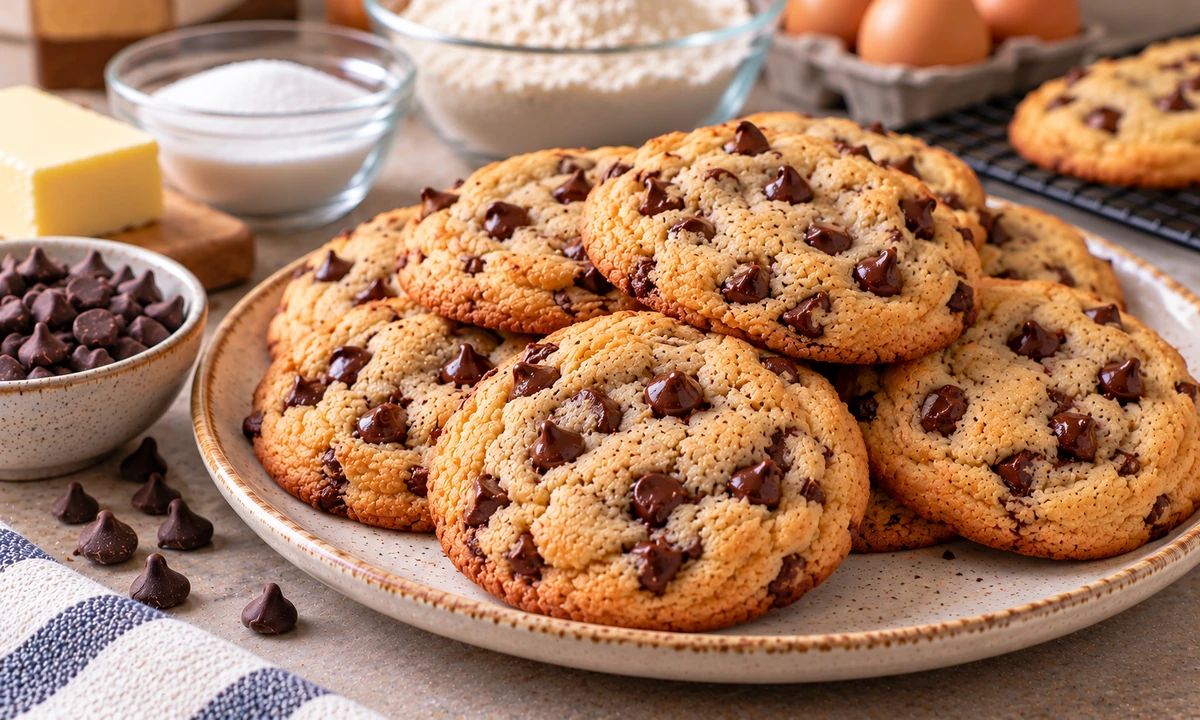
Last week, mid-bake, I realized I was completely out of brown sugar. My chocolate chip cookie cravings weren’t going to wait for a grocery run, so I decided to experiment with just white sugar instead. What came out of the oven surprised me – cookies with crisp, golden edges and soft, chewy centers, and honestly, just as delicious as my usual batch.
If you’ve ever found yourself in the same situation – no brown sugar in the pantry but a serious cookie craving – this recipe is for you. Below, I’m sharing my exact method for making chocolate chip cookies without brown sugar, along with the measurements, substitutions, troubleshooting tips, and a few shortcuts I’ve picked up over dozens of batches. If you’re also avoiding other common ingredients, you might enjoy browsing our cookies without milk guide too – it follows a similar “swap it out, don’t skip the cookie” philosophy.
Recipe Info:
- Prep Time: 10 minutes
- Cook Time: 10–12 minutes
- Total Time: 25 minutes
- Yield: 18–20 cookies
- Category: Dessert
- Cuisine: American
My Story – Why I Started Baking Without Brown Sugar
I’ve been baking cookies for years, and brown sugar was always non-negotiable in my recipe – until that one evening when I simply didn’t have any. Rather than postpone my baking plans, I swapped it out entirely for white sugar and added a touch of extra vanilla to compensate for the flavor.
The result wasn’t just a decent backup – it became a recipe I now use intentionally, even when brown sugar is sitting right there in my pantry. The cookies came out lighter in color, slightly crispier at the edges, and just as satisfying with that classic buttery, chocolatey bite. It taught me that brown sugar isn’t the only path to a great cookie – it’s just one option.
What really sold me, though, was the second time I made them. I’d assumed the first batch was a fluke – maybe I got lucky with oven timing. So a few days later, I baked another batch, this time paying closer attention to dough temperature and bake time. Same result: crisp edges, soft middles, no complaints from anyone who tried them (and my nephew, who’s usually my harshest critic, asked for the recipe). That’s when this stopped being a “backup plan” and became a recipe I keep in regular rotation.
I’ve also learned a few things the hard way. My first attempt at doubling the recipe for a bake sale went slightly wrong – I didn’t account for how much longer the dough needed to rest when the batch size increased, and the cookies spread more than I wanted. Lesson learned: when scaling up, give the dough extra chilling time, not just extra ingredients.
Why Skip Brown Sugar? (The Science, Explained)

Brown sugar contains molasses, which adds moisture and a deeper, caramel-like flavor to baked goods. White sugar, on the other hand, is drier and more neutral in taste. According to King Arthur Baking’s cookie science research, sugar does far more than sweeten dough – it caramelizes during baking, drives the Maillard reaction (the chemical process responsible for browning and complex flavor), and directly affects how much a cookie spreads in the oven.
The Science Behind It
- Moisture retention: Molasses in brown sugar is hygroscopic, meaning it attracts and holds onto water. Without it, dough has slightly less moisture to work with, which is part of why brown-sugar-free cookies firm up a little faster.
- Acidity: Brown sugar is mildly acidic due to the molasses content. This acidity reacts with baking soda to help cookies rise and spread. Without brown sugar, that reaction is slightly reduced, which is one reason these cookies spread a touch more evenly rather than puffing up as much.
- Caramelization point: White sugar caramelizes at a slightly higher temperature than the sugars in molasses, which is part of why brown-sugar cookies brown faster and develop deeper color even at the same bake time.
- Recrystallization on cooling: As sugar cools after baking, it recrystallizes and firms up, which is actually what gives cookies their eventual crisp texture (they’re not crisp straight out of the oven – that happens as they cool).
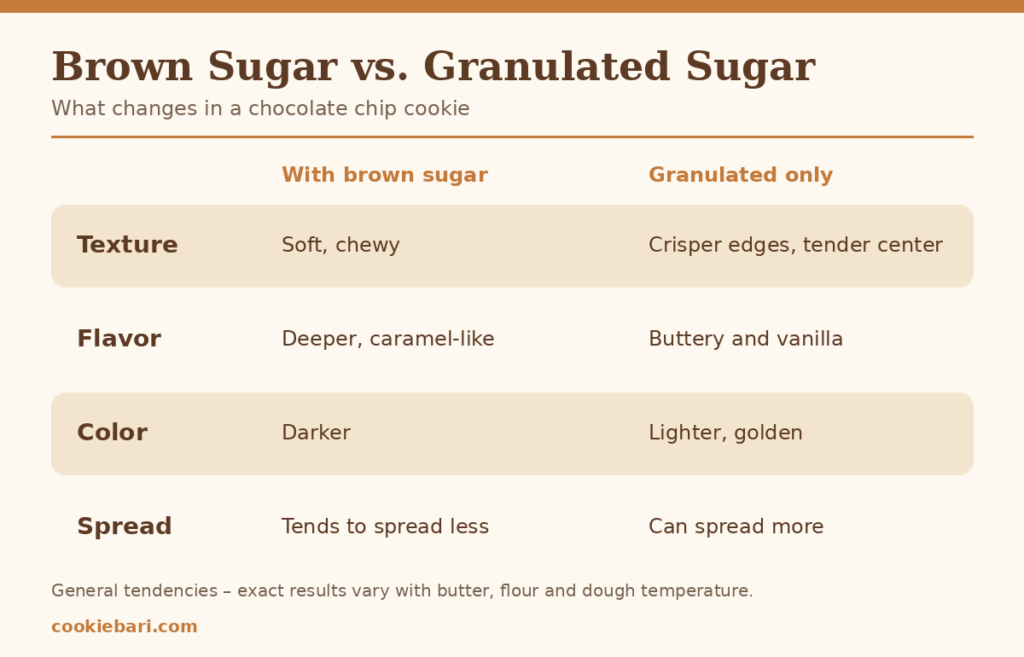
What Changes When You Leave Brown Sugar Out
- Texture: Cookies turn out slightly crispier around the edges instead of dense and chewy throughout
- Flavor: You get a lighter, more buttery-vanilla taste instead of a caramel undertone
- Color: The cookies bake up a bit paler since molasses darkens dough
- Spread: Dough tends to spread a touch more evenly, giving you a classic, flatter cookie shape
None of these changes are bad – they just create a different (and equally delicious) style of cookie. If you actually prefer a crispier bite on purpose, our crispy chocolate cookie recipe leans fully into that texture.
Chocolate Chip Cookies Without Brown Sugar vs. Regular Chocolate Chip Cookies
It’s worth knowing exactly how this version compares to a traditional recipe before you bake, so you know what to expect:
| Factor | With Brown Sugar | Without Brown Sugar |
|---|---|---|
| Texture | Soft, dense, chewy | Slightly crisp edges, tender center |
| Flavor | Caramel, toffee-like | Light, buttery, vanilla-forward |
| Color | Darker golden-brown | Pale golden |
| Spread | Less spread, puffier | Slightly more spread, flatter |
| Shelf softness | Stays soft longer | Softens with proper storage tricks |
Neither version is “better” – it really comes down to personal preference and what you have on hand.
Ingredients You’ll Need (With Exact Measurements)

Here’s everything you need for a batch of soft, chewy cookies – no brown sugar required.
| Ingredient | US Measurement | Metric (UK/AU) | Notes |
|---|---|---|---|
| Unsalted butter, softened | 1 cup (2 sticks) | 226g | Room temperature is key for creaming |
| White granulated sugar | 1 cup | 200g | Replaces brown sugar entirely |
| Eggs | 2 large | 2 large | Room temperature works best |
| Vanilla extract | 2 tsp | 10ml | Extra vanilla helps replace brown sugar’s depth |
| All-purpose flour | 2¾ cups | 345g | Spoon and level, don’t scoop directly |
| Baking soda | 1 tsp | 5g | See substitute section below if omitting |
| Salt | ½ tsp | 3g | Balances sweetness |
| Chocolate chips | 2 cups | 340g | Semi-sweet or milk chocolate, your choice |
Full Ingredient Substitution Guide
One thing I get asked constantly is what to do when more than one ingredient is missing. Here’s a rundown of every major substitution I’ve personally tested:
Butter substitutes:
- Shortening: Use in a 1:1 ratio. Produces a softer, more tender cookie with less spread. Our Crisco cookie recipe covers this swap in more detail.
- Margarine: 1:1 swap, but expect a slightly greasier texture and less flavor depth.
- Coconut oil: Use in a 1:1 ratio (solid, not melted). Adds a very faint coconut flavor and slightly crisper edges.
Egg substitutes:
- Flax egg: 1 tablespoon ground flaxseed + 3 tablespoons water per egg, rested for 5 minutes. Works well but yields a slightly denser cookie.
- Applesauce: ¼ cup per egg. Adds moisture but makes cookies more cake-like.
- Commercial egg replacer: Follow the package ratio; results are closest to a real egg in texture.
Flour substitutes:
- Self-rising flour: Skip the baking soda and salt if using this, since it’s already included.
- Gluten-free 1:1 baking blend: Works in most cases, though cookies may spread slightly less and feel a touch more crumbly.
Chocolate chip substitutes:
- Chopped chocolate bars: Gives you irregular melty pockets instead of uniform chips – many bakers (myself included) actually prefer this.
- Cocoa nibs or chunks: Less sweet, more intense chocolate flavor if that’s your preference.
Sugar substitutes (beyond white sugar):
- Coconut sugar: 1:1 swap, adds a light caramel note similar to brown sugar, though not identical.
- Honey or maple syrup: Use ¾ cup per 1 cup sugar, and reduce another liquid ingredient slightly to compensate, since these are liquid sweeteners.
Step-by-Step Method

Creaming Butter & Sugar
Beat the softened butter and white sugar together until light and fluffy, about 2–3 minutes. This step traps air into the dough, which helps your cookies stay soft rather than dense.
Mixing Dry Ingredients
In a separate bowl, whisk together the flour, baking soda, and salt. Add this dry mixture into the butter-sugar mix gradually, stirring just until combined – overmixing at this stage leads to tougher cookies.
Folding in Chocolate Chips
Gently fold in the chocolate chips using a spatula. I always save a small handful to press on top of the dough balls before baking – it makes the cookies look bakery-style once done.
Baking Time & Temperature

Preheat your oven to 350°F (175°C). Scoop rounded tablespoons of dough onto a lined baking sheet, spacing them about 2 inches apart. Bake for 10–12 minutes, until the edges turn golden but the centers still look slightly underdone.
My personal tip: I let the dough rest in the fridge for 10–15 minutes before baking. It firms up the butter slightly, which helps prevent the cookies from spreading too thin. I learned this after a batch spread into one giant cookie sheet-sized blob because I skipped the resting step on a hot summer day – never again.
Quick 3-Ingredient Version (For Busy Days)
Some days, you just need cookies fast. For a stripped-down version, you only need:
- 1 cup white sugar
- 1 cup softened butter
- 2 cups self-rising flour (skip the baking soda and salt separately)
- Fold in chocolate chips to taste
Mix everything together, scoop, and bake the same way as above. It won’t have the exact same rise or structure as the full recipe, but it’s perfect when you’re short on pantry staples or time. If shortcut baking is your thing, you’ll probably also like our pancake mix cookie recipe – another quick fix that uses ingredients you likely already have.
5 Ingredient Chocolate Chip Cookies Without Brown Sugar (Upgraded Version)
If you want a slightly more refined version without going full-recipe, this 5 ingredient chocolate chip cookies without brown sugar method adds just one egg and a splash of vanilla extract to the 3-ingredient version above. This small addition improves the chew and gives the cookies a more rounded flavor, closer to a classic bakery cookie.
This version works well when you want something a little more special – like for a weekend treat – without committing to a longer ingredient list. For another soft, simplified take on chocolate chip cookies, our soft and chewy dairy-free chocolate chip cookies is worth trying too, especially if you’re also cutting dairy from your baking.
How to Keep Them Soft (Without Brown Sugar)

Since brown sugar naturally adds moisture, here’s how I keep my cookies soft without it:
- Don’t overbake – pull them out when the centers still look slightly soft; they’ll continue cooking on the tray
- Use room-temperature butter, not melted – this affects how the dough spreads and sets
- Rest the dough for at least 10 minutes before baking to control spread
- Store with a slice of bread in the container – it helps retain moisture over the next few days
- Slightly underfill your flour measurement – a heaping cup of flour dries dough out faster than a leveled one
Baking Without Baking Soda Too?
If you’re out of baking soda as well, you can substitute it with baking powder – but the ratio changes. Use 3 teaspoons of baking powder for every 1 teaspoon of baking soda called for.
Keep in mind, baking powder produces a slightly different rise and can make the cookies a touch more cake-like rather than chewy. If texture is a priority, baking soda is still the better option when available.
Troubleshooting: Why Your Cookies Might Not Be Turning Out Right

I’ve made just about every mistake possible with this recipe over the years, so here’s a detailed breakdown of what usually goes wrong and how to fix it:
Cookies Are Spreading Too Thin and Flat
- Your butter was likely too warm or fully melted rather than just softened
- Skipping the dough-chilling step is a common culprit here
- A baking sheet still warm from the previous batch can cause this too – always let it cool between rounds
Cookies Are Coming Out Too Puffy or Cake-Like
- Packing flour into the measuring cup adds more than the recipe intends – spoon and level instead of scooping directly
- Swapping in baking powder without adjusting the ratio changes the rise significantly
- Overbeating the butter incorporates too much air, which can also lead to this texture
Cookies Taste Bland or One-Dimensional
- This is common without brown sugar’s molasses depth – an extra pinch of salt or a bit more vanilla extract helps
- Relying on chocolate chips as the only flavor variation can feel one-note – try mixing chip sizes or adding a pinch of espresso powder for depth without coffee flavor
Cookies Are Dry or Crumbly
- Overbaking is the most common cause – pull cookies out when centers still look slightly underdone
- Double-check your flour measurement, since too much relative to butter dries dough out quickly
- Storing cookies uncovered speeds up moisture loss, especially since there’s no molasses here to help retain it
Chocolate Chips Are Burning on Top
- An oven rack positioned too close to the top heating element is usually to blame – bake on the middle rack instead
- Pressing chips too deep into the dough surface before baking can also cause this
Cookies Are Sticking to the Baking Sheet
- Skipping parchment paper or a silicone mat is the most common reason
- Removing cookies from the tray too soon doesn’t give them time to firm up – let them sit for 2–3 minutes first
Dough Is Too Sticky to Handle
- Warm butter mixed into the dough is often the root cause – chill it for 15–20 minutes before scooping
- Humidity in your kitchen can affect how much moisture the flour absorbs – an extra tablespoon of flour usually solves it
How to Store & Reheat Your Cookies
- Room temperature: Store in an airtight container for up to 5 days
- Freezing baked cookies: Place in a freezer-safe bag for up to 3 months; thaw at room temperature before eating
- Freezing cookie dough: Scoop dough balls onto a tray, freeze until solid, then transfer to a bag – bake straight from frozen, adding 1–2 extra minutes to the bake time. If you bake a lot of dough in advance, our dairy-free cookie dough post has more freezing tips that apply here too
- Reheating: A few seconds in the microwave brings back that fresh-baked softness instantly. King Arthur Baking’s notes on how sugar affects moisture retention explain why lower-sugar or brown-sugar-free cookies tend to dry out a bit faster – which is exactly why proper storage matters more here than in a standard recipe
Nutrition Info (Per Cookie, Approx.)
| Nutrient | Amount |
|---|---|
| Calories | 145 kcal |
| Total Fat | 7g |
| Sugar | 11g |
| Carbohydrates | 19g |
| Protein | 1.5g |
Values are estimates and may vary based on exact ingredients and portion size.
FAQs
General Questions
Can I make chocolate chip cookies without brown sugar? Yes, white sugar works as a full substitute. The cookies will be slightly crispier at the edges with a lighter flavor, but just as delicious.
Will the taste or texture change? The texture becomes a bit crispier rather than deeply chewy, and the flavor is lighter without molasses’ caramel notes. Adding extra vanilla helps balance this out.
Can I make it with just 3 ingredients? Yes – butter, white sugar, and self-rising flour (plus chocolate chips) create a simplified version that works well in a pinch.
What’s the best 5 ingredient chocolate chip cookies without brown sugar recipe? Butter, white sugar, egg, vanilla, and self-rising flour (plus chocolate chips) make a simple five-ingredient version that’s chewier than the 3-ingredient shortcut.
How do I keep them soft? Avoid overbaking, use room-temperature butter, rest the dough before baking, and store with a slice of bread to retain moisture.
How long do these cookies stay fresh? Up to 5 days at room temperature in an airtight container, or up to 3 months in the freezer.
Do I need to chill the dough before baking? It’s not strictly required, but resting the dough for 10–15 minutes helps control spread and gives you a thicker, more evenly baked cookie.
Ingredient & Substitution Questions
Can I skip baking soda too? Yes, substitute with baking powder at a 3:1 ratio. The rise will be slightly different, leaning more cake-like than chewy.
Can I add brown sugar back later if I get some? Yes – this recipe isn’t a one-way swap. You can always return to your usual brown sugar ratio next time; the two versions simply produce slightly different textures.
Can I use coconut sugar instead of white sugar? Yes, in a 1:1 ratio. It adds a light caramel note similar to (but not identical to) brown sugar, since coconut sugar has its own distinct mineral flavor.
Why do my cookies taste flat compared to ones made with brown sugar? Molasses adds complexity that white sugar can’t fully replicate. A pinch more salt, a bit more vanilla, or a tiny amount of espresso powder can help round out the flavor.
Can I substitute the eggs in this recipe? Yes – a flax egg (1 tablespoon ground flaxseed plus 3 tablespoons water) or ¼ cup applesauce per egg both work, though applesauce makes the texture slightly more cake-like.
More Cookie Recipes You’ll Love
If this recipe hit the spot, here are a few more from the blog worth trying next:
- Soft and Chewy Dairy-Free Chocolate Chip Cookies
- Crispy Chocolate Cookie Recipe
- Crisco Cookie Recipe
- Pancake Mix Cookie Recipe
- Cookies Without Milk
Final Thoughts

Running out of brown sugar used to feel like a baking emergency – now it’s just another way I make cookies. This recipe proves that a great chocolate chip cookie doesn’t depend on having every ingredient perfectly stocked. With just a few pantry staples, some patience, and the troubleshooting tips above, you can still get that soft, chewy, chocolate-loaded cookie you’re craving, batch after batch.
Give this recipe a try, and let me know in the comments how yours turned out. If you make any tweaks along the way, I’d love to hear about them too.