

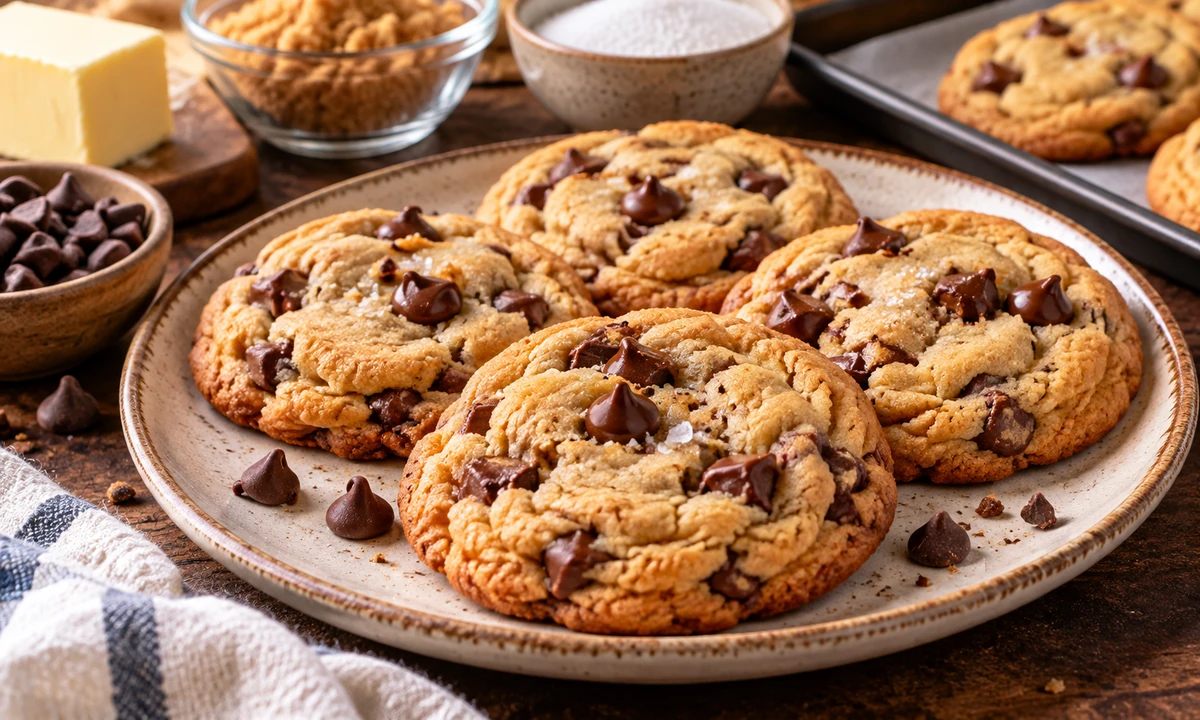
Small-batch cookies are the answer when you want a few warm cookies without baking two or three dozen. This recipe makes about six cookies, which is three each for two people, and the dough comes together in one bowl with a spoon.
The cookies have lightly crisp edges, soft centers, and plenty of chocolate chips. There is no long chill, no mixer, and very little cleanup. If a few cookies are all you want, this is a quick way to get them.
Recipe at a Glance
- Prep time: about 10 minutes
- Bake time: 9–11 minutes at 350°F (175°C)
- Cooling time: 5 minutes on the baking sheet
- Total time: about 30 minutes
- Yield: about 6 cookies
- Serves: 2
Why Make a Small Batch?
Most cookie recipes make two to four dozen cookies. That is great for a party and too much for a quiet evening. A small batch fits the way many people actually eat dessert:
- You bake only as many cookies as you will eat.
- Most pantries already have everything you need.
- Mixing and cleanup take a few minutes.
- You can test a new mix-in without committing to a full batch.
If you want a bigger batch, our classic chocolate chip cookies make about two dozen.
Ingredients
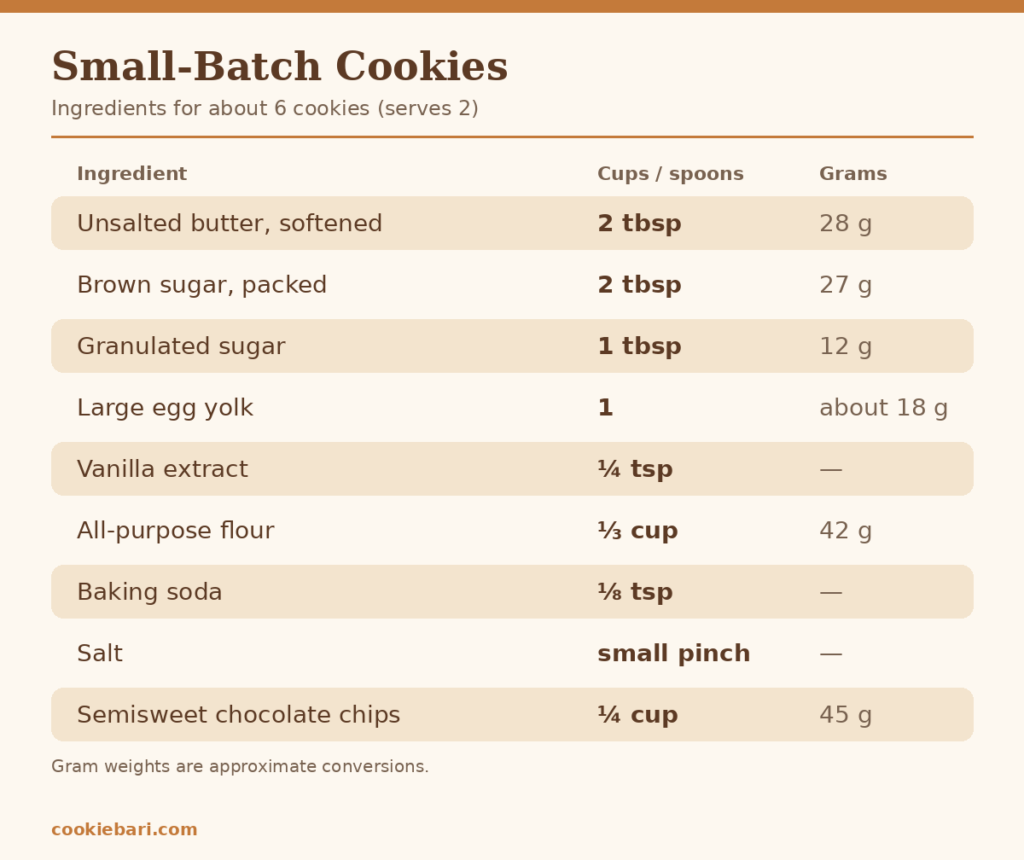
| Ingredient | Amount |
|---|---|
| Unsalted butter, softened | 2 tablespoons (about 28 g) |
| Brown sugar, packed | 2 tablespoons (about 27 g) |
| Granulated sugar | 1 tablespoon (about 12 g) |
| Large egg yolk | 1 |
| Vanilla extract | ¼ teaspoon |
| All-purpose flour | ⅓ cup (42 g) |
| Baking soda | ⅛ teaspoon |
| Salt | 1 small pinch |
| Semisweet chocolate chips | ¼ cup (45 g) |
Ingredient Notes
Butter: Use unsalted butter, softened until it mixes easily but is not melted. With so little dough, a few extra seconds in the microwave can turn it from soft to greasy.
Brown and granulated sugar: Brown sugar adds moisture and a chewy texture. A little granulated sugar helps the edges turn crisp.
Egg yolk: A whole egg contains more liquid than this small amount of dough can use. The yolk adds richness and holds the dough together without making it loose. Keep the white in the fridge, covered, for scrambled eggs or an omelet within a few days.
Flour: Measure carefully, because a small mistake changes a small batch a lot. A kitchen scale is the most reliable tool, and King Arthur Baking explains how to measure flour if you use cups.
Chocolate chips: Semisweet chips give a balanced flavor. Milk, dark, or white chips also work.
How to Make Small-Batch Cookies
1. Preheat and Prepare the Pan
Heat the oven to 350°F (175°C) and line a small baking sheet with parchment paper. A standard sheet works too. Just keep the cookies close together with room around each one.
2. Mix the Butter and Sugars
Put the softened butter, brown sugar, and granulated sugar in a small bowl. Mix with a spoon or spatula until smooth and creamy. At this size, you do not need an electric mixer.
3. Mix in the Yolk and Vanilla
Stir in the egg yolk and vanilla until the mixture looks smooth and glossy.
4. Stir in the Dry Ingredients
Sprinkle the flour, baking soda, and salt over the bowl. Stir gently until a soft dough forms and no dry flour remains. The dough should be thick enough to hold its shape when scooped. Stop as soon as it comes together, because too much mixing can make the cookies tough.
5. Fold in the Chocolate Chips
Fold in the chocolate chips until they are spread evenly. Save a few to press onto the tops of the cookies if you like a bakery-style finish.
6. Shape the Cookies
Divide the dough into about six equal portions, roughly 2 tablespoons each. Roll each into a ball and place it on the baking sheet with at least 2 inches between them. Leave the balls round rather than pressing them flat, because the cookies spread on their own in the oven. Keep the portions the same size so they finish baking together.
7. Bake
Bake for 9–11 minutes, until the edges are set and lightly golden while the centers still look soft. With only a few cookies on the pan, they can bake a little faster or slower than a full tray, so start checking at 9 minutes.
8. Cool
Let the cookies rest on the baking sheet for about 5 minutes, then move them to a rack. They keep firming as they cool.
Do You Need to Chill the Dough?
Usually not. A small amount of dough can go straight into the oven. If the dough feels very soft, chill it for 15–20 minutes, which makes it easier to shape and helps limit spreading. Chilling helps most when your kitchen is warm or the butter softened too much.
Soft Centers and Crisp Edges
Soft, chewy cookies depend mostly on baking time. Take them out while the centers still look slightly underdone, because they finish setting on the hot baking sheet.
The mix of brown sugar and granulated sugar gives you both textures: brown sugar for chew, granulated sugar for crisp edges. The egg yolk adds a rich, tender bite. Too much flour makes the cookies dense and dry, so level the cup or use a scale.
Baking Just Two Cookies
If you want only two cookies, divide the dough into two larger portions of about 87 g each. Larger cookies need more time than the six-cookie size, so watch the edges and pull them out while the centers are still slightly soft.
You can also shape all six portions and freeze the extra dough balls for another night.
Small-Batch Cookie Variations
A small batch is a good place to try a new flavor, since a failed experiment only wastes a few cookies. Swap the chocolate chips for the same amount of one of these, or split the dough and use a different mix-in in each cookie:
- Chopped walnuts or pecans
- White chocolate chips with chopped macadamia nuts (see our white chocolate macadamia nut cookies)
- Shredded coconut
- Raisins or dried cranberries
- Toffee pieces
- No mix-in at all, for a plain brown sugar cookie
Cocoa, peanut butter, and oats change the dough structure, so changing them in a recipe this small is risky. For those flavors, use a tested recipe instead: our double chocolate chip cookies, classic peanut butter cookies, or soft and chewy oatmeal cookies.
Common Small-Batch Mistakes
- Using a whole egg. It adds too much liquid for this amount of dough, so stick with the yolk.
- Adding too much flour. Even a small excess makes the cookies dry. Weigh it if you can.
- Overbaking. Small cookies go from soft to dry quickly, so check early.
- Making uneven portions. Cookies of different sizes finish at different times.
- Using hot or melted butter. It makes the cookies spread too much. Softened butter gives more control.
Can You Use Melted Butter?
Yes, but the texture changes. Melted butter makes a softer dough and a cookie that spreads more. If you use it, let it cool first and chill the dough for 15–20 minutes before baking. Softened butter is the simpler choice for predictable results.
How to Store Leftover Cookies
Let the cookies cool completely, then keep them in an airtight container at room temperature. For the best texture, eat them within a few days.
Can You Freeze Small-Batch Cookies?
Yes. Freeze cooled baked cookies in a freezer-safe container. To freeze the dough, shape the portions, freeze them on a tray until firm, and move them to a freezer-safe container or bag.
Frozen dough balls let you bake one or two cookies on demand. They may need a minute or two longer in the oven, so check them early.
Food safety: Raw cookie dough contains uncooked flour and egg, so do not eat it before baking. The FDA explains the risks in its guide to handling flour safely, and the CDC lists why you should not eat raw dough.
Ways to Serve Them
Warm cookies feel special even in a small batch. Press a few extra chocolate chips onto the dough before baking, or sprinkle a tiny pinch of flaky salt on top when they come out. You can also drizzle cooled cookies with melted chocolate or serve them warm with a scoop of vanilla ice cream.
How to Scale the Recipe
To make more, multiply every ingredient by the same number. Doubling the recipe gives about 12 cookies and uses two egg yolks. Because the amounts are tiny, a kitchen scale helps a lot. If you make fewer cookies instead, freeze the extra dough rather than trying to halve a single yolk.
Frequently Asked Questions
How many cookies does this recipe make?
About six medium cookies, depending on how large you make each portion.
Can I make only two cookies?
Yes. Divide the dough into two larger portions and bake them a little longer, or freeze the rest.
Can I use a whole egg instead of a yolk?
It is better to use only the yolk. A whole egg adds too much liquid for this little dough, and the cookies can come out loose and cakey.
Do I have to chill the dough?
No. Chilling is optional unless the dough is very soft or hard to shape.
Can I use only brown sugar?
You can, but the cookies will be softer and chewier with less crisp edges. If you have no brown sugar at all, see our chocolate chip cookies without brown sugar.
Can I freeze the dough?
Yes. Portion it first so you can bake only what you need.
More Cookie Recipes to Try
- Mini Chocolate Chip Cookies
- Quick Chocolate Chip Cookies
- Thick Chocolate Chip Cookies
- Classic Chocolate Chip Cookies
Final Thoughts
These small-batch cookies give you about six soft, chewy chocolate chip cookies with crisp edges, without the leftovers of a full recipe. The method is simple: soft butter, one egg yolk, carefully measured flour, even portions, and a close eye on the oven. Take them out while the centers are still soft, let them rest on the pan, and enjoy them warm. Freeze any extra dough, and you can have fresh cookies again whenever you want them.