

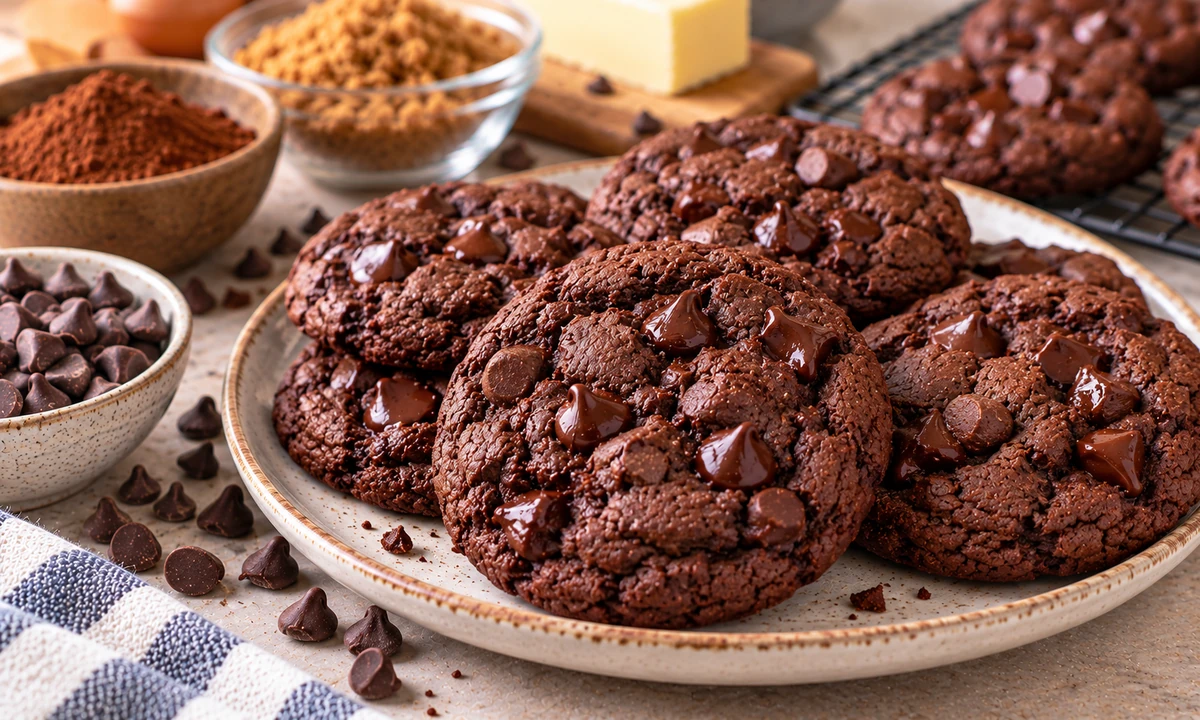
If you love chocolate, these double chocolate chip cookies deliver it in every bite. Unsweetened cocoa powder gives the dough a rich chocolate base, and semisweet chips create pockets of melted chocolate throughout. The result is a soft, chewy cookie with slightly firm edges, rather than a dry or cakey one.
The dough comes together quickly, and chilling is optional. For thicker cookies, a short chill is recommended; otherwise you can bake the dough as soon as it is firm enough to scoop.
Recipe at a Glance
- Prep time: 15 minutes
- Chill time: 30 minutes (optional)
- Bake time: 9–12 minutes at 350°F (175°C)
- Total time: 45–60 minutes
- Yield: about 24 medium cookies
Ingredients for Double Chocolate Chip Cookies
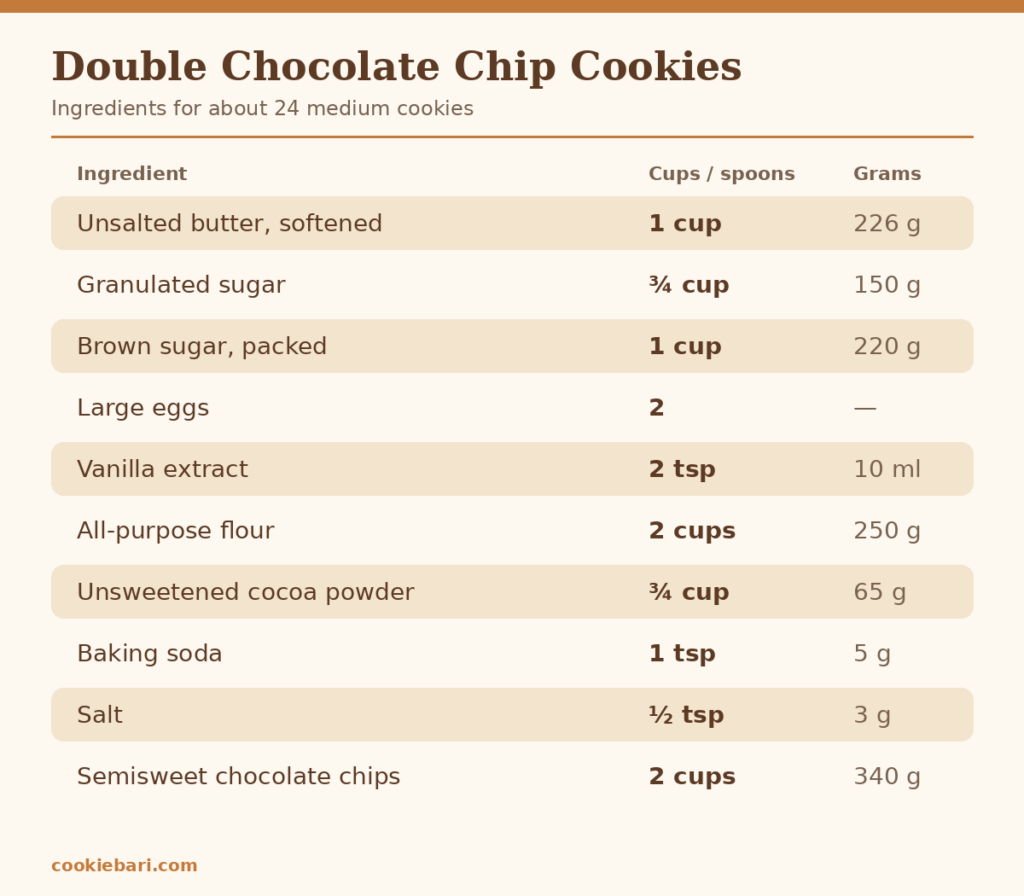
- 1 cup (226 g) unsalted butter, softened
- ¾ cup (150 g) granulated sugar
- 1 cup (220 g) packed brown sugar
- 2 large eggs, room temperature
- 2 teaspoons vanilla extract
- 2 cups (250 g) all-purpose flour
- ¾ cup (65 g) unsweetened cocoa powder
- 1 teaspoon baking soda
- ½ teaspoon salt
- 2 cups (340 g) semisweet chocolate chips
Optional Add-Ins
Chopped walnuts or pecans, dark or white chocolate chips, or a small sprinkle of flaky sea salt.
A Note About Flour and Cocoa
Flour and cocoa both affect the moisture balance of these cookies, so weighing them is the most reliable way to get consistent results. If you measure by volume, spoon the ingredients into the cup and level the top instead of scooping straight from the container. King Arthur Baking has a helpful guide on how to measure flour.
What Kind of Cocoa Powder Should You Use?
Use unsweetened cocoa powder, not sweetened hot chocolate mix.
Natural cocoa powder is the most predictable choice here because it works well with the baking soda. Dutch-process cocoa can also work, but it is less acidic, so the cookies may rise and spread a little differently. Whichever you choose, pick a cocoa with a rich chocolate flavor, since it forms the base of the cookie.
How to Make Double Chocolate Chip Cookies
1. Preheat the Oven
Heat your oven to 350°F (175°C) and line one or two baking sheets with parchment paper. A fully preheated oven helps the cookies spread and set consistently.
2. Cream the Butter and Sugars
Put the softened butter, granulated sugar, and brown sugar in a large bowl. Beat for about 1–2 minutes, just until smooth and evenly combined. The mixture doesn’t need to be whipped until very light and fluffy.
3. Mix in the Eggs and Vanilla
Beat in the eggs one at a time, then stir in the vanilla until everything is evenly incorporated. Scrape down the sides of the bowl if needed.
4. Combine the Dry Ingredients
In a separate bowl, whisk together the flour, cocoa powder, baking soda, and salt. If the cocoa has lumps, sift it first so it spreads evenly through the dough.
5. Make the Dough
Gradually mix the dry ingredients into the butter mixture, on low speed or by hand, until the flour and cocoa are just incorporated. Once no obvious streaks of flour remain, stop mixing.
6. Fold in the Chocolate Chips
Fold in the semisweet chips until evenly distributed. For a chocolate-loaded look, save a small handful and press them onto the tops of the dough balls before baking.
What Should the Dough Look Like?
The finished dough should be thick, soft, and deeply chocolate-colored. It should hold its shape when scooped without being so dry that it crumbles.
If the dough looks unusually dry or crumbly, check that you measured the flour and cocoa correctly, because too much of either can absorb moisture and dry out the cookies. Avoid adding milk unless the dough genuinely needs it, since changing the liquid balance can affect how the cookies spread.
Should You Chill the Dough?
Chilling is optional and depends on the dough’s consistency. If the dough feels firm and easy to scoop, bake it right away. If it feels soft or sticky, refrigerate it for about 30 minutes first.
For noticeably thicker cookies, chilling is the better choice, because colder butter takes longer to melt in the oven, which reduces spreading. If the dough gets very firm in the refrigerator, let it sit at room temperature for a few minutes before scooping.
How to Shape and Space the Cookies
For 24 medium cookies, portion the dough into balls of about 3 tablespoons (roughly 55 g) each. Scooping 2 tablespoons per cookie gives smaller cookies and closer to 36–40 of them, with a shorter bake time.
Roll each portion into a ball and place the dough balls about 2 inches apart on the prepared baking sheet. Keeping the portions the same size helps them bake at the same rate. Leave the dough rounded for thicker cookies, or press the balls down slightly if you prefer flatter ones.
How Long to Bake Double Chocolate Chip Cookies
Bake at 350°F (175°C) for 9–12 minutes. Because the dough is already dark, color is not a reliable sign of doneness. Look for these signs instead:
- The edges look set.
- The surface no longer looks wet.
- The centers still look slightly soft.
Take the cookies out while the centers look a little underbaked. They keep firming up as they cool. Let them rest on the baking sheet for about 5 minutes, then move them to a wire rack to finish cooling.
Why Use a Cool Baking Sheet?
Between batches, let the baking sheet cool before adding more dough. A hot sheet can start melting the butter before the cookies reach the oven, so the dough may spread too quickly and bake unevenly. If you’re making several batches, rotating between two baking sheets makes this easier.
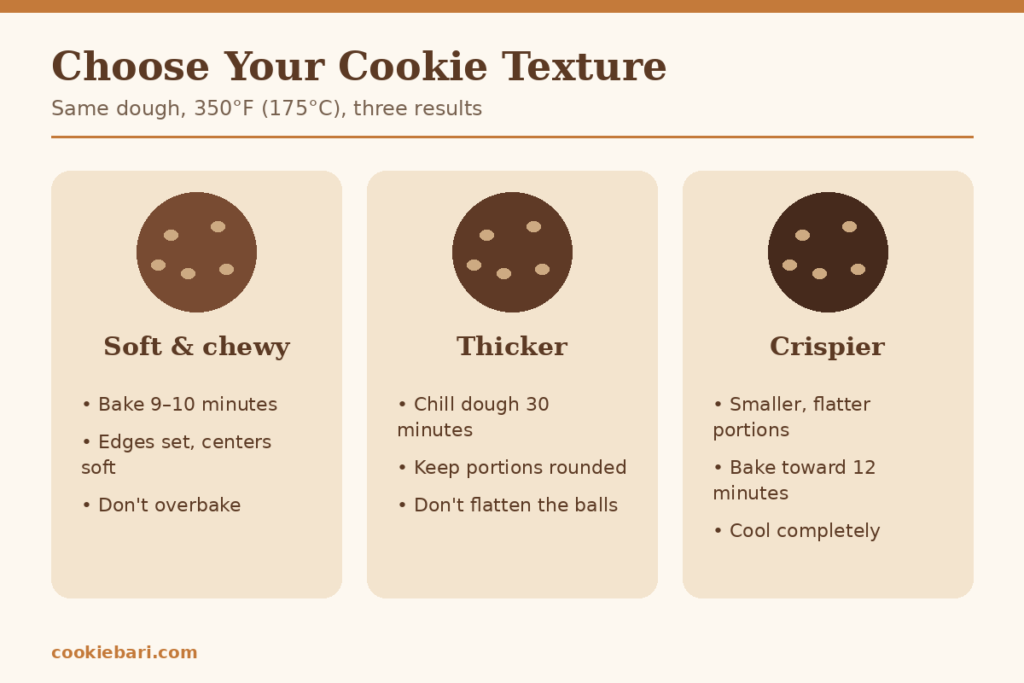
How to Make Soft, Thick, or Crispy Cookies
The same dough can give different textures with a few adjustments.
For Soft and Chewy Cookies
Bake until the edges are set while the centers still look slightly soft, and don’t leave the cookies in the oven longer than necessary.
For Thicker Cookies
Chill the dough for about 30 minutes, keep the portions rounded, and don’t flatten them before baking. You can also see our thick chocolate chip cookies for more on this technique.
For Crispier Cookies
Make slightly smaller, flatter portions and bake toward the longer end of the 9–12 minute range, then let the cookies cool completely so the edges firm up. Watch closely near the end, because overbaking chocolate dough can leave a bitter flavor.
Common Double Chocolate Cookie Mistakes
- Too much flour or cocoa: both absorb moisture, so extra amounts can leave the cookies dry.
- Melted butter: the recipe calls for softened butter. Melted or oily butter makes the dough loose and causes excessive spreading.
- Overmixing: once the dry ingredients disappear, stop mixing. Overworking the dough can toughen the cookies.
- Overbaking: dark dough won’t look deeply browned, so use the edges and center as your guide.
- Baking on a hot sheet: a warm sheet melts the butter too quickly. Use a cool sheet for each batch.
Choosing the Best Chocolate Chips
Semisweet chips are a good default because they balance the sweetness of the dough with the cocoa flavor. Dark chocolate chips give a more intense chocolate flavor, milk chocolate gives a sweeter, creamier result, and white chocolate adds a contrasting sweetness. You can also combine types: semisweet chips with chopped dark chocolate, for example, create melted chocolate in different sizes throughout the cookies.
Easy Variations
- Double chocolate walnut: fold in chopped walnuts or pecans for extra crunch.
- Mint chocolate: mix in a small amount of mint extract, or use mint chocolate chips.
- White chocolate: replace some of the semisweet chips with white chocolate chips. The contrast against the dark dough also looks striking.
- Salted chocolate: sprinkle flaky sea salt over the tops right after baking for a sweet-and-salty finish.
- Different texture: if you want a cracked, brownie-like cookie instead, try our chocolate crinkle cookies.
- Smaller cookies: for a bite-sized version, see our mini chocolate chip cookies.
How to Store Double Chocolate Chip Cookies
Let the cookies cool completely, then keep them in an airtight container at room temperature, with parchment paper between layers if you need to stack them. Don’t seal them while they’re still warm, because trapped steam can make them gummy. For the best texture, enjoy them while they’re fresh. If you’re baking for a gathering, you can make them ahead and store them once fully cooled.
Can You Freeze Double Chocolate Chip Cookies?
Yes, both baked cookies and unbaked dough freeze well.
To Freeze Baked Cookies
Cool the cookies completely, then place them in a freezer-safe container with parchment paper between the layers.
To Freeze Cookie Dough
Scoop the dough into portions on a tray and freeze until firm. Transfer the frozen portions to a freezer-safe bag or container. To bake, place the frozen dough balls on a lined baking sheet. They may need a little extra time, so go by the same cues: set edges and slightly soft centers.
Food safety: Don’t eat raw cookie dough, which contains uncooked flour and eggs. The FDA explains the risks in its guide to handling flour safely.
Frequently Asked Questions
Why are my double chocolate cookies dry?
The most common causes are too much flour or cocoa, or overbaking. Weigh the dry ingredients when possible, and take the cookies out while the centers still look slightly soft.
Why did my cookies spread too much?
Warm butter, very soft dough, or a hot baking sheet can all cause extra spreading. Chilling the dough and baking on a cool sheet helps.
Can I make these cookies without a mixer?
Yes. A sturdy wooden spoon or spatula works with softened butter. Combining the butter and sugars takes a little more effort, but a mixer isn’t required.
How do I make these cookies thicker?
Chill the dough for about 30 minutes, keep the portions rounded, and don’t flatten them. Make sure the oven is fully preheated, too.
Can I use Dutch-process cocoa powder?
Yes, but natural unsweetened cocoa is the more predictable option here because its acidity works with the baking soda.
Can I add nuts?
Yes. About ½ cup of chopped walnuts or pecans is a good amount for extra crunch.
Final Thoughts
These double chocolate chip cookies are made for serious chocolate lovers. Cocoa gives the dough its deep flavor, and the semisweet chips add rich pockets of melted chocolate. The most important rule is not to overbake: pull the cookies when the edges are set but the centers still look slightly soft, and they will firm up into soft, chewy cookies as they cool. Chill the dough for a thicker cookie, or bake a little longer for a crisper one.