Amish Sugar Cookie Recipe (Soft & Chewy)

If you are looking for a soft, buttery sugar cookie with lightly crisp edges and a tender center, this Amish sugar cookie recipe is a simple one to try. The dough uses everyday ingredients such as butter, granulated sugar, eggs, flour, vanilla, baking soda, and cream of tartar.

Unlike decorated sugar cookies that are usually rolled and cut into shapes, these cookies are designed to be simple. After the dough is mixed and chilled, you scoop it onto a baking sheet and bake until the edges are lightly golden while the centers are still soft.

Amish sugar cookie recipes vary from one recipe to another, so there is not just one universal formula. This version focuses on a straightforward butter-based dough with cream of tartar for a soft, tender texture.

Quick Answer

This Amish sugar cookie recipe makes about 24 soft cookies with lightly crisp edges and buttery centers. The dough takes about 15 minutes to prepare, then chills for 1 hour before baking at 350°F.

Recipe Info

  • Prep Time: 15 minutes
  • Chill Time: 1 hour
  • Bake Time: 8–10 minutes
  • Total Time: About 1 hour 25 minutes
  • Yield: About 24 cookies
  • Oven Temperature: 350°F (175°C)

What Makes These Amish Sugar Cookies Different?

Amish sugar cookie recipes can vary considerably, but many versions share a simple approach to baking: basic pantry ingredients, straightforward preparation, and a focus on texture and flavor rather than elaborate decoration.

Some published Amish sugar cookie recipes use a combination of butter and vegetable oil, while others use different amounts or types of sugar. This variation is one reason it is better to think of Amish sugar cookies as a style of cookie rather than a single fixed recipe.

This version uses butter as the main fat and granulated sugar for sweetness. Cream of tartar is paired with baking soda in the dough, and the cookies are chilled before baking to help control spreading.

The finished cookies are best when the edges are lightly golden and the centers still look slightly soft when they come out of the oven.

Ingredients You Need

This recipe uses a short list of familiar ingredients.

Basic Ingredients

  • 1 cup unsalted butter, softened
  • 1½ cups granulated sugar
  • 2 large eggs
  • 2 teaspoons vanilla extract
  • 3 cups all-purpose flour
  • 1 teaspoon baking soda
  • 1 teaspoon cream of tartar

Optional Add-Ins

You can keep the cookies plain or add one of these simple variations:

  • ½ teaspoon ground nutmeg
  • ½ teaspoon almond extract
  • Colored sugar or festive sprinkles for topping

If you enjoy simple homemade cookies with different flavors, you may also want to try these Dairy-Free Cookie Recipe and Cherry Chip Cookie Recipe.

Ingredients for homemade Amish sugar cookies
Simple pantry ingredients are all you need for these homemade Amish sugar cookies.

Ingredient Notes

Butter: Use softened butter rather than melted butter. The butter should be soft enough to mix easily with the sugar but should not look oily or liquid.

Sugar: Granulated sugar provides the sweetness and contributes to the cookie’s structure and browning.

Eggs: Large eggs help bind the dough and add moisture.

Vanilla: Vanilla gives the cookies a familiar, balanced flavor.

Flour: Measure the flour carefully. Adding too much can make the cookies heavier and drier.

Baking soda and cream of tartar: These ingredients work together in the dough. Cream of tartar is an acidic baking ingredient that can react with baking soda, and it is commonly used in cookies such as snickerdoodles. King Arthur Baking: What Is Cream of Tartar?

Amish Sugar Cookie Recipe

Ingredients

  • 1 cup unsalted butter, softened
  • 1½ cups granulated sugar
  • 2 large eggs
  • 2 teaspoons vanilla extract
  • 3 cups all-purpose flour
  • 1 teaspoon baking soda
  • 1 teaspoon cream of tartar

Instructions

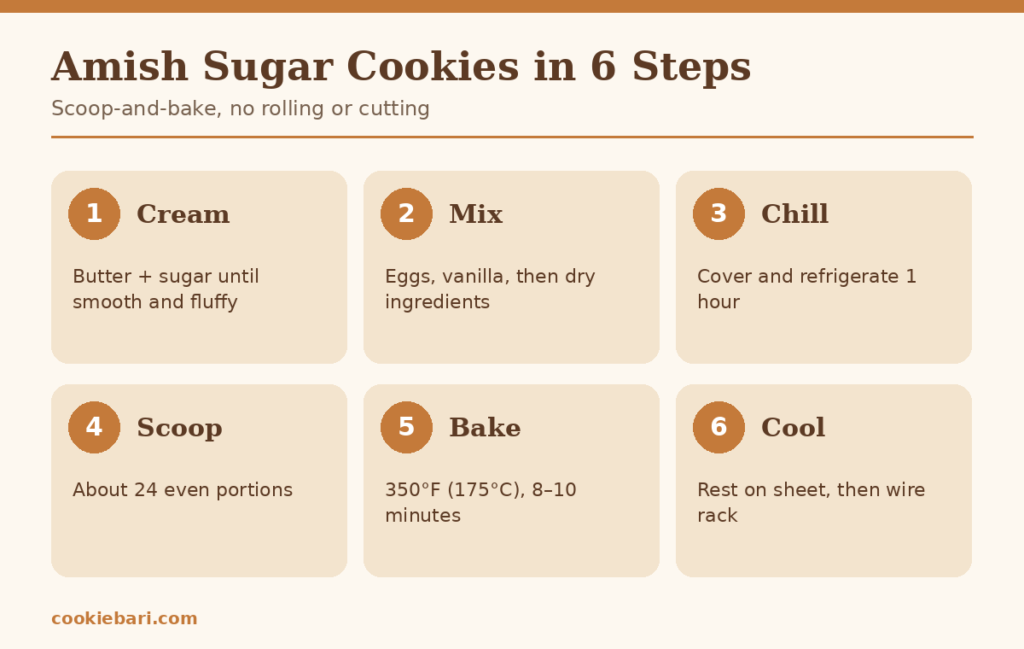
  1. Cream the butter and sugar.
    Place the softened butter and granulated sugar in a large mixing bowl. Beat until the mixture is smooth and fluffy.
  2. Add the eggs and vanilla.
    Add the eggs one at a time, mixing after each addition. Add the vanilla extract and mix until evenly combined.
  3. Mix the dry ingredients.
    In a separate bowl, whisk together the flour, baking soda, and cream of tartar.
  4. Make the dough.
    Gradually add the dry ingredients to the butter mixture. Mix just until the flour is incorporated. Avoid overmixing once the dough comes together.
  5. Chill the dough.
    Cover the bowl and refrigerate the dough for about 1 hour. Chilling helps firm the butter and makes the dough easier to handle.
  6. Prepare the oven.
    When you are ready to bake, heat the oven to 350°F (175°C). Line a baking sheet with parchment paper.
  7. Portion the dough.
    Scoop the chilled dough into even portions and arrange them on the prepared baking sheet with space between each cookie.
  8. Bake.
    Bake for 8–10 minutes, or until the edges are lightly golden and the centers still look slightly soft.
  9. Cool.
    Let the cookies rest on the baking sheet for a few minutes before transferring them to a wire rack.

How to Make Amish Sugar Cookies Step by Step

Step 1: Soften the Butter

The butter should be softened before you begin. It should press easily with a finger but should still hold its shape.

If the butter is too cold, it can be difficult to cream with the sugar evenly. If it is melted, the dough can behave differently and may spread more during baking.

Step 2: Cream the Butter and Sugar

Beat the softened butter and sugar together until the mixture becomes lighter and fluffy.

Creaming softened butter and sugar for Amish sugar cookie dough
Cream the softened butter and sugar until the mixture becomes light and fluffy.

This step helps distribute the sugar through the butter and gives the dough a smooth starting texture.

There is no need to keep mixing once the butter and sugar are properly combined.

Step 3: Add the Eggs and Vanilla

Add the eggs one at a time, mixing after each addition.

Add the vanilla and mix until the ingredients are evenly combined.

The mixture may look slightly soft at this point. That is normal.

Step 4: Combine the Dry Ingredients

Whisk the flour, baking soda, and cream of tartar together in a separate bowl.

This helps distribute the leavening ingredients throughout the flour before they are added to the wet mixture.

Gradually add the dry mixture to the butter mixture and stir just until a dough forms.

Avoid excessive mixing because overworking a flour-based dough can make the finished cookies tougher.

Step 5: Chill the Dough

Cover the dough and refrigerate it for about 1 hour.

Chilling firms the butter and makes the dough easier to scoop. It can also help reduce excessive spreading during baking.

Chilled Amish sugar cookie dough portioned on a baking sheet
Chilled dough is portioned evenly before the cookies go into the oven.

If the dough is still very firm after chilling, let it sit at room temperature briefly so it is easier to portion.

Step 6: Shape and Bake

Line a baking sheet with parchment paper and portion the chilled dough into even pieces.

Keeping the portions similar in size helps the cookies finish baking at approximately the same time.

Bake at 350°F for 8–10 minutes.

The cookies do not need to look completely firm in the center when you remove them from the oven. The centers can still look slightly soft while the edges are lightly golden.

Step 7: Cool Before Moving

Leave the cookies on the baking sheet for a few minutes after baking.

They will be delicate while hot, so moving them immediately can cause them to break. Once they have set slightly, transfer them to a cooling rack.

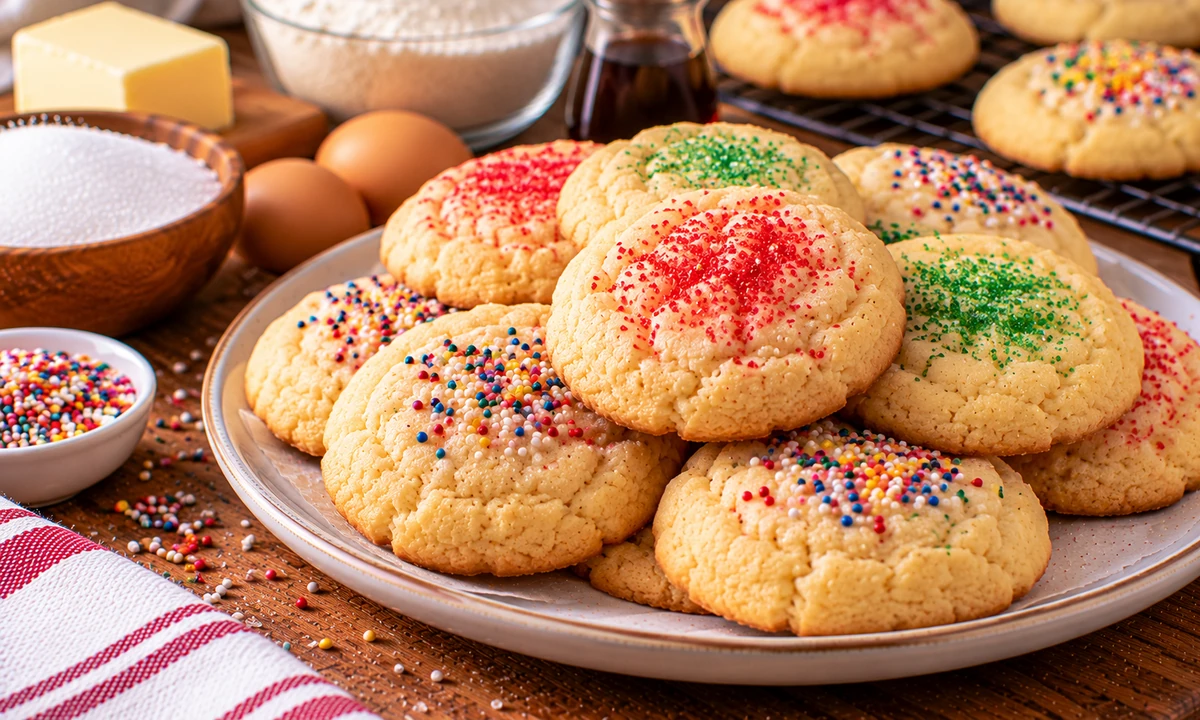
Freshly baked Amish sugar cookies with lightly golden edges
The cookies are ready when the edges are lightly golden and the centers still look slightly soft.

Tips for Soft and Chewy Amish Sugar Cookies

Do Not Overbake

This is one of the most important points for a soft cookie.

If you wait until the entire surface looks completely firm and browned, the cookies can become drier after cooling.

Look for lightly golden edges with centers that still appear slightly soft.

Measure Flour Carefully

Too much flour can make cookies dense or dry.

For the most consistent result, spoon flour into your measuring cup and level the top rather than repeatedly packing flour into the cup.

Use Softened Butter

Softened butter mixes more evenly with the sugar than cold butter.

At the same time, avoid using butter that has melted and become liquid.

Chill the Dough

The one-hour chill is an important part of this recipe.

Cold dough is easier to handle and can help the cookies hold their shape better in the oven.

Keep Cookie Portions Even

Try to make the dough portions similar in size. Smaller and larger cookies on the same tray will not finish baking at the same time.

If you enjoy soft, cinnamon-coated cookies, you can also try these Easy Homemade Snickerdoodle Cookies.

Easy Variations

The basic dough can be adapted with a few simple additions.

Cinnamon Sugar Cookies

Add a small amount of ground cinnamon to the dough for a warmer flavor.

For a stronger cinnamon profile, you can also use a cinnamon-sugar topping before baking.

Nutmeg Sugar Cookies

Add ½ teaspoon ground nutmeg for a gently spiced version.

Nutmeg works especially well when you want a more noticeable warm spice without changing the basic cookie.

Almond Sugar Cookies

Add ½ teaspoon almond extract along with the vanilla.

Almond extract has a stronger flavor than vanilla, so a small amount is enough.

Lemon Sugar Cookies

Add fresh lemon zest to the dough for a brighter variation.

The lemon version works particularly well for spring and summer gatherings.

Holiday Sugar Cookies

Top the shaped dough with colored sugar or festive sprinkles before baking.

For another holiday option, see these Easy Christmas Sugar Cookies for Holiday Baking.

Do These Cookies Need Frosting?

No. These cookies are designed to be served without frosting.

Their flavor comes from the butter, sugar, vanilla, and the slight tang from the cream of tartar.

If you prefer decorated sugar cookies, you can add a simple glaze or frosting after the cookies have cooled completely.

For a different classic cookie with a more buttery, crumbly texture, try these Buttery Shortbread Cookies.

How to Store Amish Sugar Cookies

Let the cookies cool completely before storing them.

Place them in an airtight container and keep them at room temperature for up to 5 days.

For the best texture, avoid leaving the container open for long periods because exposed cookies can gradually lose moisture.

Can You Freeze the Baked Cookies?

Yes. Once completely cooled, place the cookies in a freezer-safe container or bag.

Separate layers with parchment paper if needed to prevent them from sticking together.

For best quality, use the frozen cookies within about 2 months.

Allow them to thaw at room temperature before serving.

Can You Freeze the Dough?

Yes, the dough can be frozen before baking.

Wrap the dough tightly and place it in a freezer-safe container or bag. When you are ready to use it, thaw it safely in the refrigerator before portioning and baking.

Because the exact baking time can change when dough has been frozen, check the cookies visually and bake until the edges are lightly golden and the centers remain slightly soft.

Common Mistakes to Avoid

1. Using Melted Butter

Melted butter changes the consistency of the dough and can cause the cookies to spread differently.

Use softened butter instead.

2. Adding Too Much Flour

Extra flour can make the cookies heavy and dry.

Measure carefully and avoid adding extra flour simply because the dough feels soft before chilling.

3. Skipping the Chill

The dough is easier to manage after chilling, and the cold butter can help limit spreading.

4. Overmixing

Once the flour has been incorporated, stop mixing.

Overmixing can develop more gluten and lead to a tougher cookie.

5. Overbaking

The centers should still look slightly soft when the cookies come out of the oven.

They will continue to set as they cool.

6. Moving the Cookies Too Soon

Freshly baked cookies are fragile.

Allow them to rest on the baking sheet for a few minutes before transferring them to a cooling rack.

Frequently Asked Questions

Why are Amish sugar cookies soft?

The texture comes from the balance of butter, sugar, eggs, flour, and the leavening ingredients in the dough. Chilling the dough and avoiding overbaking also help preserve a soft center.

Can I make these cookies without cream of tartar?

You can make changes to a cookie recipe, but removing cream of tartar changes the recipe’s balance and may affect its texture and flavor.

Because this recipe was developed around the listed ingredients, I recommend keeping the cream of tartar if you want the intended result rather than substituting another ingredient without testing the recipe.

Can I make Amish sugar cookies without frosting?

Yes. Frosting is not necessary for this recipe. The cookies can be served plain once cooled.

Do I have to chill the dough?

For this recipe, the one-hour chill is recommended. It firms the dough and makes it easier to handle before baking.

Skipping the chill may change how much the cookies spread, so if you want the texture described in this recipe, keep the chilling step.

How do I know when the cookies are done?

Look for lightly golden edges while the centers still appear slightly soft.

The cookies will continue to set as they cool, so they do not need to look completely firm when you remove them from the oven.

Can I add cinnamon or nutmeg?

Yes. Cinnamon, nutmeg, almond extract, lemon zest, colored sugar, and sprinkles can all be used to create simple variations.

A Note About the Name “Amish Sugar Cookies”

There is no single universal Amish sugar cookie formula.

Published recipes identified as Amish sugar cookies use different combinations of butter, oil, granulated sugar, confectioners’ sugar, flour, eggs, and other ingredients. For example, one commonly published version uses butter and vegetable oil along with both granulated and confectioners’ sugar, while another uses eggs, oil, buttermilk, flour, and leavening ingredients.

That is why this recipe is best understood as one version of an Amish-style sugar cookie, rather than a claim that there is only one authentic formula.

Food Safety Note

Cookie dough contains raw eggs and raw flour, so it should not be eaten before baking.

The USDA notes that raw cookie dough may contain raw eggs that can carry Salmonella, and raw flour can also be a food-safety concern. USDA FSIS: Is It Safe to Eat Raw Cookie Dough?

Wash your hands and utensils after handling raw dough, and bake the cookies before serving.

Final Thoughts

This Amish sugar cookie recipe keeps the preparation simple while giving you soft, buttery cookies with lightly crisp edges and tender centers.

The dough comes together with familiar ingredients, and the one-hour chill gives it time to firm before baking. The most important details are to use softened butter, measure the flour carefully, avoid overmixing, and take the cookies out while the centers still look slightly soft.

You can keep them plain for a simple homemade cookie or add cinnamon, nutmeg, almond extract, lemon zest, colored sugar, or sprinkles for a different version.

If you are looking for an uncomplicated sugar cookie that does not require rolling, cutting, or elaborate decorating, this recipe is a good one to keep in your regular baking rotation.

CookieBari Kitchen
CookieBari Kitchenhttp://cookiebari.com
CookieBari Kitchen shares easy, delicious, and reliable cookie recipes for home bakers. We create simple recipes with clear instructions, helpful baking tips, and practical guidance to make homemade cookies enjoyable for everyone.

Related Articles

LEAVE A REPLY

Please enter your comment!
Please enter your name here

Latest Articles