

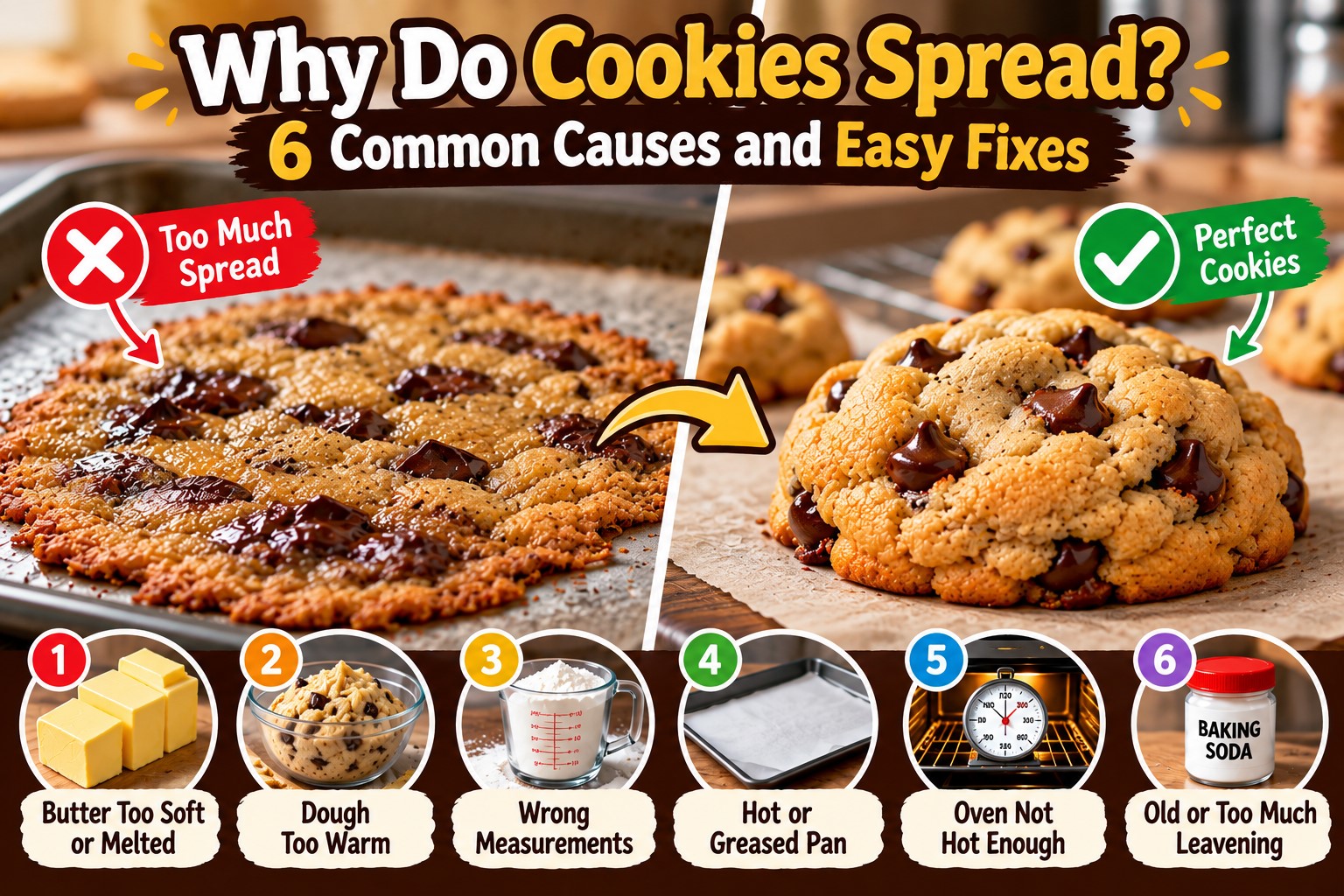
You mix the dough, scoop it neatly, and slide the tray into the oven. Ten minutes later the cookies have melted into one thin, greasy sheet. It is frustrating, but it is also one of the most fixable problems in baking.
Cookies spread because the dough melts and flows before the structure has time to set. Almost every cause comes down to fat that is too warm, dough that is too loose, or an oven and pan that are not doing their job. This guide covers each cause, how to spot it, and what to change.
What Makes a Cookie Spread?
In the oven, the butter in your dough melts first. The cookie flattens and widens while the sugar dissolves and the dough is still soft. The flour, egg, and leavening then set the shape. If the dough starts out too warm or too wet, it has more time to spread before it sets.
A little spread is normal and gives cookies their crisp edges. The goal is control, not zero spread.
Quick Fixes at a Glance
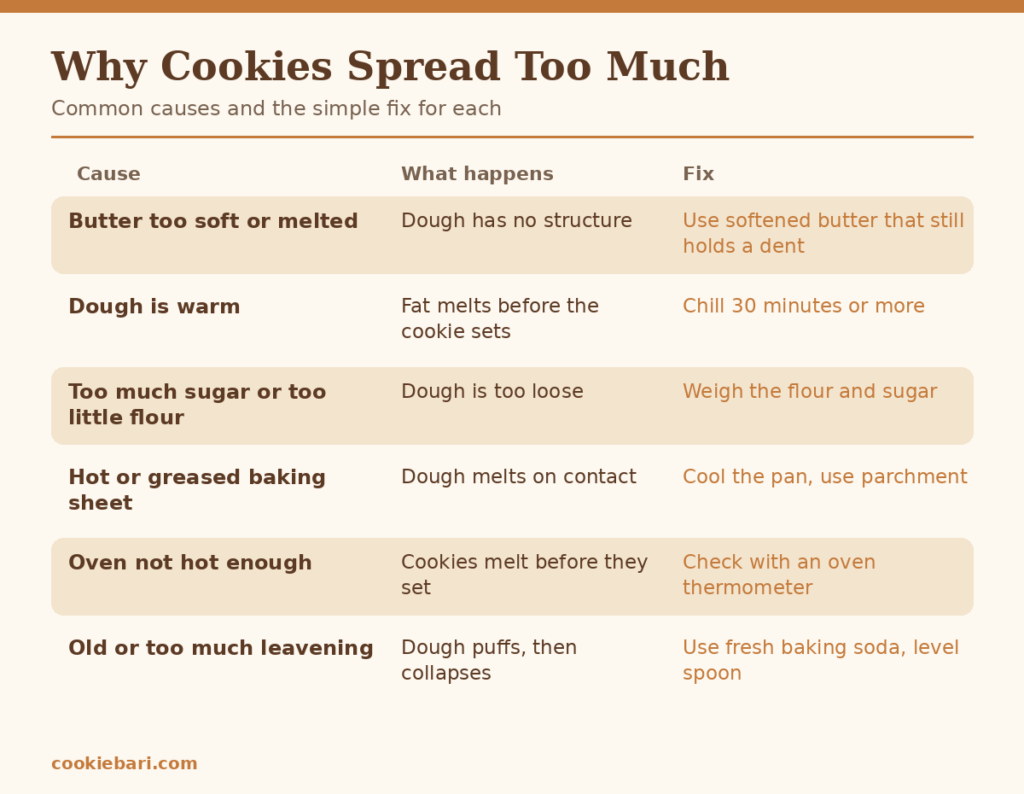 Common causes of cookie spread and the simple fix for each.
| Cause | What you will notice | Fix |
|---|---|---|
| Butter too soft or melted | Greasy dough, flat cookies | Use softened butter that still holds a fingertip dent |
| Warm dough | Dough feels sticky and soft | Chill 30 minutes or longer |
| Too much sugar or too little flour | Loose, shiny dough | Weigh ingredients |
| Hot or greased baking sheet | Dough starts melting on the tray | Cool the pan, use parchment |
| Oven not hot enough | Cookies spread wide before browning | Preheat fully and verify with an oven thermometer |
| Old or too much leavening | Cookies puff, then collapse | Use fresh baking soda and level spoonfuls |
1. The Butter Is Too Soft or Melted
This is the most common cause. Butter that is too warm cannot hold air or structure, so the dough melts almost as soon as it heats up.
Softened butter should be cool to the touch and give slightly when you press it. It should hold a fingertip dent without being greasy or shiny. If your butter looks glossy or has started to pool, it is too warm. Chill it for 10 to 15 minutes before using it.
The exception is a recipe that is built around melted butter, such as some chewy cookies. Those recipes balance the extra liquid with more flour or a chilling step, so follow them as written.
2. The Dough Is Warm
Even good dough spreads if it goes into the oven warm. A kitchen on a hot day, a long mixing time, or a recipe that makes you handle the dough a lot can all warm it up.
Chilling the dough for at least 30 minutes firms the butter, so it melts later in the bake and the cookie sets before it can spread far. Longer chilling often gives a thicker cookie with a deeper flavor. Our thick chocolate chip cookies use this approach.
If you are short on time, scoop the dough onto the tray and chill the whole tray in the fridge for 15 to 20 minutes before baking.
3. The Measurements Are Off
Too much sugar, butter, or liquid, or too little flour, makes a loose dough that spreads. The most common culprit is flour. Scooping a measuring cup straight into the flour packs it down, and some bakers end up with more flour than they meant to, while others who spoon it lightly end up with less than the recipe expects.
A kitchen scale removes the guesswork. If you use cups, spoon the flour into the cup and level it off with a knife. King Arthur Baking explains how to measure flour step by step.
If you add extra ingredients such as more chocolate, nuts, or a splash of milk, you are changing the balance of the dough. Add a spoonful of flour for every spoonful of liquid you add.
4. The Baking Sheet Is Hot or Greased
Dough placed on a hot sheet starts to melt before it ever reaches the oven. If you bake in batches, let the pan cool completely, or rinse it under cool water and dry it, before putting the next scoops on it.
Greasing the pan also encourages spread, because the dough slides outward on the slick surface. Parchment paper or a silicone baking mat gives the dough something to grip.
Dark, thin pans also brown the bottoms faster. A light-colored, heavier baking sheet gives more even results.
5. The Oven Is Not Hot Enough
If the oven is cooler than the dial says, the butter has more time to melt before the cookie sets. Many home ovens run hotter or cooler than their setting. An inexpensive oven thermometer hanging on the rack tells you the real temperature.
Also wait until the oven has fully preheated. Most ovens beep before the walls and rack are truly at temperature, so give it a few extra minutes.
6. The Leavening Is Old or Too Much
Baking soda that has lost its strength, or too much of it, can make cookies rise and then collapse into flat, crackly discs. Use fresh baking soda, keep the box closed, and level your measuring spoon. Baking powder is not a substitute, because the two behave differently in dough.
7. Other Things That Cause Spread
- Creaming too long: Beating butter and sugar for a very long time adds air that can collapse in the oven. Mix until combined and creamy, not for many minutes.
- Dough balls that are too small or too close together: Cookies that touch each other merge. Leave about 2 inches between them.
- Too much liquid: Extra egg, milk, or melted chocolate loosens the dough.
- Low-fat or tub spreads: Spreads with more water than butter change the dough. Use real butter unless a recipe says otherwise.
A 6-Step Checklist Before You Bake
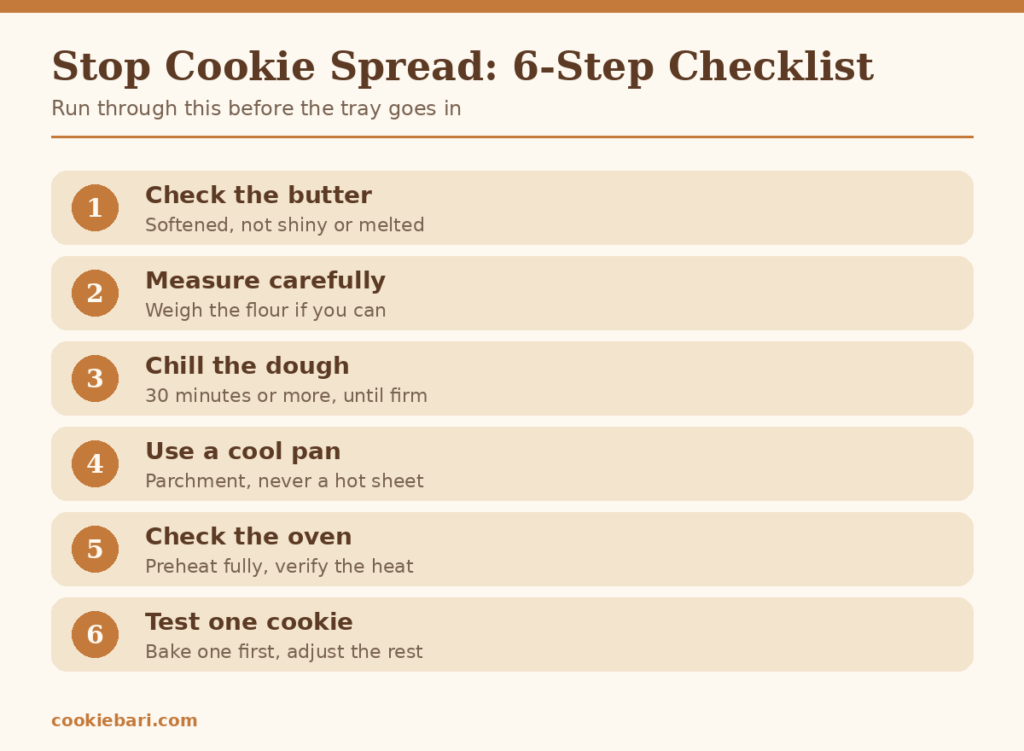 Run through this checklist before the tray goes in the oven.
- Check the butter. It should be softened, not shiny or melted.
- Measure carefully. Weigh the flour if you can.
- Chill the dough. At least 30 minutes, until it feels firm.
- Use a cool pan. Line it with parchment and never reuse a hot sheet.
- Check the oven. Preheat fully and verify the temperature.
- Test one cookie. Bake a single cookie first. If it spreads, chill the rest longer or add a spoonful of flour.
How to Rescue Dough That Is Already Too Soft
- Chill it. This fixes most problems. Wait until the dough feels firm, then scoop and bake.
- Add flour. Mix in one tablespoon of flour at a time until the dough holds a scoop. Add too much and the cookies turn cakey and dry.
- Bake a test cookie. One cookie tells you whether the fix worked before you commit the whole tray.
Can You Fix Cookies That Already Spread?
Yes, to a point. While a spread cookie is still hot and soft, use a round cutter or the rim of a glass to nudge the edges back into a circle. Thin cookies are often still tasty. Crumble them over ice cream, or sandwich two with frosting.
Recipes Where Spread Control Matters
- Classic chocolate chip cookies
- Thick chocolate chip cookies
- Brown butter chocolate chip cookies
- Easy homemade sugar cookies
Food Safety Note
If you taste the dough while you test it, remember that raw flour and raw eggs can carry germs. The FDA explains how to handle flour safely, and the CDC advises not to eat raw dough.
Frequently Asked Questions
Why do my cookies spread even when I chill the dough?
Chilling helps, but it cannot fix a dough that is too loose. Check your measurements, the butter temperature, and whether the oven is truly at temperature. Also make sure the baking sheet is cool.
Does baking soda make cookies spread?
It can. Baking soda raises the dough’s pH and helps cookies spread and brown. Too much, or old baking soda, can make them puff and then collapse. Level the spoon and use fresh baking soda.
Is melted butter the reason for flat cookies?
Often, yes, unless the recipe is designed for melted butter. In that case the recipe balances it with extra flour or a rest time. If a recipe calls for softened butter, use softened, not melted.
How long should I chill cookie dough?
At least 30 minutes is a good starting point for most drop cookies. Many bakers chill longer, even overnight, for thicker cookies and more flavor.
Should I use parchment paper or a silicone mat?
Either one works better than a greased pan. Both give the dough something to grip so it spreads less.
Why do my cookies spread more at the end of the batch?
Dough warms up while it sits on the counter, and a reused pan may still be warm. Keep the remaining dough in the fridge between batches and cool the pan fully.
Final Thoughts
Flat cookies almost always trace back to warm butter, warm dough, or a loose dough. Fix those, give the oven a proper preheat, and test one cookie before baking the whole tray. A small change, such as 30 minutes in the fridge, often makes the biggest difference.