

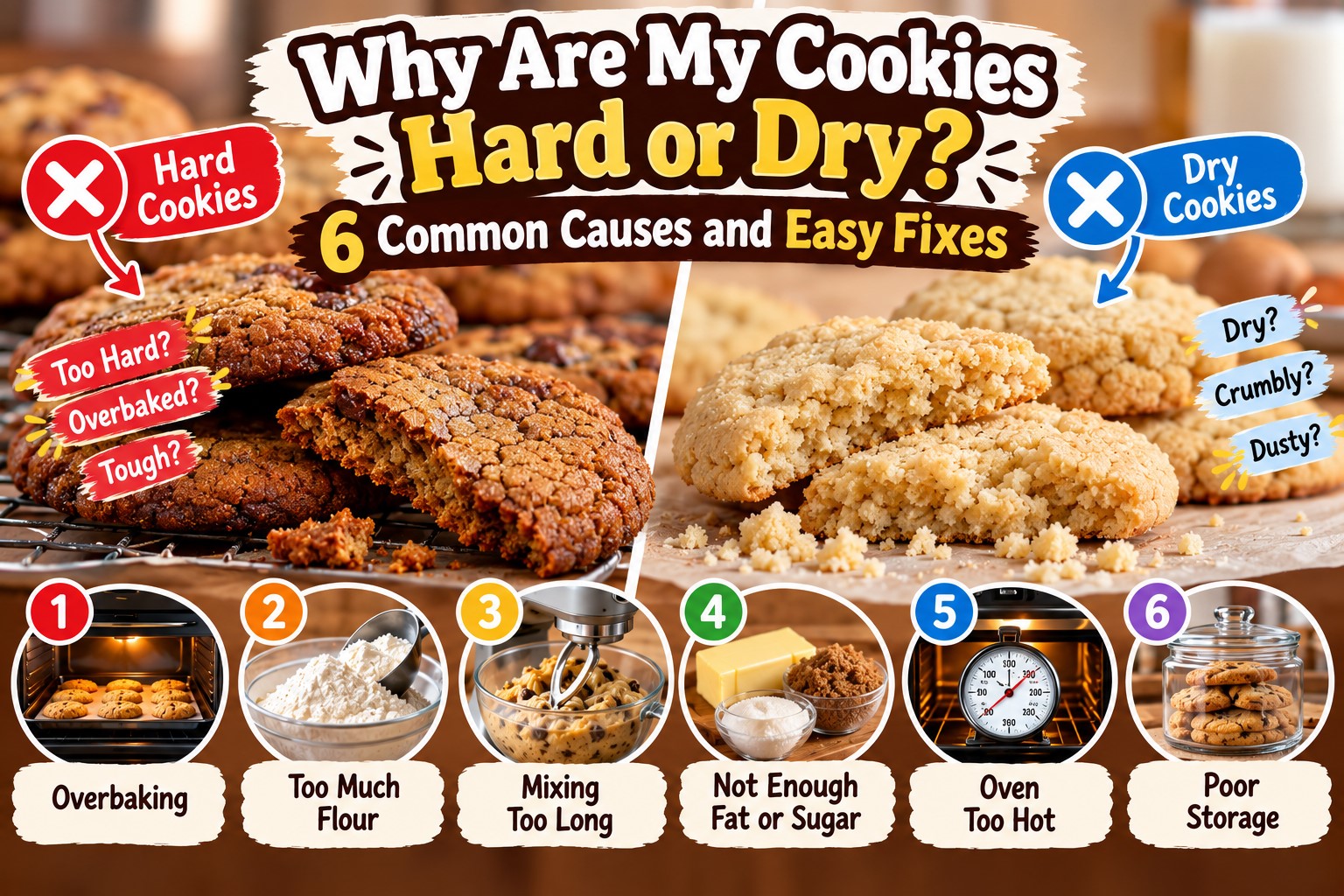
You followed the recipe, the cookies looked fine in the oven, and then they cooled into something hard enough to chip a tooth. Or they were dry, crumbly, and dusty instead of soft and chewy. It is a common problem, and it almost always has a clear cause.
Cookies turn hard or dry for a few main reasons: they bake too long, the dough has too much flour, the dough is mixed too much, or the recipe does not have enough fat and sugar. Storage matters too. This guide walks through each cause, how to recognize it, and what to change next time.
Hard vs. Dry: What Is the Difference?
The two problems feel similar but have slightly different causes:
- Hard cookies are firm and dense, often because they baked too long, the dough was overmixed, or they are simply stale.
- Dry cookies crumble and taste dusty. This usually points to too much flour or too little fat, sugar, or egg.
Quick Fixes at a Glance
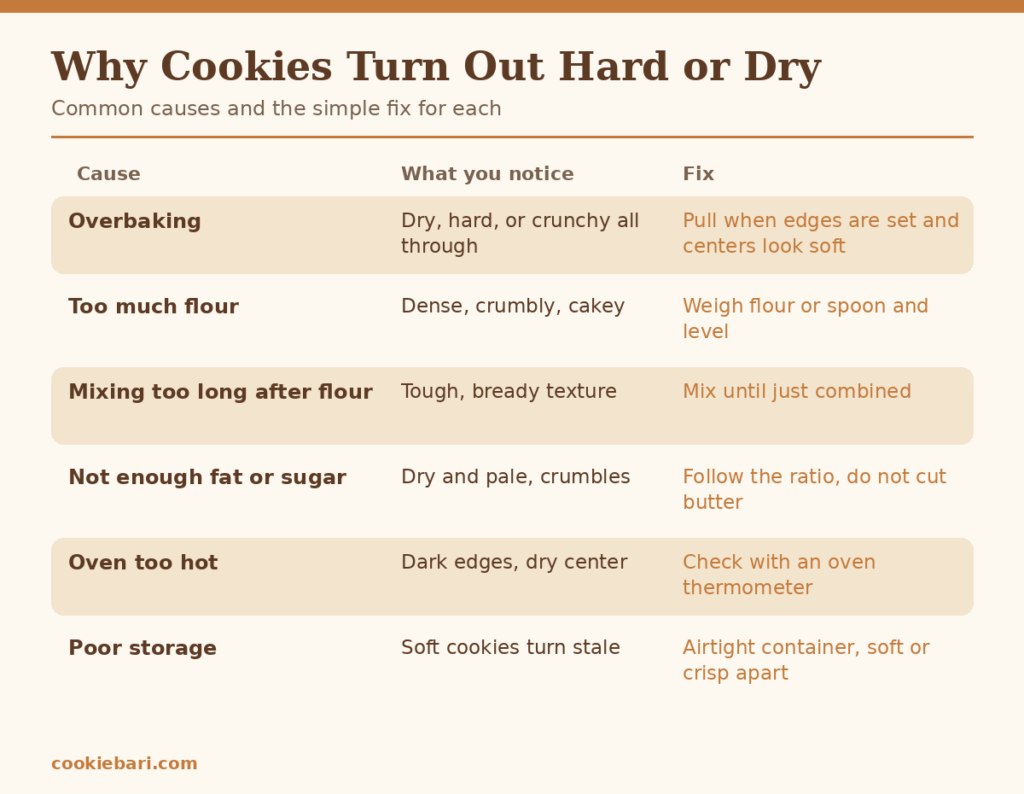 Common causes of hard or dry cookies and the simple fix for each.
| Cause | What you will notice | Fix |
|---|---|---|
| Overbaking | Dry, hard, or crunchy all through | Pull cookies when the edges are set and the centers look soft |
| Too much flour | Dense, crumbly, cake-like | Weigh the flour, or spoon and level it |
| Mixing too long after adding flour | Tough, bready texture | Mix just until no dry flour remains |
| Not enough fat or sugar | Pale, dry, crumbly | Follow the recipe’s ratios |
| Oven too hot | Dark edges and a dry center | Verify with an oven thermometer |
| Poor storage | Soft cookies turn stale | Store airtight |
1. You Baked Them Too Long
This is the number one cause. Cookies keep baking on the hot pan after you take them out of the oven. If they look completely done in the oven, they will be overdone once they cool.
For soft, chewy cookies, take them out when the edges are set and lightly golden but the center still looks soft and slightly underdone. Then let them rest on the baking sheet for about 5 minutes. The heat left in the pan finishes the center.
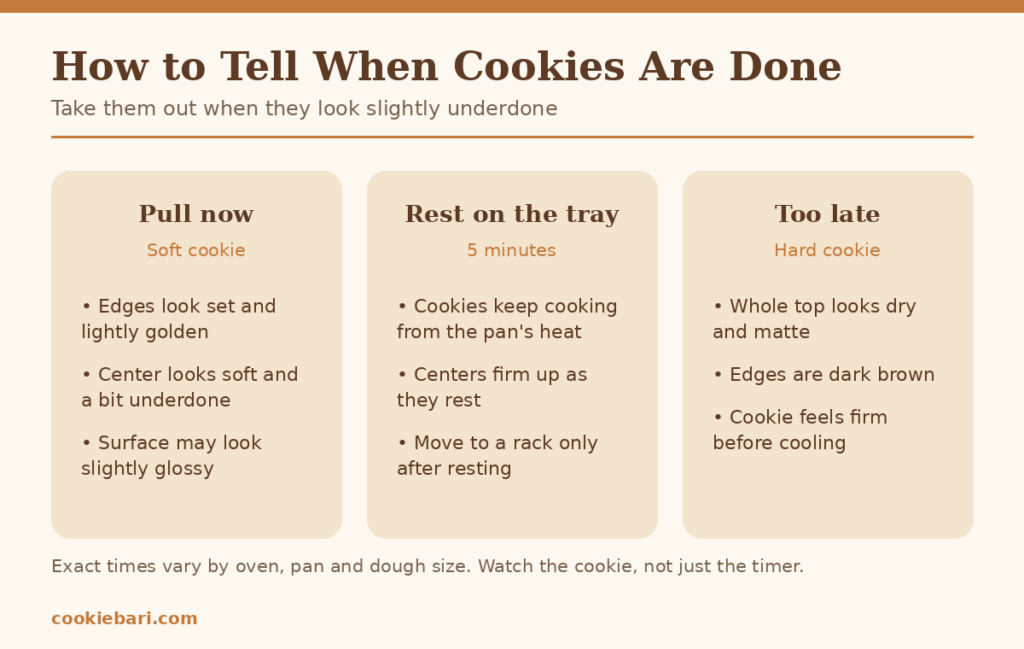
Set the timer for the low end of the recipe’s range and check early. Many ovens run hot, and a darker pan bakes faster than a light one.
2. There Is Too Much Flour in the Dough
Too much flour absorbs the moisture and makes cookies dry and cakey. The usual cause is how the flour is measured. Scooping a measuring cup directly into the bag can pack in more flour than the recipe intends.
Weighing the flour on a kitchen scale is the most reliable method. If you use cups, spoon the flour into the cup and level it with a knife. King Arthur Baking shows how to measure flour correctly.
3. The Dough Was Mixed Too Much
When flour meets liquid and gets stirred, it forms gluten. A little gluten gives cookies structure. Too much makes them tough and bready.
Cream the butter and sugar until combined, but once the flour goes in, mix only until you no longer see dry streaks. Folding in the chocolate chips by hand also helps you avoid overmixing.
4. The Recipe Does Not Have Enough Fat, Sugar, or Egg
Butter, sugar, and eggs keep cookies tender and moist. Cutting the butter or sugar to make a cookie “healthier” often makes it dry and crumbly. Brown sugar holds more moisture than white sugar, so it helps cookies stay soft and chewy.
If you need to adjust a recipe, make one change at a time and bake a test cookie. Our soft and chewy oatmeal cookies are a good example of a recipe balanced for moisture.
5. The Oven Is Too Hot
If the oven runs hotter than the dial, the edges overbake before the center cooks. An inexpensive oven thermometer shows the real temperature. Let the oven preheat fully before baking, and bake on the middle rack.
6. The Cookies Were Not Stored Well
Even perfect cookies dry out in the open air. Once they are fully cool, store them in an airtight container.
- Keep soft and crisp cookies in separate containers, because crisp cookies take up moisture from soft ones.
- A slice of bread in the container is an old trick that many bakers use to help cookies stay soft. Replace it when it gets hard.
- Freeze extra cookies, or the raw dough, if you will not eat them within a few days.
How to Soften Cookies That Are Already Hard
- Add moisture. Place the cookies in an airtight container with a slice of bread for several hours or overnight.
- Warm them briefly. Wrap a cookie in a slightly damp paper towel and microwave it in a few short bursts, checking after each one. It is best eaten right away.
- Use them another way. Crush hard cookies for an ice cream topping, a crumb crust, or a bowl of yogurt.
A Quick Checklist for Soft Cookies
- Weigh the flour or spoon and level it.
- Mix the dough until the flour just disappears.
- Keep the recipe’s butter and sugar amounts.
- Check the oven temperature with a thermometer.
- Pull the cookies when the centers still look soft.
- Rest them on the tray for 5 minutes.
- Store them airtight once cool.
Recipes for Soft, Chewy Cookies
- Classic chocolate chip cookies
- Soft and chewy oatmeal cookies
- Easy homemade sugar cookies
- Small-batch cookies
Food Safety Note
If you taste the dough while adjusting a recipe, remember that raw flour and raw eggs can carry germs. The FDA explains how to handle flour safely, and the CDC advises not to eat raw dough.
Frequently Asked Questions
Why are my cookies hard after they cool?
Usually they baked a little too long. Cookies keep cooking on the hot pan, so take them out while the centers still look soft, then rest them on the tray for about 5 minutes.
Why are my cookies dry and crumbly?
The most common reasons are too much flour, too little butter or sugar, or overbaking. Weigh the flour and follow the recipe’s ratios.
Does overmixing make cookies hard?
It can. Mixing after the flour is added builds gluten, which makes cookies tougher. Stir only until the flour is mixed in.
Does brown sugar make cookies softer?
Brown sugar contains molasses and holds more moisture than white sugar, so cookies made with more brown sugar tend to be softer and chewier.
How long do cookies stay soft?
That depends on the recipe and storage. In an airtight container, most homemade cookies stay pleasant for a few days. For longer storage, freeze them.
Can I fix cookies that are already hard?
Often, yes. Store them with a slice of bread in an airtight container, or warm one briefly with a slightly damp paper towel.
Final Thoughts
Hard or dry cookies usually come down to a few minutes in the oven, a heavy hand with the flour, or storage. Pull them while the centers still look soft, measure the flour carefully, and keep them airtight. Those three habits fix most problems.