

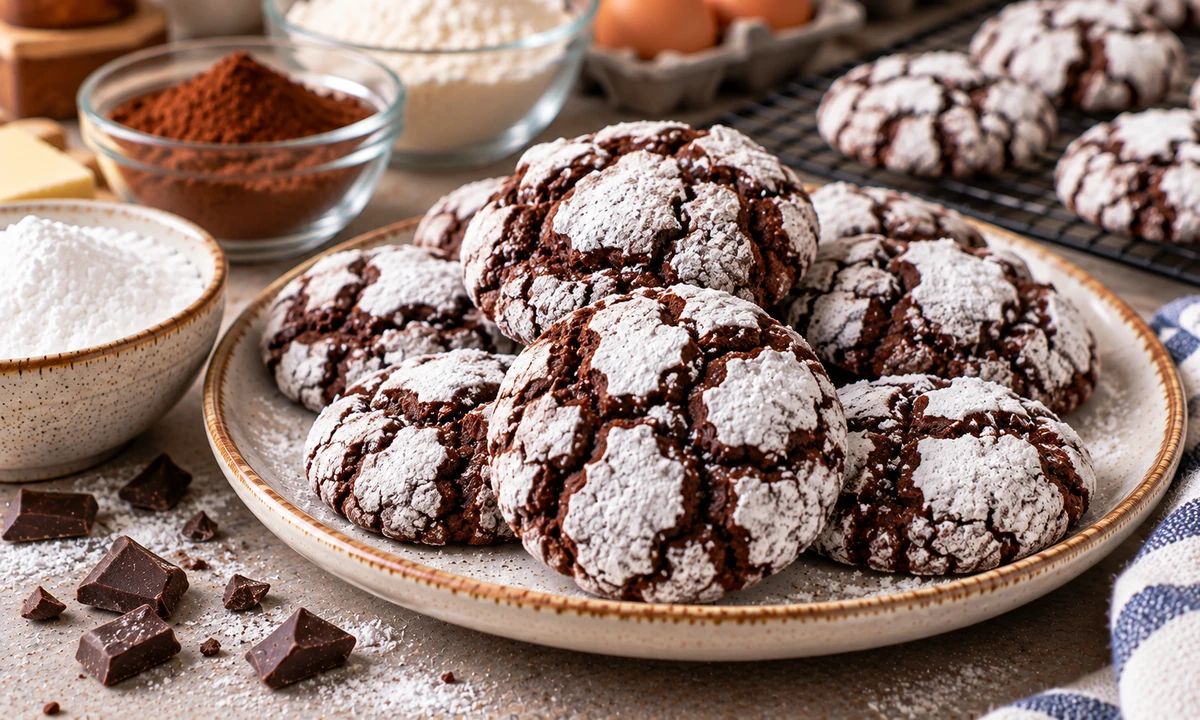
Few cookies look as striking as chocolate crinkle cookies, with a snowy powdered-sugar shell split open by deep, dark cracks. They taste as good as they look: soft and almost brownie-like in the middle, with a little chew at the edges.
This recipe uses vegetable oil instead of butter, which helps keep the centers tender and fudgy. The dough is moist and chilled before baking, and the cookies come out of the oven while the middles still look underdone. Below you’ll find the full process, including how to get the signature cracks.
Recipe at a Glance
- Prep time: 20 minutes
- Chill time: 2 hours
- Bake time: 10–12 minutes at 350°F (175°C)
- Total time: about 2 hours 30 minutes
- Yield: about 24 cookies
What Are Chocolate Crinkle Cookies?
Chocolate crinkle cookies are soft chocolate cookies rolled generously in powdered sugar before baking. As they bake, the dough spreads and rises, cracking the sugar shell and revealing the dark chocolate beneath. That white-and-dark contrast is their signature.
Unlike a crisp chocolate cookie, a crinkle is meant to stay soft and fudgy in the center, so the texture depends on the dough’s moisture and your timing in the oven. If you like chocolate-forward bakes, they sit well next to our thick chocolate chip cookies or, for a buttery contrast, our buttery shortbread cookies on a holiday tray.
Ingredients for Chocolate Crinkle Cookies
This makes about 24 medium cookies.
- 1 cup (200 g) granulated sugar
- ½ cup (120 ml) vegetable oil
- 1 cup (85 g) unsweetened cocoa powder
- 4 large eggs
- 2 teaspoons vanilla extract
- 2 cups (250 g) all-purpose flour
- 2 teaspoons baking powder
- ½ teaspoon salt
- 1 cup (120 g) powdered sugar, for coating
Ingredient Notes
Granulated sugar: It sweetens the dough and helps the surface crackle.
Vegetable oil: Oil stays liquid at room temperature, so it keeps the crumb soft and fudgy and the cookies tender for longer than butter would.
Cocoa powder: The deep chocolate base. It must be unsweetened, not a drinking-cocoa mix.
Eggs: They provide structure, richness, and lift.
Flour: Measure it accurately, since too much makes crinkles heavy and dry. King Arthur Baking explains how to measure flour, and weighing it is the most reliable method.
Baking powder and salt: The baking powder puffs the cookies so they crack, and the salt balances the sweetness.
Powdered sugar: This is for coating, and you’ll want a generous amount.
What Cocoa Powder Should You Use?
Cocoa carries most of the flavor here, so it’s worth choosing well. Use unsweetened cocoa powder, never a sweetened mix, because the recipe already has its own sugar. This recipe was developed around natural unsweetened cocoa. Dutch-process cocoa is less acidic and darker, and it can change the color, flavor, and rise a little. If you switch, expect a slightly different texture and look, and change only one thing at a time.
Equipment
- Large mixing bowl and whisk or spoon (a mixer isn’t required)
- Kitchen scale for accurate flour and cocoa
- Cookie scoop for even portions
- Shallow bowl for the powdered sugar
- Parchment paper, baking sheets, and a wire rack
How to Make Chocolate Crinkle Cookies
1. Mix the Sugar, Oil, and Cocoa
In a large bowl, stir the granulated sugar, oil, and cocoa into a thick, dark paste. It should look smooth and glossy, with no dry pockets of cocoa.
2. Mix in the Eggs and Vanilla
Beat in the eggs one at a time, then the vanilla, until the mixture is glossy and smooth. Scrape the bowl as needed.
3. Whisk the Dry Ingredients
In a separate bowl, whisk the flour, baking powder, and salt so the leavening is evenly spread. That helps the cookies rise and crack consistently.
4. Combine Gently
Stir the dry mixture into the chocolate mixture just until a thick, sticky dough forms, then stop. The dough will be too soft to shape right away, which is normal; chilling fixes that.
Why the Dough Needs Chilling
Cover the dough and refrigerate it for at least 2 hours, until it is firm enough to scoop and roll. Overnight is fine, too. Chilling makes the sticky dough manageable and slows the spread in the oven, so the cookies hold their rounded shape and crack properly. If your kitchen is warm, keep the bowl in the refrigerator between batches.
How to Coat Them in Powdered Sugar
Put the powdered sugar in a shallow bowl. Scoop the chilled dough in portions of about 2 tablespoons (roughly 35 g), roll each into a ball, then roll it in the sugar until it is completely and generously coated. Coat the balls right before baking, because a thick, even layer is what stays visible in the cracks after the cookies spread. Place them on a parchment-lined sheet about 2 inches apart and leave them rounded rather than pressing them down.
How to Get the Perfect Crinkle
The cracks come from a few things working together:
- Chilled dough is easier to shape and controls spreading, which helps the surface crack as the cookies rise.
- A generous, even sugar coating keeps the contrast sharp. A thin layer just melts into the dough.
- Rounded dough balls, never flattened.
- Fresh baking powder, because its puff is what pulls the surface apart.
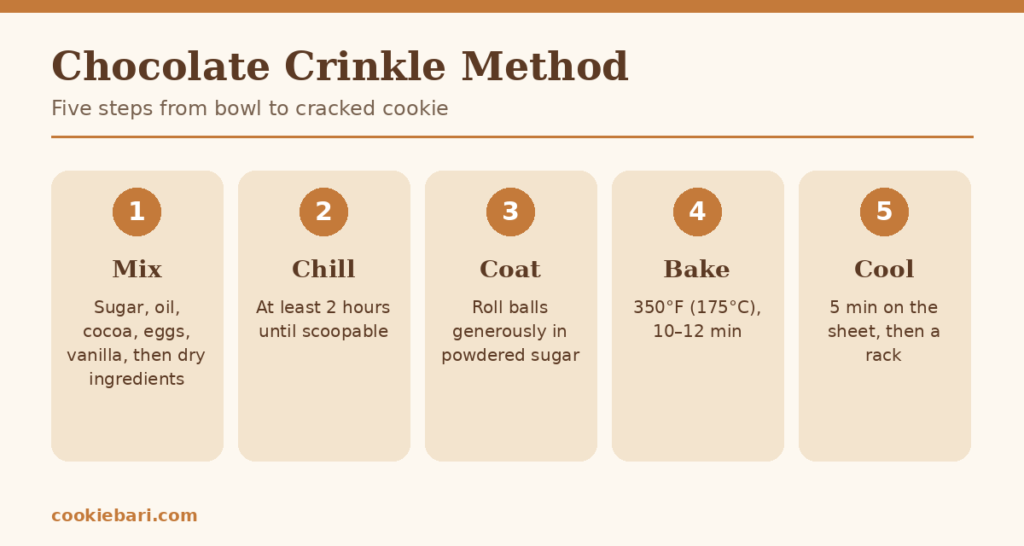
The chocolate crinkle method in five steps.
How to Tell When They’re Done
Bake at 350°F (175°C) for 10–12 minutes, and judge by look rather than firmness. They’re ready when the edges are set, the surface is visibly cracked, and the centers still look slightly soft. Don’t wait for them to feel completely firm, because they finish setting as they cool, and that carry-over keeps the middle fudgy. Let them rest on the sheet for about 5 minutes, then move them to a rack. Overbaking is the easiest way to lose the soft center, so err on the early side.
Keeping the Centers Soft
A soft crinkle starts with the dough: the oil locks in moisture and the eggs give a tender structure. Two things protect that texture. Measure the flour accurately so the cookies don’t turn dense, and store the cooled cookies in an airtight container so they don’t dry out.
Common Mistakes to Avoid
- Under-chilled dough: too soft to handle and prone to spreading. Give it the full chill.
- Too little powdered sugar: a thin coat vanishes into the dough, so roll generously.
- Flattening the dough balls: they need their rounded shape to crack.
- Too much flour: it makes the cookies heavy and less fudgy. Weigh it.
- Overbaking: it dries out the centers and is hard to spot because the dough is already dark, so go by the visual cues above.
Easy Variations
- Espresso: 1–2 teaspoons of instant espresso powder deepens the chocolate without tasting like coffee.
- Orange: 1–2 teaspoons of finely grated orange zest for a bright citrus lift.
- Mint: a small amount of mint extract (start with ¼ teaspoon) for a cool, festive note.
- White chocolate: fold in white chips before chilling for a sweet contrast against the dark dough.
- Chocolate chips: semisweet or dark chips add melty pockets. For a cookie built around that idea, see our double chocolate chip cookies.
How to Store Chocolate Crinkle Cookies
Cool the cookies completely, then keep them in an airtight container at room temperature, separating layers with parchment if you stack them. They’re best within several days, while the centers are softest. Don’t store them warm, because trapped steam can dull the powdered-sugar finish.
Can You Freeze Them?
Yes, both baked cookies and raw dough freeze well. For baked crinkles, cool them fully and store them in a freezer-safe container with parchment between layers.
For dough, the order matters: portion the chilled dough into balls and freeze them before coating in powdered sugar. When you’re ready to bake, thaw the portions in the refrigerator, then roll them generously in powdered sugar and bake. Coating before freezing leaves the sugar damp and patchy, so always coat fresh, right before the oven.
Food safety: Don’t eat raw cookie dough, which contains uncooked flour and eggs. The FDA explains the risks in its guide to handling flour safely.
Frequently Asked Questions
Why are my chocolate crinkle cookies not cracking?
Usually the dough wasn’t chilled enough, the baking powder is old, or the balls were flattened. A firm dough, fresh leavening, a rounded shape, and a generous sugar coating together give the classic cracks.
How do I keep the powdered sugar white?
Roll the balls in powdered sugar right before baking, and coat them thickly. A thin or early coating soaks into the dough and disappears.
Can I make the dough ahead of time?
Yes. Covered dough keeps in the refrigerator for a day or two, and it handles better well chilled. Coat and bake straight from cold.
Why are my crinkle cookies hard?
Overbaking is the usual cause. Take them out while the centers still look soft, since they keep setting as they cool on the sheet.
Can I use butter instead of oil?
You can, but it changes the cookie. Oil gives these their especially soft, fudgy texture, while butter makes a firmer, more traditional cookie.
Can I add chocolate chips?
Yes. Fold in semisweet or dark chips, or chopped chocolate, for a richer, meltier cookie.
Final Thoughts
Chocolate crinkle cookies look like a showstopper without needing fancy technique. You need a moist, oil-based dough, a good long chill, a generous sugar coating, and the restraint to pull them while the centers are still soft. Once the base feels familiar, it’s an easy starting point for espresso, orange, mint, or extra chocolate.