

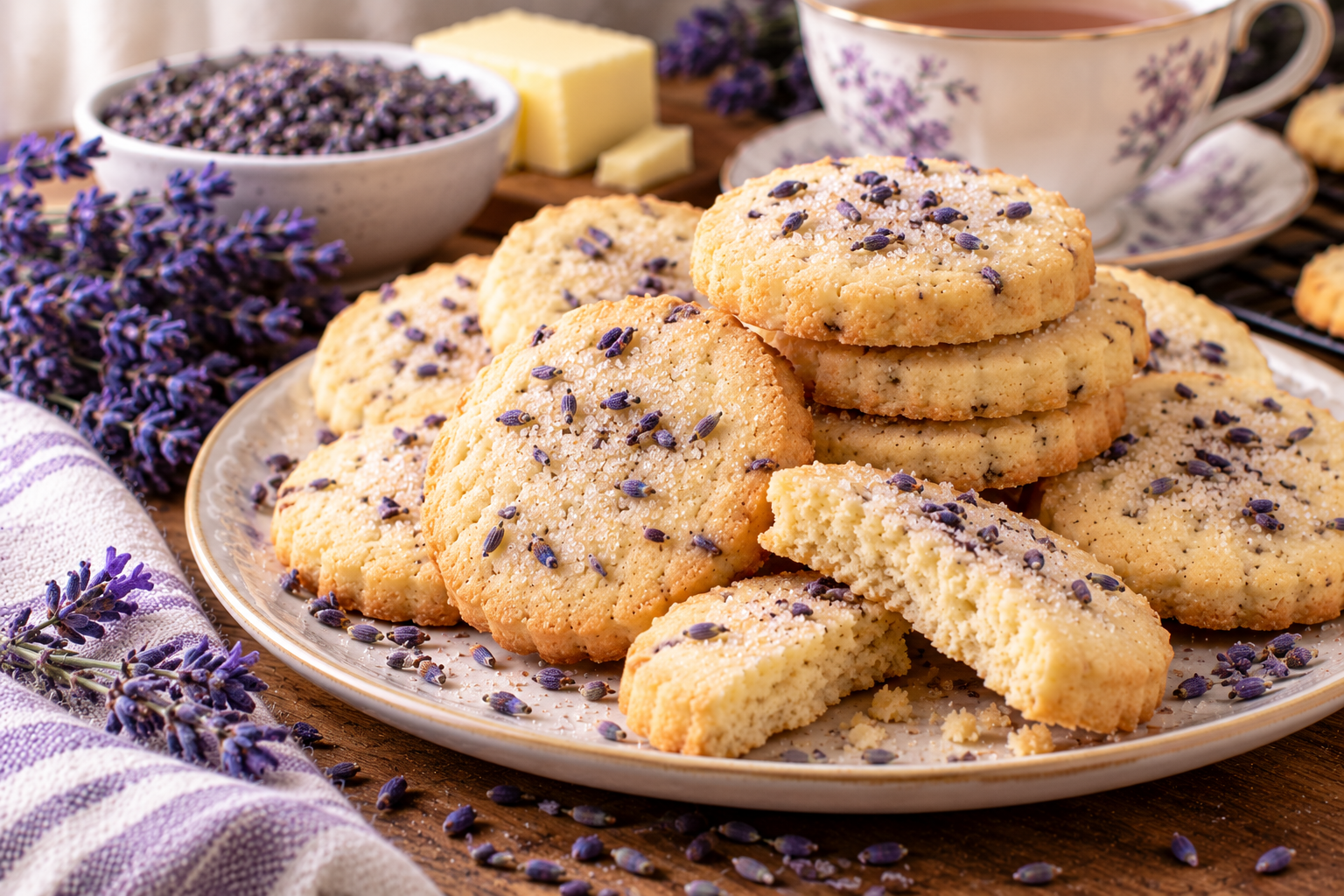
This lavender shortbread cookie recipe blends rich, buttery shortbread with the light floral flavor of culinary lavender. The cookies are crisp at the edges, tender in the center, and elegant enough for tea gatherings, holiday cookie trays, and homemade gifts, yet the recipe is surprisingly easy.
This guide covers how to choose the right lavender, how to get a tender texture, and which common mistakes to avoid, whether you want a traditional lavender shortbread or a new baking project.
Recipe at a Glance
- Prep time: 15 minutes
- Chill time: 1 hour
- Bake time: 12–15 minutes at 325°F (165°C)
- Total time: about 1 hour 30 minutes
- Yield: 18–24 cookies
- Difficulty: easy
What Makes Lavender Shortbread Special?
Lavender shortbread combines the rich taste of traditional shortbread with the delicate aroma of culinary lavender. Culinary lavender is a food-safe variety grown for cooking and baking. It has a clean floral flavor that works well in desserts, and in the right amount it adds depth without tasting overly floral.
The appeal comes from balance. Traditional shortbread is rich, buttery, and slightly crumbly. Lavender adds a light, fragrant note that brightens the flavor. The cookies pair well with tea, coffee, and dessert platters, and the aroma of butter and lavender while they bake is part of the charm.
What Do Lavender Shortbread Cookies Taste Like?
The first thing you notice is the rich buttery flavor, followed by gentle floral notes from the lavender. The flavor is balanced rather than overpowering. The texture is crisp at the edges and tender in the center, which makes the cookies good with tea or coffee.
Ingredients
- 1 cup (226 g) unsalted butter, softened
- ½ cup (100 g) granulated sugar
- 2 cups (250 g) all-purpose flour
- 2 teaspoons culinary lavender buds
- 1 teaspoon vanilla extract
- ¼ teaspoon salt
Optional additions: lemon zest, a lavender sugar topping, or a white chocolate drizzle.
Ingredient Tips Before You Begin
- Lavender: choose culinary-grade lavender, which is grown for cooking and has a clean, pleasant flavor. Decorative varieties can taste harsh. The label should say it is intended for food use. English lavender is a common choice for baking. Less is more: lavender should be a soft background note while the butter stays the star.
- Butter: use room-temperature butter. Soft butter blends easily with the sugar and makes a smooth dough, while cold butter makes the dough harder to bring together. Good-quality butter makes a noticeable difference in shortbread.
- Flour: spoon the flour into the measuring cup and level it with a knife instead of scooping from the bag, or weigh it. King Arthur Baking explains how to measure flour.
- Sugar and salt: sugar adds sweetness and a delicate crumb, and the small amount of salt balances the flavors.
How to Make Lavender Shortbread Cookies
1. Make the Lavender Sugar
Crush or pulse the sugar and lavender together in a small food processor or with a mortar and pestle until the lavender is fine and fragrant. This spreads the flavor evenly through the dough.
2. Prepare the Dough
Cream the butter and lavender sugar until light and smooth. Stir in the vanilla, then mix in the flour and salt just until a soft dough forms. Overmixing makes the cookies less tender.
3. Chill the Dough
Wrap the dough and refrigerate it for at least one hour. Chilling firms the butter and improves the final texture, so it’s a step worth keeping.
4. Shape and Cut the Cookies
Roll the chilled dough on a lightly floured surface and cut it into rounds, squares, or classic wedges. Wedges give the cookies a traditional homemade look and suit afternoon tea.
5. Bake Until Lightly Golden
Heat the oven to 325°F (165°C) and bake for 12 to 15 minutes, until the edges are lightly golden. Avoid overbaking. Shortbread should stay pale and delicate with a crisp texture around the edges. Let the cookies cool completely before serving, because freshly baked shortbread is fragile and crumbles if handled too soon.
Tips for Perfect Lavender Shortbread
- Stop mixing as soon as the ingredients come together. Too much mixing develops gluten and toughens the cookies.
- Don’t skip the chill. Cold dough holds its shape better and bakes with a cleaner texture.
- Watch the baking time. Shortbread goes from perfect to overbaked quickly, so look for lightly golden edges rather than a dark golden color.
- Cool the cookies completely before serving.
- Keep the lavender restrained so the butter stays the star.
Easy Variations to Try
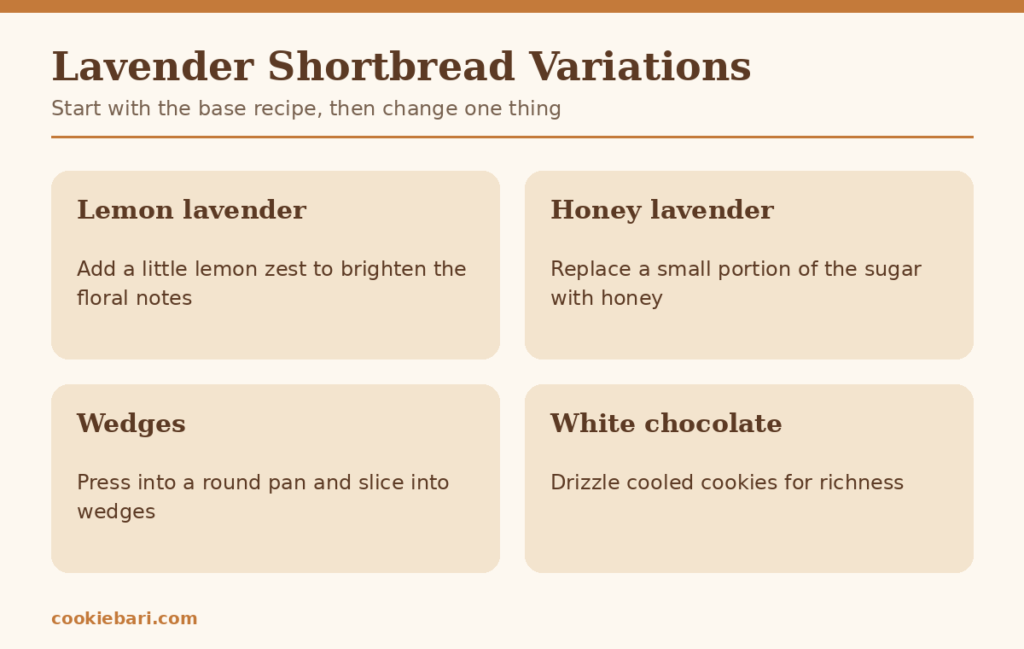
- Lemon lavender: lemon and lavender are a natural match. A little lemon zest brightens the dough and makes the floral notes feel fresher.
- Honey lavender: replace a small portion of the sugar with honey for a softer sweetness that complements the floral notes. Because honey adds moisture, start with a small amount.
- Wedges: press the dough into a round pan and slice it into wedges for a classic presentation.
- White chocolate: drizzle cooled cookies with white chocolate for richness and visual appeal.
For a plainer base, see our buttery shortbread cookies. If you enjoy unusual cookie flavors, our marzipan cookie recipe is another elegant option.
Serving Suggestions
Lavender shortbread pairs well with afternoon tea. The floral notes complement black tea, Earl Grey, and herbal blends without overpowering them. Coffee works too, since the buttery richness balances its slight bitterness. The cookies also suit dessert platters, where their delicate flavor contrasts with rich cakes, brownies, and chocolate desserts.
They make a thoughtful homemade gift too. Pack them in a decorative tin or gift box once they’ve cooled completely. For another soft, buttery classic, try our Amish sugar cookies.
How to Store Lavender Shortbread
Store the cookies in an airtight container at room temperature for up to one week, with parchment between layers to prevent breakage. This keeps the texture crisp and preserves the delicate flavor. You can also freeze baked cookies in a freezer-safe container, or wrap the unbaked dough tightly and freeze it. Thaw the dough in the refrigerator before shaping and baking.
Food safety: The dough contains raw flour, so don’t eat it before baking. The FDA explains the risks of raw flour.
Common Mistakes to Avoid
- Non-culinary lavender: decorative lavender can taste harsh. Always choose culinary-grade.
- Overbaking: shortbread should stay light in color with only slightly golden edges. Dark cookies lose their delicate buttery quality.
- Too much lavender: a little goes a long way. Both the butter and the floral notes should come through.
- Skipping the chill: chilled dough holds its shape and gives a cleaner texture.
- Cold butter: it makes mixing harder and the dough uneven. Soft butter gives a tender crumb.
Frequently Asked Questions
Can I use fresh lavender instead of dried?
You can, but dried culinary lavender usually gives a more consistent flavor. Fresh lavender holds more moisture and varies in strength, so use it sparingly and make sure it’s safe for culinary use.
What type of lavender is best for baking?
Culinary-grade English lavender is a common choice for baking. It has a mild, pleasant flavor that works in cookies, cakes, and other desserts.
Can I freeze lavender shortbread dough?
Yes. Wrap the dough tightly in plastic wrap and put it in a freezer-safe bag or container. Thaw it in the refrigerator before shaping and baking.
Why are my shortbread cookies crumbly?
Some crumbliness is normal for shortbread. Too much flour or too little mixing can make it excessive. Measure the flour carefully and mix until the dough just comes together.
Is this a traditional British shortbread?
It follows the same simple principles as classic British shortbread: quality butter, few ingredients, and balanced flavor. The lavender gives the classic cookie a fresh, elegant twist.
Final Thoughts
These cookies turn a few basic ingredients into something memorable. The buttery texture, delicate floral aroma, and pretty appearance make them feel special, yet they’re easy enough for beginners. Small details such as making lavender sugar, chilling the dough, and watching the bake time give the best results.