


These homemade gingerbread cookies are warmly spiced, buttery, and perfect for holiday baking. Molasses, ginger, cinnamon, and brown sugar give them lightly crisp edges and tender centers.
The dough is easy to roll and cut into gingerbread people, Christmas trees, stars, snowflakes, or any shape you like. A short chill helps the dough hold its shape, and careful baking keeps the cookies from turning hard or dry.
Recipe at a Glance
- Prep time: 15 minutes
- Chill time: 1 hour
- Bake time: 8–11 minutes at 350°F (175°C)
- Total time: about 1 hour 25 minutes
- Yield: 24–30 cookies, depending on cutter size
Ingredients
- ¾ cup (170 g) unsalted butter, softened
- ¾ cup (165 g) packed brown sugar
- ½ cup (120 g) molasses
- 1 large egg
- 1 teaspoon vanilla extract
- 3 cups (375 g) all-purpose flour
- 1 teaspoon baking soda
- ½ teaspoon salt
- 1½ teaspoons ground ginger
- 1½ teaspoons ground cinnamon
- ¼ teaspoon ground cloves
- ¼ teaspoon ground nutmeg
For decorating: royal icing, powdered sugar glaze, colored sprinkles, colored sugar, melted chocolate, or powdered sugar.
Ingredient Notes
- Butter: use softened, not melted, butter. It should be easy to mix while still holding its shape.
- Brown sugar: it adds sweetness and moisture, and it complements the rich flavor of molasses.
- Molasses: it gives gingerbread its dark color and deep, rich flavor.
- Flour: measure carefully, because too much makes the cookies dry or tough. King Arthur Baking explains how to measure flour.
- Spices: ginger provides the main spicy flavor, while cinnamon, cloves, and nutmeg add warmth and depth.
- Baking soda: it helps the cookies rise slightly and shapes their final texture.
How to Make Homemade Gingerbread Cookies
1. Prepare the Dough
Beat the softened butter and brown sugar in a large bowl until creamy and smooth. Mix in the molasses, egg, and vanilla until everything is evenly combined. In a separate bowl, whisk the flour, baking soda, salt, ginger, cinnamon, cloves, and nutmeg. Gradually stir the dry ingredients into the wet mixture, just until a thick dough forms. Mixing further once the flour is incorporated makes the cookies tougher.
2. Chill the Dough
Wrap the dough tightly or put it in a covered container and refrigerate for at least 1 hour. Chilling firms the butter, makes the dough easier to roll, and helps the cookies keep their shapes in the oven. For a holiday gathering, you can make the dough a day ahead and keep it refrigerated.
3. Roll and Cut the Dough
If the chilled dough feels extremely firm, let it sit at room temperature for a few minutes. Lightly flour your work surface, or roll the dough between two sheets of parchment paper, to about ¼ inch thick. Press the cutters firmly into the dough and lift straight up rather than twisting. Move the shapes to a parchment-lined baking sheet. If the dough gets soft while you work, refrigerate it for several minutes before continuing.
4. Bake
Heat the oven to 350°F (175°C) if you haven’t already, and bake for 8 to 11 minutes, depending on size and thickness. The edges should look set and lightly browned. For softer cookies, take them out toward the early end of the range, and for crispier cookies, bake slightly longer. Let them rest on the baking sheet for about 5 minutes, then move them to a wire rack to cool completely.
How to Get Soft Gingerbread Cookies
Avoid rolling the dough too thin. About ¼ inch gives a tender center. Watch the baking time closely and remove the cookies when the edges are set and the centers still have a little softness. Brown sugar and molasses add moisture and richness, and storing the cooled cookies in an airtight container helps preserve their texture.
Tips for Perfect Gingerbread Cookies
- Use softened butter, not melted.
- Measure the flour carefully to avoid dry cookies.
- Chill the dough before rolling.
- Roll the dough evenly so the cookies bake at the same rate.
- Use only enough flour to prevent sticking.
- If the dough softens while you cut, chill it again.
- Avoid overbaking.
- Let the cookies cool completely before decorating, and let icing or melted chocolate set before stacking.
Simple Gingerbread Decorating Ideas
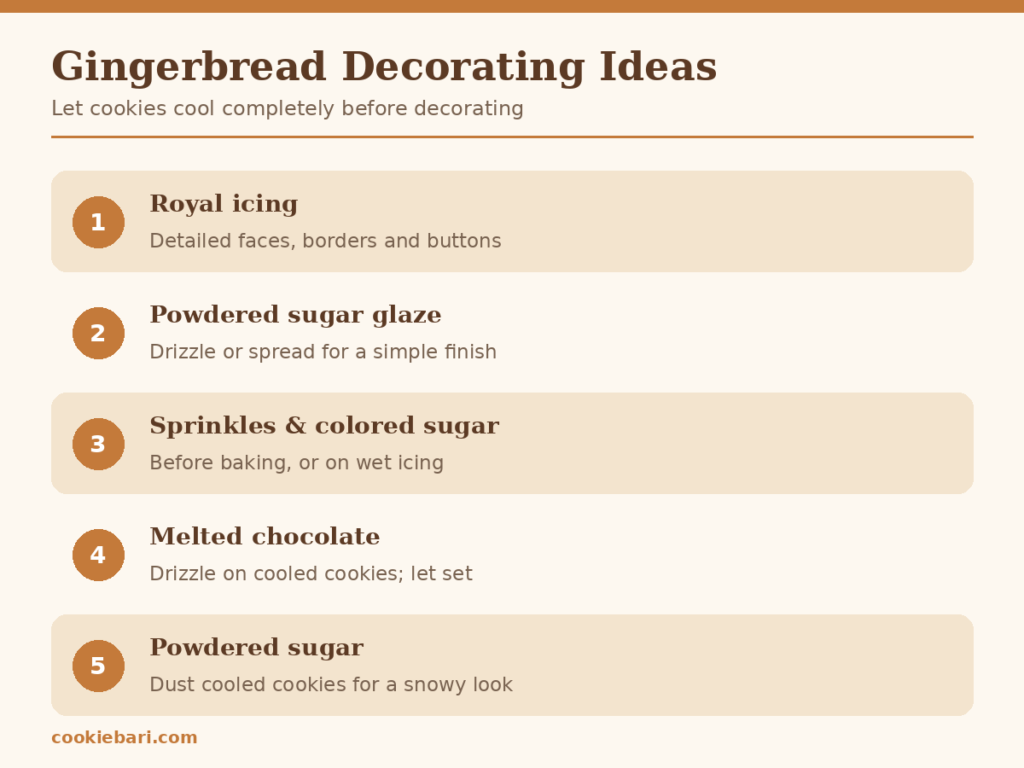
- Royal icing: good for detailed designs such as faces, clothing, borders, and buttons on gingerbread people.
- Powdered sugar glaze: drizzle it over the cookies or spread it across the surface for an easy sweet finish.
- Sprinkles and colored sugar: add colored sugar or sprinkles before baking, or press them into wet icing so they stick.
- Chocolate: drizzle or pipe melted chocolate onto cooled cookies and let it set completely before stacking.
- Powdered sugar: lightly dust completely cooled cookies for a snowy finish.
Cutter ideas include Christmas trees, stars, snowflakes, hearts, bells, stockings, ornaments, and snowmen.
Easy Gingerbread Cookie Variations
- Orange: add finely grated orange zest for a bright citrus flavor that pairs well with ginger and cinnamon.
- Lemon: add finely grated lemon zest for a fresh citrus note.
- Almond: add a small amount of almond extract for a subtle almond flavor.
- Chocolate-dipped: dip half of each cooled cookie into melted chocolate and let it set before serving.
How to Store Gingerbread Cookies
Let the cookies and decorations cool and dry completely, then store the cookies in an airtight container at room temperature. If you stack decorated cookies, separate the layers with parchment to protect the decorations. A tightly sealed container matters most if you want soft cookies.
Can Gingerbread Cookies Be Frozen?
Baked Cookies
Cool the cookies completely, then place them in a freezer-safe airtight container with parchment between the layers. Thaw at room temperature before serving.
Gingerbread Dough
Wrap the dough tightly and put it in a freezer-safe container or bag. For easier holiday baking, you can also roll and cut the dough before freezing. Freeze the cut shapes on a tray until firm, then transfer them to a freezer-safe container. Frozen cut dough can be baked directly from frozen, though the baking time may need a slight adjustment.
Food safety: The dough contains raw egg and flour, so don’t eat it before baking. The FDA explains the risks of raw flour, and the CDC explains why you shouldn’t eat raw dough.
Make-Ahead Gingerbread Cookies
The dough can be prepared a day ahead and refrigerated until you’re ready to roll and bake. You can also bake the cookies before a holiday gathering. Once they are completely cooled, decorate them and let the icing set before packaging. For another festive cut-out cookie, try our easy homemade sugar cookies.
Frequently Asked Questions
Why do my gingerbread cookies spread?
Warm butter or dough that wasn’t chilled enough can cause spreading. Chill the dough before rolling, and return it to the refrigerator if it softens while you work.
How thick should gingerbread cookies be?
About ¼ inch is a good starting point. Thicker cookies tend to have softer centers, while thinner cookies turn crispier.
Why are my gingerbread cookies hard?
Overbaking is a common reason, and too much flour can also harden them. Measure the flour carefully and remove the cookies when the edges are set.
Can I decorate gingerbread cookies before baking?
Some toppings, such as colored sugar, can go on before baking. Add most icing and detailed decorations after the cookies have cooled completely.
Can I freeze decorated gingerbread cookies?
Yes. Let the decorations dry completely first, then store the cookies in an airtight freezer-safe container with parchment between layers.
Serving Suggestions
Serve these cookies with coffee, tea, milk, or hot chocolate. They also make a festive addition to holiday cookie trays and homemade gift boxes.
Final Thoughts
These homemade gingerbread cookies are a classic holiday treat with warm spices, rich molasses flavor, and a tender texture. The dough is sturdy enough for cookie cutters and still tastes good with little decoration. Chill the dough before rolling, use only as much flour as you need, and watch the baking time. Once the cookies have cooled, decorate them simply or go all out with icing and festive toppings.