
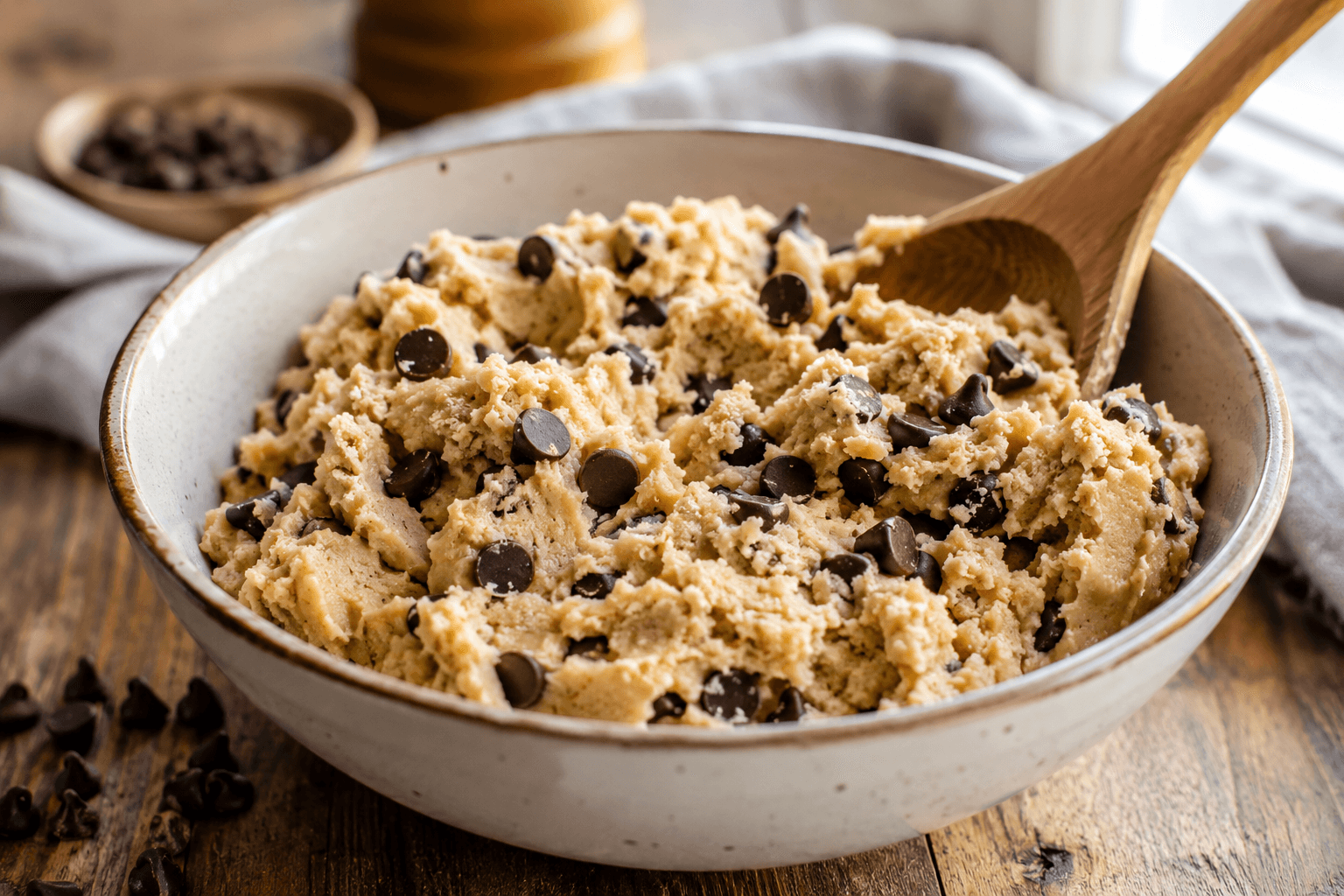
Few treats are as tempting as a spoonful of cookie dough. That craving inspired me to create a cookie dough recipe vegan version at home. It delivers the same sweet flavor and creamy texture without eggs or dairy.
I started making vegan cookie dough when I wanted a safer way to enjoy raw dough. After many tests, I found a simple mix of ingredients that creates a rich and satisfying treat. The flavor rivals traditional cookie dough, and the texture stays soft and creamy.
This edible cookie dough recipe vegan tastes great straight from the bowl. You can make it in minutes and customize it with your favorite mix-ins. A simple 3 ingredient vegan cookie dough version also works well when you need a quick snack.
In this guide, I’ll show you how to make vegan cookie dough step by step. You’ll learn about ingredient swaps, storage tips, and creative flavor ideas. Grab a spoon and let’s get started.
Recipe Information
Prep Time: 10 minutes
Cook Time: 0 minutes
Total Time: 10 minutes
Servings: 6
Calories: Approx. 220 per serving
Course: Dessert
Cuisine: Vegan
Diet: Vegan, Dairy-Free
Why You’ll Love This Cookie Dough Recipe Vegan
The best thing about this cookie dough recipe vegan is that you can enjoy it without baking. That means you get all the fun of cookie dough with none of the worry that comes with raw eggs. When I first switched to vegan baking, this was one of the biggest benefits I noticed. It felt like getting permission to enjoy my favorite treat straight from the bowl.
Another reason to love this recipe is its rich and creamy texture. Vegan cookie dough does not feel dry or bland when you use the right balance of ingredients. In fact, many friends who tried my recipe could not tell the difference. The dough stays smooth and soft, much like a cozy blanket on a cool evening.
If you need a quick snack, this recipe can help. Most days, I can mix everything together in about ten minutes. The ingredients are simple, and the steps are easy to follow. That makes this cookie dough recipe vegan perfect for busy afternoons or late-night cravings.
You likely already have many of the ingredients in your kitchen. Basic items like flour, vegan butter, sugar, and vanilla do most of the work. There is no need for special equipment or hard-to-find products. Simple ingredients often create the best results.
One of my favorite things about this recipe is how easy it is to customize. Some days I add chocolate chips. Other times I mix in nuts, coconut, or colorful sprinkles. You can create a new version every time and never get bored.
What Makes Vegan Cookie Dough Safe to Eat?
Vegan cookie dough is safer because it does not contain raw eggs. Traditional cookie dough often includes eggs, which can carry harmful bacteria. This cookie dough recipe vegan removes that concern while keeping the flavor people love. That simple change makes a big difference.
Heat-treated flour is another important step. Many people know about raw eggs, but fewer realize that raw flour can also contain unwanted germs. I always heat-treat flour before making edible cookie dough. It takes only a few minutes and adds an extra layer of safety.
According to the FDA, raw flour may contain harmful bacteria, which is why heat-treating flour is recommended for edible cookie dough.
These adjustments matter because they allow you to enjoy cookie dough with more confidence. Safety should never come at the cost of flavor. Thankfully, vegan ingredients and heat-treated flour work together to create a treat that tastes amazing. The result is a dessert that feels both fun and worry-free.
The main difference between regular cookie dough and an edible cookie dough recipe vegan comes down to ingredients and preparation. Traditional dough is meant for baking. Edible vegan cookie dough is designed for eating right away. That makes it a convenient choice when you want a quick sweet treat without turning on the oven.
Ingredients You’ll Need
The ingredients for this cookie dough recipe vegan are simple, but each one plays an important role. Together, they create the sweet flavor, soft texture, and creamy consistency that make edible cookie dough so enjoyable. I have tested many combinations over the years, and this mix delivers reliable results every time.

- 1 cup heat-treated flour
- ½ cup vegan butter
- ⅓ cup brown sugar
- 1 tsp vanilla extract
- 2 tbsp plant-based milk
- ¼ tsp salt
- ½ cup vegan chocolate chips
Main Ingredients
Heat-Treated Flour
Heat-treated flour gives the dough structure and helps create a classic cookie dough texture. Always use heat-treated flour when making edible cookie dough. This step helps make the recipe safer to enjoy raw.
Vegan Butter
Vegan butter adds richness and creates a smooth mouthfeel. I prefer using a stick-style vegan butter because it blends well and produces a creamy texture. It also helps the dough hold its shape.
Brown Sugar
Brown sugar brings sweetness and a subtle caramel flavor. It also helps keep the dough soft and moist. That extra depth of flavor makes the finished dough taste more like traditional cookie dough.
Vanilla Extract
Vanilla adds warmth and enhances the sweetness of the other ingredients. Even a small amount can make a big difference. I never skip it because it helps create that classic homemade cookie flavor.
Plant-Based Milk
Plant-based milk helps bring the dough together. A small splash can turn crumbly ingredients into a smooth and scoopable mixture. Oat milk and almond milk both work well.
Salt
Salt may seem like a small ingredient, but it balances the sweetness. It also helps highlight the flavors of the vanilla and brown sugar. A pinch goes a long way.
Optional Mix-Ins
Vegan Chocolate Chips
Chocolate chips are the most popular mix-in for a reason. They add texture, sweetness, and little bursts of chocolate in every bite. They are perfect for a chocolate chip cookie dough recipe vegan variation.
Chopped Nuts
Nuts add crunch and a deeper flavor. Pecans, walnuts, and almonds are all great options. They create a nice contrast to the soft dough.
Coconut Flakes
Coconut flakes bring a light sweetness and a chewy texture. If you enjoy coconut flavors, you may also like my Coconut Pecan Cookie Recipe. They work especially well if you enjoy tropical flavors. A small handful can completely change the character of the dough.
Vegan Sprinkles
Sprinkles add color and fun. They turn a simple bowl of cookie dough into a festive treat. I often use them when making cookie dough for birthdays or celebrations.
Ingredient Substitutions and Swaps
One reason I love this cookie dough recipe vegan is how flexible it is. You can swap several ingredients without ruining the texture or flavor. That makes this recipe easy to adapt to different diets and pantry situations. A few simple changes can still give you delicious results.
Best Flour Alternatives
Oat flour is one of the best substitutes for all-purpose flour. It adds a mild flavor and creates a soft texture. I often use it when I want a slightly heartier cookie dough. Almond flour can also work, though it creates a richer and denser result.
Dairy-Free Milk Options
Almost any plant-based milk works in this recipe. Oat milk creates a creamy texture, while almond milk keeps the flavor light. Soy milk also works well because it has a smooth consistency. Choose the milk you enjoy most and adjust the amount as needed.
Another easy recipe that works well with simple pantry ingredients is my No Milk Cookie Recipe.
Alternative Sweeteners
Maple syrup and coconut sugar are great alternatives to brown sugar. Maple syrup adds moisture and a gentle caramel note. Coconut sugar creates a deeper flavor that reminds me of classic baked cookies. Small changes in sweeteners can create surprisingly different results.
Gluten-Free Substitutions
Making a gluten-free cookie dough recipe vegan is simple. Replace regular flour with a trusted gluten-free flour blend or oat flour. I have tested both options with good results. The dough stays soft, creamy, and easy to scoop.
How to Make Vegan Cookie Dough Step by Step
Making this cookie dough recipe vegan takes only a few minutes. The process is simple, and each step helps create the perfect texture. Follow these steps for the best results every time.
Step 1 – Heat-Treat the Flour
Heat-treating flour helps make edible cookie dough safer to eat. Spread the flour on a baking sheet and warm it in the oven until it reaches a safe temperature. I never skip this step because it provides peace of mind. A few extra minutes make a big difference.
Step 2 – Cream the Butter and Sugar
Place the vegan butter and brown sugar in a mixing bowl. Stir until the mixture looks light and smooth. This step helps create the rich texture that makes cookie dough so satisfying. A creamy base leads to better results.
Step 3 – Add Vanilla and Plant Milk
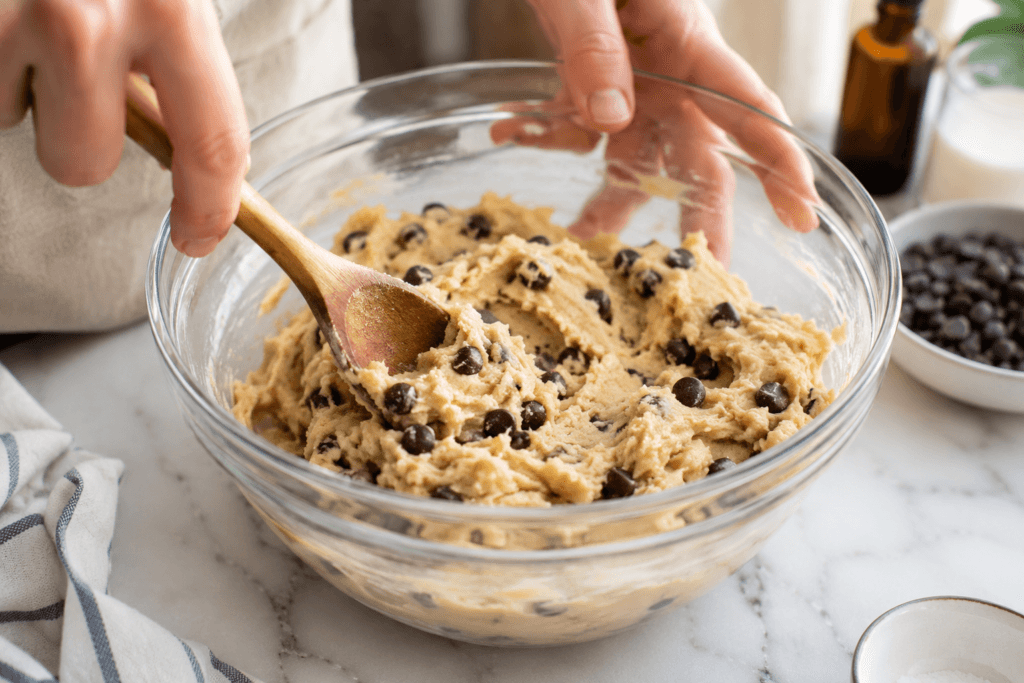
Pour in the vanilla extract and plant-based milk. Mix until everything blends together. The dough should look smooth and slightly fluffy at this stage. The aroma of vanilla often fills the kitchen right away.
Step 4 – Mix in the Flour
Add the heat-treated flour a little at a time. Stir gently until the dough comes together. If the mixture feels dry, add a small splash of milk. The goal is a soft and scoopable texture.
The first batch I made was much too dry because I added all the flour at once. After a few tests, I learned that adding flour gradually creates a much smoother texture. That small change improved every batch I made afterward.
Step 5 – Fold in Chocolate Chips
Stir in vegan chocolate chips or your favorite mix-ins. This is my favorite step because the dough starts to look like a finished treat. Every spoonful becomes more exciting with extra texture and flavor. Feel free to get creative here.
Step 6 – Chill and Serve
Place the dough in the refrigerator for about fifteen to thirty minutes. Chilling helps the flavors blend and improves the texture. The dough becomes slightly firmer and even more delicious. Then grab a spoon and enjoy.
I used to skip the chilling step because I was impatient. Once I started chilling the dough for twenty minutes, the texture became noticeably better. The flavors also tasted more balanced.
Why This Recipe Works
This cookie dough recipe vegan works because each ingredient has a clear purpose. The combination creates a balanced texture and flavor without eggs or dairy. Small details work together to produce a satisfying result. Good recipes often rely on simple science.
The balance of moisture and fat helps create a smooth texture. Vegan butter provides richness, while plant-based milk adds just enough moisture. Together, they keep the dough soft without becoming sticky. Balance is the key to great cookie dough.
Many people wonder how vegan dough stays soft without eggs. The answer is that vegan butter and the right amount of liquid create a similar texture. The dough remains creamy and easy to scoop. You do not need eggs to achieve great results.
Sweetness also plays an important role. Brown sugar adds flavor as well as sweetness. It gives the dough subtle caramel notes that make it taste more like traditional cookie dough. That extra depth makes every bite more enjoyable.
Consistency matters just as much as flavor. Too much liquid creates a sticky dough, while too little makes it crumbly. This recipe uses simple ratios that help maintain a smooth texture. The result is a dependable cookie dough recipe vegan you can make again and again.
My Best Tips for Perfect Vegan Cookie Dough
The easiest way to improve vegan cookie dough is to use room-temperature vegan butter. Soft butter blends more easily with sugar and creates a smoother texture. I learned this lesson after making several batches with cold butter. The difference was noticeable right away.
Add plant-based milk slowly instead of pouring it in all at once. A small amount often goes a long way. This simple habit helps you control the texture. It also prevents the dough from becoming too wet.
Always taste the dough before serving. Sometimes a little extra vanilla or a pinch of salt makes the flavors shine. Small adjustments can transform a good batch into a great one. Trust your taste buds.
Chilling the dough before serving is another helpful trick. Even a short rest in the refrigerator improves the texture. The flavors blend together and become more balanced. The finished dough tastes richer and more complete.
Finally, use good-quality vanilla extract whenever possible. Vanilla acts like the background music of this recipe. You may not notice it right away, but it helps every other flavor stand out. A quality vanilla extract can make homemade cookie dough taste truly special.
One weekend, I tested three different vegan butter brands side by side. The texture changed more than I expected. That experience taught me that ingredient quality can make a noticeable difference.
Easy 3 Ingredient Vegan Cookie Dough
Need a quick treat? A 3 ingredient vegan cookie dough is one of the easiest desserts you can make. I often turn to this version when I want something sweet but do not feel like measuring a long list of ingredients. It takes only a few minutes and still delivers great flavor.
Ingredients
For a simple 3 ingredient vegan cookie dough, you only need oat flour, natural peanut butter, and maple syrup. These ingredients create a soft and creamy dough without eggs or dairy. Most people already have them in the kitchen. Simple ingredients can produce surprisingly tasty results.
Quick Instructions
Add the oat flour, peanut butter, and maple syrup to a bowl. Mix until a soft dough forms. If the dough feels dry, add a small splash of plant-based milk. Once everything comes together, it is ready to enjoy.
Texture and Flavor Expectations
This quick version has a soft and slightly chewy texture. The peanut butter adds richness, while the maple syrup brings natural sweetness. It tastes different from traditional cookie dough but remains satisfying and delicious. Think of it as the shortcut version of a classic favorite.
Flavor Variations to Try
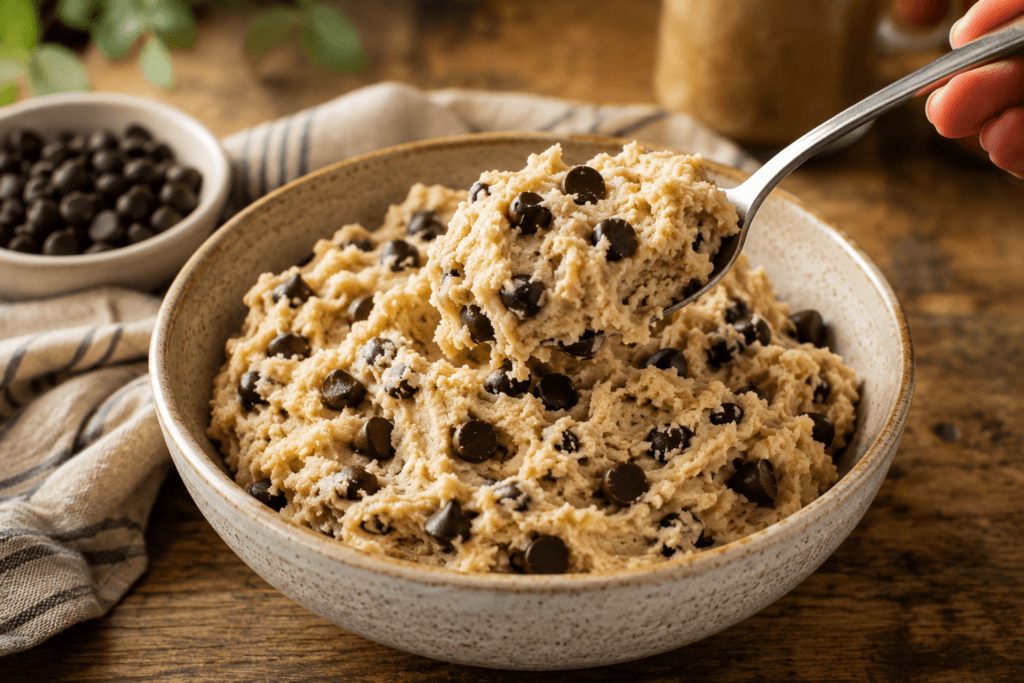
One of the best things about a cookie dough recipe vegan is how easy it is to customize. A few simple additions can create a completely new flavor experience. I enjoy experimenting with different mix-ins because every batch feels unique. Small changes often lead to exciting results.
Chocolate Chip Cookie Dough
Chocolate chip cookie dough remains the most popular variation. Vegan chocolate chips add sweetness, texture, and bursts of chocolate in every bite. If someone asks me where to start, I always recommend this option first. A chocolate chip cookie dough recipe vegan version delivers classic flavor with a plant-based twist.
If you enjoy chocolate-based cookies, you might also love my Cherry Chip Cookie Recipe.
Peanut Butter Cookie Dough
Peanut butter creates a rich and nutty flavor. It also makes the dough feel extra creamy. This variation works especially well for peanut butter lovers. A small spoonful often feels surprisingly filling.
Double Chocolate Cookie Dough
For serious chocolate fans, double chocolate cookie dough is hard to beat. Mix cocoa powder into the dough and add vegan chocolate chips. The result is deep, rich, and intensely chocolatey. Every bite feels like a dessert shop treat.
Birthday Cake Cookie Dough
Birthday cake cookie dough adds a fun and festive touch. Mix colorful vegan sprinkles into the dough and add a little extra vanilla extract. The flavor feels cheerful and nostalgic. This version is always a hit at celebrations.
Common Mistakes to Avoid
Even a simple cookie dough recipe vegan can run into problems if you skip key steps. The good news is that most mistakes are easy to prevent. A few small adjustments can improve both texture and flavor. Learning these lessons saved me many disappointing batches.
Skipping Flour Heat Treatment
Heat-treated flour helps make edible cookie dough safer to eat. Skipping this step increases unnecessary risk. I always heat-treat flour before mixing the dough. A few extra minutes are worth it.
Using Melted Butter
Melted vegan butter can make the dough greasy and loose. Softened butter works much better because it creates a creamy texture. I learned this after making a batch that turned into a sticky mess. Room-temperature butter produces more consistent results.
Adding Too Much Liquid
Too much plant-based milk can make the dough runny. Start with a small amount and add more only if needed. It is easier to add liquid than remove it. A gradual approach gives you better control.
Overmixing
Overmixing can affect the final texture. Stir only until the ingredients come together. Gentle mixing keeps the dough soft and pleasant to eat. Less work often produces better results.
Improper Storage
Leaving cookie dough uncovered can dry it out. Always store it in an airtight container. Proper storage helps preserve freshness and texture. A little care keeps the dough tasting its best.
Serving Ideas
Wondering how to serve vegan cookie dough? The answer is simple: enjoy it however you like. This recipe works as both a snack and a dessert. Its versatility makes it one of my favorite treats.
Enjoy by the Spoonful
The easiest option is also my favorite. Grab a spoon and enjoy the dough straight from the bowl. The soft texture and sweet flavor make every bite satisfying. Sometimes simple is best.
Ice Cream Topping
Cookie dough and ice cream create a perfect pair. Small chunks of dough add texture and flavor to every scoop. I often use vanilla ice cream as the base. The contrast between cold ice cream and soft dough is wonderful.
Frozen Bites
Roll the dough into small balls and freeze them. Frozen bites make a convenient grab-and-go snack. They also last longer in the freezer. This option works well during warm weather.
Dessert Board Addition
Cookie dough looks great on a dessert board. Pair it with fruit, chocolate, crackers, and nuts. Guests can mix and match flavors. It adds a fun and interactive element to gatherings.
Layered Dessert Cups
Layer cookie dough with dairy-free whipped topping and crushed cookies. The result feels elegant but takes very little effort. These dessert cups are perfect for parties. They always disappear quickly.
Storage and Shelf Life
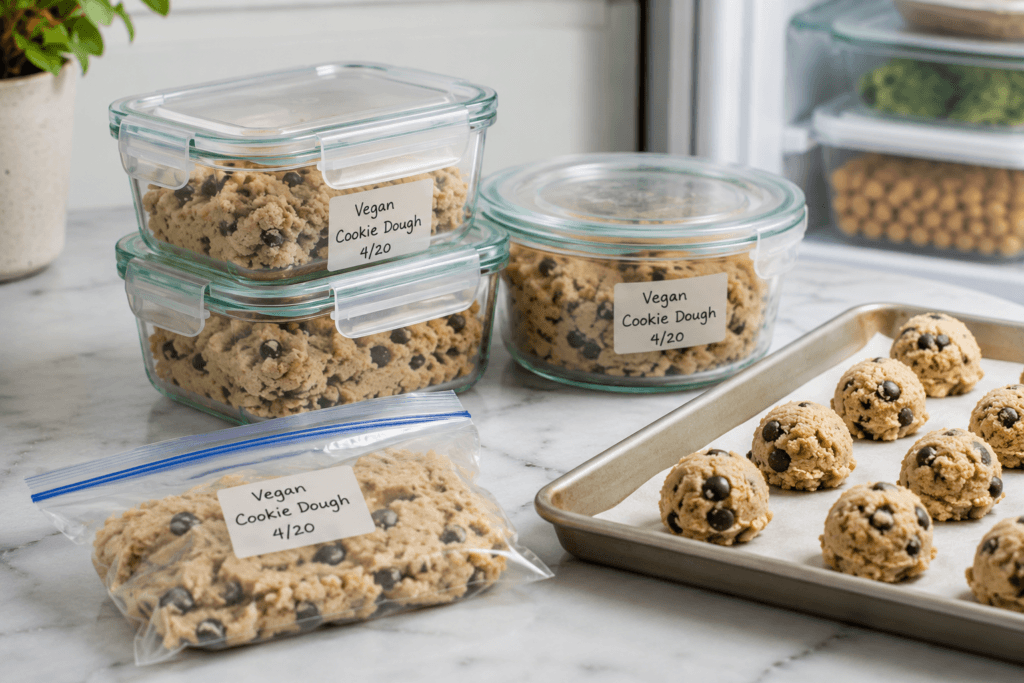
Proper storage helps maintain freshness and flavor. A cookie dough recipe vegan can stay delicious for several days when stored correctly. I always make extra because it keeps well. Good storage also helps prevent waste.
Refrigerator Storage
Store the dough in an airtight container in the refrigerator. It will stay fresh for about five to seven days. Chilling also helps the flavors develop further. Many people enjoy the texture even more after a day in the fridge.
Freezer Storage
For longer storage, place the dough in a freezer-safe container. It can last up to three months in the freezer. I like freezing small portions for quick snacks. Individual portions make serving easy.
How to Thaw Properly
Move the dough from the freezer to the refrigerator several hours before serving. This gradual method helps maintain the best texture. Avoid using high heat to speed up the process. Slow thawing produces the best results.
Nutrition Highlights
A cookie dough recipe vegan can fit into many lifestyles because it uses plant-based ingredients. Most versions contain no dairy and no eggs. That makes them a good option for people who avoid animal products. Simple ingredients often make recipes easier to enjoy.
The Academy of Nutrition and Dietetics notes that well-planned plant-based diets can support healthy living.
One benefit of dairy-free cookie dough is that it works for many people with dairy sensitivities. Vegan butter and plant-based milk can provide a creamy texture without traditional dairy products. I started using these alternatives years ago and was surprised by how little flavor I sacrificed. The result still felt rich and satisfying.
The ingredients in this recipe are also vegan-friendly. Every ingredient serves a purpose while keeping the recipe completely plant-based. That means you can enjoy a sweet treat without changing your dietary preferences. A well-balanced vegan recipe can taste just as comforting as a traditional one.
Portion size matters with any dessert. Cookie dough contains sugar and fat, so a moderate serving often feels most satisfying. I find that a small bowl usually satisfies my sweet tooth. A little can go a long way.
A typical serving provides carbohydrates from flour and sugar, while vegan butter contributes fat for richness. Plant-based ingredients also help keep the recipe completely dairy-free. Exact nutrition depends on the ingredients and portion size.
Keep in mind that nutrition values vary from recipe to recipe. Different brands of vegan butter, plant-based milk, and chocolate chips can change the final numbers. Exact nutrition depends on the ingredients you choose. Checking product labels can provide the most accurate information.
Approximate Nutrition Per Serving
Calories: 220
Carbohydrates: 24g
Fat: 12g
Protein: 3g
Sugar: 14g
Frequently Asked Questions
Is vegan cookie dough safe to eat raw?
Yes, vegan cookie dough can be safe to eat raw when you use heat-treated flour and avoid raw eggs. Safety comes from both ingredient choice and preparation method. I always use heat-treated flour for extra peace of mind. That simple step helps make edible cookie dough safer to enjoy.
For additional food safety guidance, visit the CDC Food Safety Resource Center.
Do I have to heat-treat flour?
Yes, heat-treating flour is strongly recommended for edible cookie dough. Raw flour can contain unwanted germs, even when it looks perfectly fine. The process takes only a few minutes. It is one of the easiest ways to improve food safety.
Can I bake this cookie dough?
Sometimes, but results may vary. This cookie dough recipe vegan is designed primarily for eating raw. If you want to bake cookies, you may need to adjust ingredient amounts. Edible cookie dough and baking dough do not always behave the same way.
How long does vegan cookie dough last?
Vegan cookie dough usually lasts about five to seven days in the refrigerator. Proper storage helps maintain freshness and texture. Keep it in an airtight container for the best results. Freezing can extend its shelf life even further.
Can I make it gluten-free?
Yes, you can easily make a gluten-free cookie dough recipe vegan. Replace regular flour with oat flour or a reliable gluten-free flour blend. I have tested both options successfully. The texture remains soft and enjoyable.
What plant milk works best?
Oat milk is my personal favorite because it creates a creamy texture. Almond milk and soy milk also work very well. The best choice depends on your taste preferences. Any unsweetened plant-based milk should work in this recipe.
Final Thoughts
This cookie dough recipe vegan proves that simple ingredients can create something truly delicious. It offers the sweet flavor and creamy texture people love while staying completely dairy-free and egg-free. The recipe is easy to make, easy to customize, and easy to enjoy. That combination makes it a favorite in my kitchen.
One reason I return to this recipe so often is its flexibility. Some days I make the classic version. Other days I experiment with chocolate chips, peanut butter, or colorful sprinkles. Small changes can create a completely new experience.
If you enjoy this cookie dough recipe vegan, you may also like my Applesauce Oatmeal Cookie Recipe, Dairy Free Cookie Recipe, and Coconut Pecan Cookie Recipe. Both recipes use simple ingredients and follow the same beginner-friendly approach.
I still remember the first time I made a batch that tasted exactly how I wanted. The texture felt smooth, the flavor felt balanced, and the bowl emptied surprisingly fast. That experience inspired me to keep refining this recipe. I hope it brings the same joy to your kitchen and encourages you to create your own favorite version.