
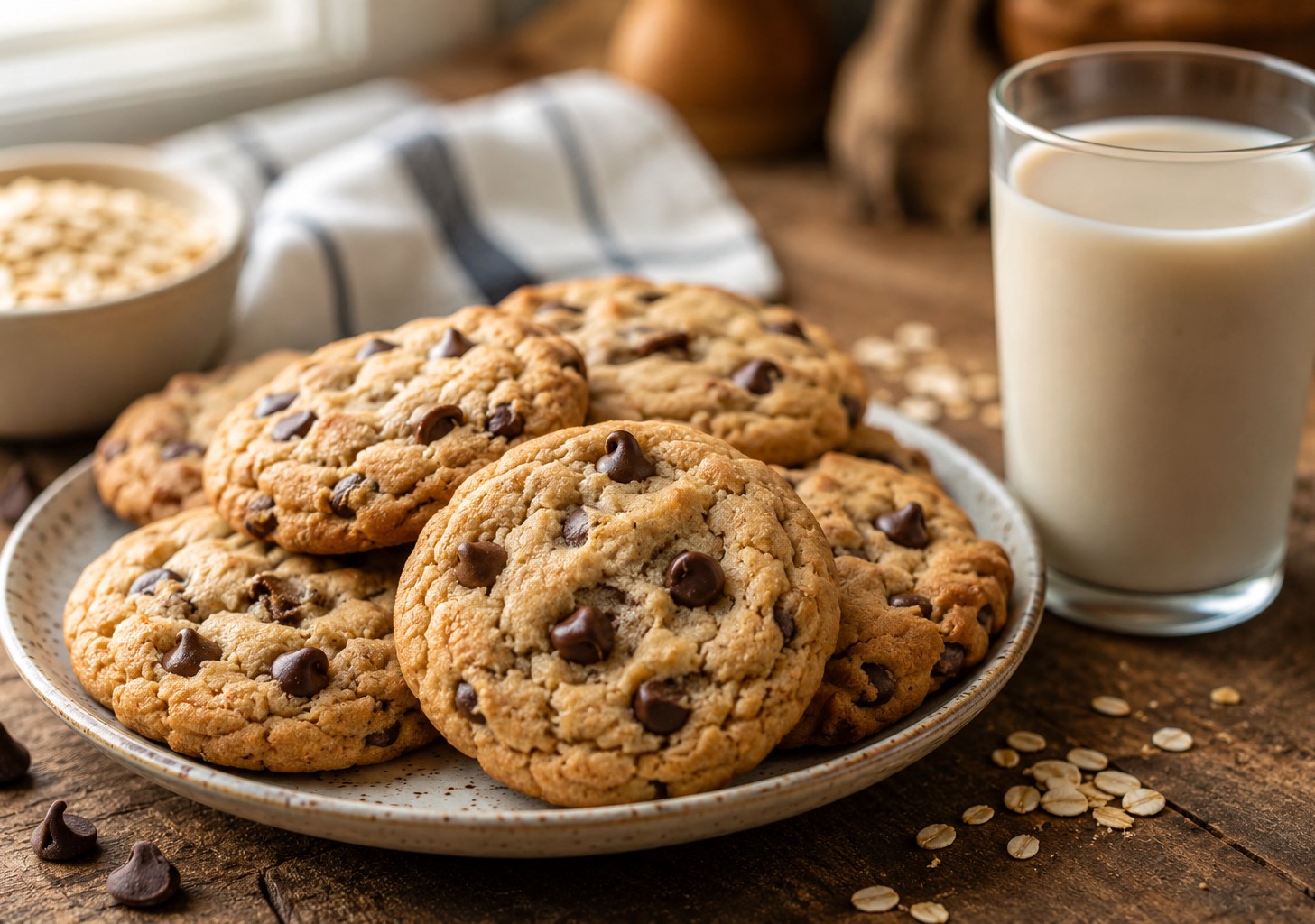
Looking for a homemade cookie without butter or other dairy ingredients? This dairy-free cookie recipe is simple, soft, and easy to make with everyday ingredients.
The cookies have lightly golden edges and soft centers, with brown sugar adding a deeper sweetness. Vegetable oil replaces butter, while a small amount of oat milk or almond milk helps bring the dough together.
You can keep the recipe simple with dairy-free chocolate chips, or add walnuts, oats, or coconut for extra texture. Since the main recipe contains no eggs, it is also naturally egg-free.
Recipe Overview
- Prep Time: 10 minutes
- Cook Time: 10–12 minutes
- Total Time: 20–22 minutes
- Yield: About 16 cookies
- Difficulty: Easy
- Course: Dessert
Ingredients
- 2 cups all-purpose flour
- 3/4 cup brown sugar
- 1/4 cup granulated sugar
- 1/2 cup vegetable oil
- 1/4 cup oat milk or almond milk
- 1 teaspoon vanilla extract
- 1 teaspoon baking soda
- 1/2 teaspoon salt
- 1 cup dairy-free chocolate chips
Optional Add-Ins
- 1/2 cup chopped walnuts
- 1/4 cup oats
- 1/4 cup unsweetened coconut flakes
A Few Notes About the Ingredients
Flour
All-purpose flour gives the cookies enough structure to hold their shape while keeping the centers tender.
For more consistent results, spoon the flour into your measuring cup and level it off rather than packing it down. Too much flour can make the dough dry and difficult to scoop.
Brown Sugar and Granulated Sugar
Brown sugar brings moisture and a warm, caramel-like flavor to the cookies. The smaller amount of granulated sugar balances the sweetness and helps give the cookies their finished texture.
Vegetable Oil
Vegetable oil takes the place of butter in this recipe. Because oil is liquid at room temperature, the finished cookies will have a somewhat different texture from traditional butter-based cookies.
A neutral oil such as vegetable or canola oil works best when you want the chocolate and vanilla flavors to stand out. Baking tests also show that changing the type of fat can noticeably affect cookie texture and spread.
Oat Milk or Almond Milk
You only need a small amount of plant-based milk to bring the dough together.
Unsweetened oat milk gives the cookies a slightly fuller flavor, while almond milk has a lighter taste. Either works well here.
Vanilla and Salt
Vanilla gives the cookies a familiar homemade flavor, while salt balances the sweetness and keeps the chocolate from tasting flat.
Dairy-Free Chocolate Chips
Dairy-free chocolate chips are optional, but they turn these simple cookies into a classic chocolate chip treat.
If you are making these cookies for someone with a milk allergy, check the chocolate label carefully. The FDA has found unintended milk in some chocolate products carrying dairy-free or similar claims, so ingredient and allergen statements are worth checking rather than assuming a chocolate product is dairy-free.
How to Make This Dairy-Free Cookie Recipe
1. Prepare the Oven
Preheat the oven to 350°F (175°C).
Line a baking sheet with parchment paper and set it aside.
2. Mix the Wet Ingredients
Add the vegetable oil, brown sugar, granulated sugar, and vanilla extract to a large mixing bowl.
Stir until the mixture is evenly combined.
Add the oat milk or almond milk and mix again.
3. Add the Dry Ingredients
Add the flour, baking soda, and salt.
Stir gently until the flour is incorporated and a soft dough forms.
Once the dough comes together, stop mixing. Overworking cookie dough after adding flour can make the texture less tender.
4. Add the Chocolate Chips
Fold the dairy-free chocolate chips into the dough with a spatula or wooden spoon.
If you are using walnuts, oats, or coconut, add them at the same time.
5. Shape the Cookies
Scoop the dough into portions and place them on the prepared baking sheet.
Leave enough space between the dough portions for the cookies to spread as they bake.
If you prefer thicker cookies, chill the dough for about 20 minutes before baking.
6. Bake
Bake for 10–12 minutes, or until the edges are lightly golden and the centers still look slightly soft.
Do not wait for the centers to become completely firm in the oven. They will continue to set as they cool.
Let the cookies rest on the baking sheet for about 5 minutes before moving them to a cooling rack.
Tips for Soft, Tender Cookies
Measure the Flour Carefully
Too much flour is one of the easiest ways to make homemade cookies dry.
Use the spoon-and-level method for more consistent measurements.
Do Not Overmix
Once the flour has been incorporated, stop mixing.
A few small uneven spots are better than stirring the dough for too long.
Chill the Dough for Thicker Cookies
Since this recipe uses liquid oil rather than solid butter, chilling can help reduce spreading.
If your first batch comes out flatter than you prefer, chill the remaining dough for about 20–30 minutes before baking.
Do Not Overbake
Take the cookies out when the edges are lightly golden and the centers still look soft.
They will firm up as they cool on the hot baking sheet.
Use a Neutral Oil
Vegetable or canola oil keeps the flavor mild. Coconut oil can also work, but it may add a noticeable coconut flavor.
Easy Variations
Chocolate Chip Cookies
For a straightforward chocolate chip version, keep the recipe as written and use your favorite dairy-free chocolate chips.
You can use dark chocolate chips for a more intense chocolate flavor, provided the product fits your dietary requirements.
Walnut Cookies
Add chopped walnuts for a little crunch.
The combination of walnuts, brown sugar, and chocolate works particularly well, but you can leave the nuts out if needed.
Oat Cookies
Add the optional oats for a heartier texture.
Keep the amount moderate so the dough does not become too dry.
Coconut Cookies
Unsweetened coconut flakes add a little chewiness and a subtle coconut flavor.
How to Make These Cookies Egg-Free
The main recipe is already egg-free, so you do not need to use flax eggs, applesauce, or another egg substitute.
This is useful if you are looking for cookies that avoid both dairy and eggs. However, always check packaged ingredients such as chocolate chips and plant-based milk if you are baking for someone with a food allergy.
Common Problems
Why Are My Cookies Dry?
Too much flour or too much baking time can make cookies dry.
Measure the flour carefully and remove the cookies while the centers are still soft.
Why Did the Cookies Spread Too Much?
Oil-based cookie dough can spread differently from dough made with butter.
Try chilling the dough for 20–30 minutes before baking. Also make sure the baking sheet is cool before adding the next batch.
Why Did My Cookies Become Hard After Cooling?
They were probably baked a little too long.
The centers should still look soft when you take the cookies from the oven. They continue cooking and setting on the baking sheet.
Can I Use Coconut Oil Instead of Vegetable Oil?
Yes. Coconut oil can be used, but it may change the flavor and texture slightly.
For a neutral-tasting cookie, vegetable or canola oil is the better choice.
Can I Use Almond Milk or Oat Milk?
Yes. Both work well in this recipe.
Choose an unsweetened version if possible so you have better control over the sweetness.
How to Store Dairy-Free Cookies
Let the cookies cool completely before storing them.
Place them in an airtight container and keep them at room temperature. They are best within about 4–5 days.
Keep the container away from direct sunlight and sources of heat, which can cause the cookies to lose their soft texture more quickly.
Can You Freeze the Dough?
Yes.
Scoop the dough into individual portions and place them on a tray. Freeze until firm, then transfer the portions to a freezer-safe bag or container.
Label the bag with the date and use the dough within about 2 months for the best quality.
When ready to bake, place the frozen dough portions on a lined baking sheet and allow a little extra baking time. Start checking around the original baking time rather than automatically adding several minutes.
Frequently Asked Questions
Can I make this dairy-free cookie recipe without butter?
Yes. Butter is not needed. Vegetable oil provides the fat for this recipe and helps keep the cookies tender.
Is this dairy-free cookie recipe also egg-free?
Yes. The main recipe contains no eggs, so no egg substitute is necessary.
Are dairy-free cookies the same as lactose-free cookies?
No.
Dairy-free generally means the recipe does not contain dairy ingredients. Lactose-free means a product has little or no lactose, but it can still contain other milk components.
If you are avoiding milk because of an allergy, do not assume that a lactose-free ingredient is automatically dairy-free.
What is the best oil for dairy-free cookies?
A neutral oil such as vegetable or canola oil is a good choice because it does not overpower the other ingredients.
Coconut oil is another option if you do not mind its flavor.
Can I make these cookies without chocolate chips?
Absolutely.
The chocolate chips can be left out or replaced with suitable add-ins such as walnuts, oats, or coconut.
Can I freeze dairy-free cookie dough?
Yes. Portion the dough before freezing so you can bake only the amount you need.
Food Safety Note
Avoid tasting raw cookie dough before baking. Flour is a raw agricultural product and can carry harmful bacteria, so cookie dough should be baked before eating.
For more information, see the FDA’s guidance on handling flour safely.
Final Thoughts
A good homemade cookie does not need butter to be satisfying.
This dairy-free cookie recipe uses simple pantry ingredients and vegetable oil to make soft cookies without dairy. The recipe is also naturally egg-free, and you can easily adapt it with chocolate chips, walnuts, oats, or coconut.
If you are looking for an uncomplicated cookie recipe for dairy-free baking, this one is easy to keep in your regular rotation.
For another dairy-free option, try our Dairy-Free Sugar Cookies or Dairy-Free Peanut Butter Cookies.

