
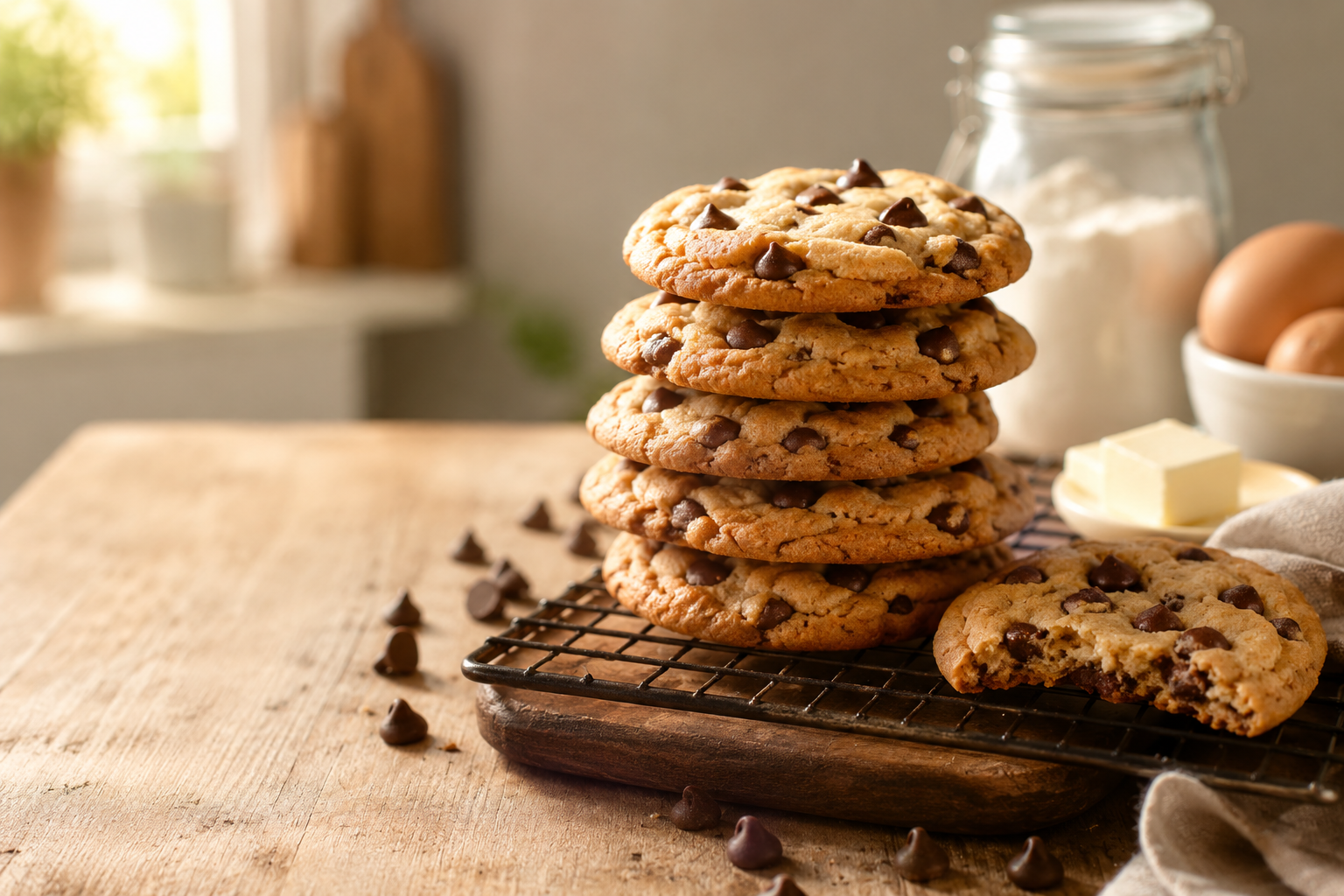
I still remember the first time I ran out of milk mid-recipe. My butter was already softened, my chocolate chips were measured out, and I was fully committed to baking. I checked the fridge – empty milk carton. Classic.
My first instinct was to just skip it and hope for the best. And honestly? The cookies turned out just as good. Maybe even better.
Making cookies without milk is easier than most people think – and once you know the simple swaps, you’ll never stress about it again. This article walks you through exactly why milk isn’t essential, what to use instead, and a tested chocolate chip cookie recipe that doesn’t need a single drop.
Can You Make Cookies Without Milk?
Yes – absolutely. And here’s the thing most people don’t realize: the majority of classic cookie recipes don’t even require milk to begin with. Check your favorite recipe right now. Chances are, milk either isn’t listed, or it shows up as just one or two tablespoons.
Eggs provide structure. Butter provides fat and flavor. Milk? It just adds a tiny bit of moisture. That’s it. Which means it’s also the easiest thing to replace – or simply leave out entirely – without your cookies falling apart, going flat, or tasting off.
What Does Milk Actually Do in a Cookie Recipe?
Before we talk about swaps, it helps to understand what milk is actually contributing to your dough.
Milk does three minor things in cookie baking. First, it adds a small amount of moisture that helps the dough come together. Second, it slightly activates your leavening agents like baking soda or baking powder. Third, the natural sugar (lactose) in milk contributes a little to browning. According to King Arthur Baking the Maillard reaction and caramelization – not milk – are the primary drivers of cookie browning.
None of these roles are critical. Your dough has enough moisture from eggs and butter. Your leavening agents will still do their job. And your cookies will still brown beautifully in the oven – with or without milk. That’s why leaving it out rarely makes a noticeable difference in the final result.
Best Milk Substitutes for Cookies
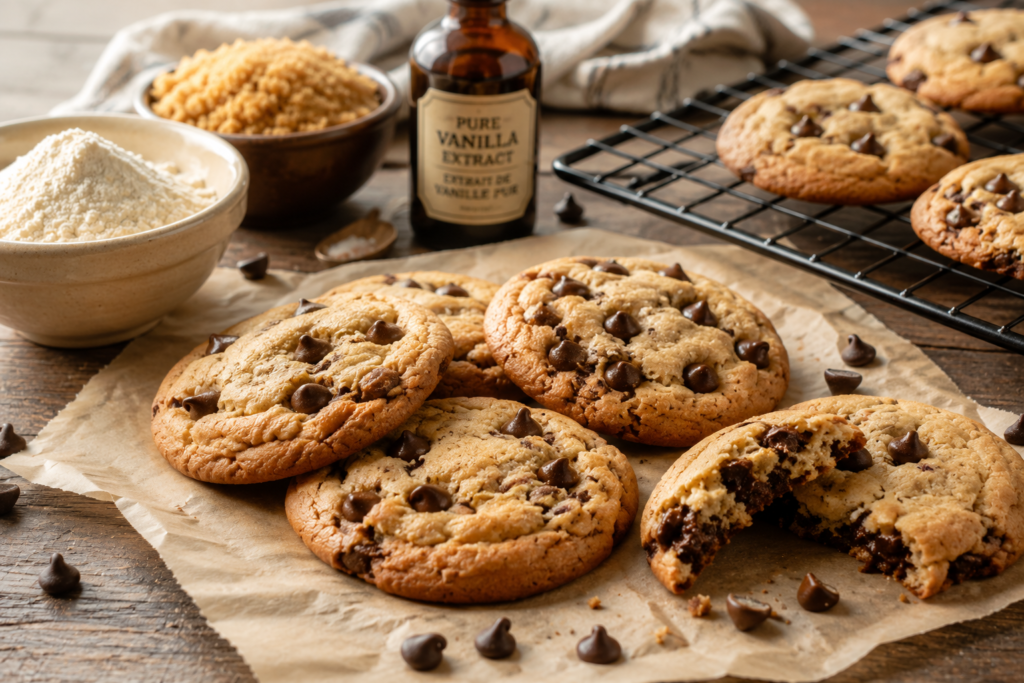
When a recipe does call for milk and you want to substitute rather than skip, here are your best options:
Plant-Based Milks are my top recommendation. Oat milk and soy milk are the most neutral – they behave almost exactly like dairy milk in baking. Almond milk works well for lighter cookies. Coconut milk adds a slight richness that works beautifully in chocolate or spiced cookies. All of these are a 1:1 swap.
“If you’re looking for a fully dairy-free cookie from scratch, my Dairy-Free Cookie Recipe is a great place to start.”
Water works in a pinch. It adds moisture without any flavor, which is exactly what milk was doing anyway. Just use about 25% less than the milk amount called for, since water is thinner than milk.
Yogurt or Sour Cream are great if you want a slightly richer, chewier cookie. Use just a tablespoon or two – a little goes a long way here.
Applesauce or Mashed Banana bring natural moisture and a hint of sweetness. These work best in softer, more tender cookies and can also pull double duty as an egg replacer.
| Substitute | Ratio | Best For | Flavor Impact |
|---|---|---|---|
| Oat Milk | 1:1 | All cookies | Neutral |
| Almond Milk | 1:1 | Light cookies | Slightly nutty |
| Coconut Milk | 1:1 | Rich cookies | Mild coconut |
| Water | ¾:1 | Any recipe | None |
| Applesauce | 1:1 | Soft/chewy cookies | Slightly sweet |
Chocolate Chip Cookies Without Milk – My Tested Recipe
This is the recipe I’ve made more times than I can count. No milk. No complicated swaps. Just a straightforward, reliable chocolate chip cookie that comes out golden, chewy, and exactly right every single time.
The first batch I made this way was by accident – I just forgot the milk entirely. When I pulled them out of the oven and tasted one, I genuinely couldn’t tell the difference. That was the last time I worried about it.
Ingredients
- 2¼ cups all-purpose flour
- 1 tsp baking soda
- 1 tsp salt
- 1 cup (2 sticks) unsalted butter, softened to room temperature
- ¾ cup granulated white sugar
- ¾ cup packed brown sugar
- 2 large eggs
- 2 tsp pure vanilla extract
- 2 cups semi-sweet chocolate chips
Instructions
- Preheat your oven to 375°F (190°C). Line two baking sheets with parchment paper.
- In a medium bowl, whisk together flour, baking soda, and salt. Set aside.
- In a large bowl, beat the softened butter with both sugars until the mixture looks light and fluffy – about 2–3 minutes.
- Add the eggs one at a time, beating well after each addition. Mix in the vanilla extract.
- Gradually fold the flour mixture into the wet ingredients. Don’t overmix – stop as soon as the flour disappears.
- Stir in the chocolate chips by hand.
- Drop rounded tablespoons of dough onto your prepared baking sheets, spacing them about 2 inches apart.
- Bake for 9 to 11 minutes, until the edges are golden but the centers still look slightly underdone.
- Let the cookies sit on the pan for 2 minutes before moving them to a wire rack. They’ll firm up perfectly as they cool.
Safety tip: Always use an oven mitt when handling hot baking sheets, and never leave the oven unattended during baking. Let cookies cool fully before storing them in a sealed container to prevent condensation and sogginess.
Baking Info
- Prep Time: 15 minutes
- Cook Time: 9–11 minutes
- Total Time: About 26 minutes
- Yield: Approximately 48 cookies
- Difficulty: Easy
Nutrition Info (Per Cookie – Approximate)
| Nutrient | Amount |
|---|---|
| Calories | 148 kcal |
| Total Fat | 7g |
| Saturated Fat | 4g |
| Carbohydrates | 20g |
| Sugar | 13g |
| Protein | 2g |
| Sodium | 85mg |
| Fiber | 0.5g |
Note: Nutrition values are approximate and may vary based on specific brands and ingredient measurements used.
Calorie estimates calculated using USDA FoodData Central database
Love chewy chocolate chip cookies? Check out my Soft and Chewy Dairy-Free Chocolate Chip Cookies for another tested favorite.
Sugar Cookies Without Milk
Here’s something worth knowing: traditional sugar cookie recipes were never really built around milk. Most classic versions use butter, eggs, flour, sugar, and vanilla – and that’s the whole list.
If your specific recipe does call for a tablespoon of milk, just swap in a tablespoon of oat milk or plain water. The dough will behave exactly the same way. One thing to watch: without the small amount of lactose from dairy milk, the edges may brown just slightly faster, so keep an eye on them in the last couple of minutes of baking.
For sugar cookies you plan to decorate, you’ll be glad to know that royal icing made with meringue powder and powdered sugar doesn’t need milk at all – it sets beautifully without it.
Want the full recipe? My Dairy-Free Sugar Cookies Recipe walks you through every step.
Cookies Without Milk or Eggs – Fully Vegan Options
Going fully dairy and egg free is very doable, and the results are genuinely good — not just “good for vegan cookies,” but actually good cookies.
The key is choosing the right egg replacer for the texture you want:
- Flax egg (1 tbsp ground flaxseed + 3 tbsp water, rested 5 minutes) – best for binding, gives a slightly dense and hearty cookie
- Aquafaba (3 tbsp of the liquid from a can of chickpeas) – creates a lighter, airier texture, surprisingly close to real egg
- Applesauce (¼ cup per egg) – adds moisture and a touch of natural sweetness, works beautifully in oatmeal cookies
- Chia egg (1 tbsp chia seeds + 3 tbsp water) – similar to flax, gives a chewier, denser result
For a ready-to-use base, my Vegan Cookie Dough Recipe is already egg and dairy free.
The cookie styles that work best without any eggs or milk are oatmeal raisin, peanut butter, and snickerdoodles. These recipes are naturally more forgiving, and the substitutions blend in without any awkward texture issues.
Dairy-Free Cookies Without Butter
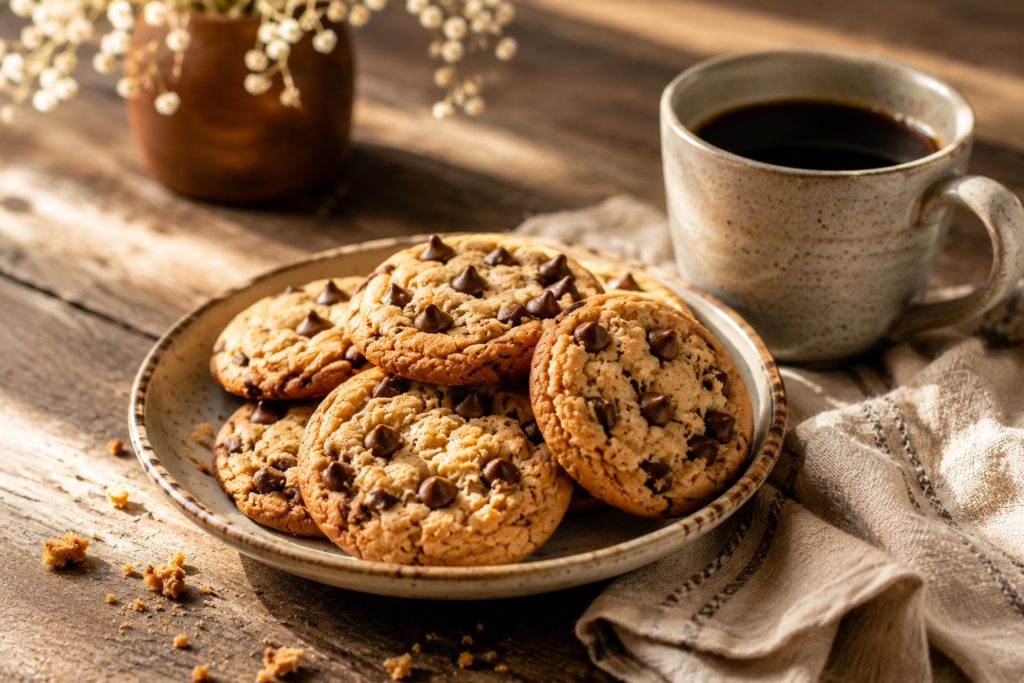
If you need to go completely dairy-free – no milk, no butter – you still have solid options.
Coconut oil is the most popular swap. Use the same amount as butter. Just know that coconut oil melts much faster than butter, so chill your dough for at least 30 minutes before baking to prevent the cookies from spreading too thin.
Peanut butter lovers — my Dairy-Free Peanut Butter Cookies use no butter or milk and turn out perfectly every time
Vegan butter (like Earth Balance or Miyoko’s) is the closest 1:1 substitute in terms of behavior and flavor. If you want results that taste most similar to traditional cookies, this is the one to reach for.
Vegetable shortening produces a slightly crispier, more shelf-stable cookie. It’s flavorless, which means you’ll want to bump up your vanilla a little to compensate.
Common Mistakes to Avoid
A few things that can trip people up when baking without milk:
- Adding too much liquid substitute – more moisture than the recipe needs makes cookies spread flat and thin. Stick to the exact amount the recipe calls for, or slightly less.
- Using cold coconut oil – it doesn’t cream properly. Melt it slightly first, then chill the finished dough before baking.
- Overbaking – milk-free cookies can brown a little faster since there’s no lactose slowing things down. Start checking at the 8-minute mark.
- Skipping vanilla extract – vanilla carries so much of the flavor load in a cookie. When you’re already pulling out dairy, don’t pull this too.
If you’re baking oatmeal-style, don’t miss my Dairy-Free Oatmeal Cookies — a forgiving recipe that handles substitutions really well.
Storage & Shelf Life
Milk-free cookies actually keep well – arguably better than traditional cookies since there’s no dairy to turn.
At room temperature: Store in an airtight container with a slice of bread inside to maintain softness. They’ll stay fresh for up to 7 days.
In the freezer: Baked cookies freeze well for up to 3 months. Arrange them in a single layer first to freeze solid, then transfer to a zip-lock bag. Cookie dough balls freeze just as well – bake straight from frozen, adding 2–3 extra minutes to your bake time.
Food safety note: Always make sure cookies are completely cooled before sealing them in any container. Storing warm cookies traps steam, which creates moisture and can lead to mold forming faster than expected.
For detailed food storage safety guidelines, the USDA Food Safety and Inspection Service is always a reliable reference
FAQs
What happens if you don’t put milk in cookies? Very little changes. Milk plays a minor supporting role in cookies – mostly adding a bit of moisture. Your cookies will still bake up properly without it.
Can I use water instead of milk in cookies? Yes. Use about ¾ of the amount the recipe calls for, since water is thinner than milk. The taste and texture difference is minimal.
What is the best dairy-free milk for baking cookies? Oat milk or soy milk. Both are neutral in flavor and behave almost identically to dairy milk in baking.
Can you make cookies without milk or eggs? Yes – use a flax egg or aquafaba in place of eggs, and oat milk or water in place of milk. Oatmeal and peanut butter cookies work especially well with these swaps. My Vegan Snickerdoodle Cookie Recipe is another great option – no milk, no eggs, no compromise.
Aquafaba – the liquid from canned chickpeas – has been widely studied as an egg replacement in baking. Serious Eats has a solid breakdown of how it behaves in different recipes.”
Do dairy-free cookies taste different? Honestly, with the right substitutes, most people can’t tell. The flavor difference is so small that it usually goes unnoticed.
Final Thoughts
Milk was never the star of the show in cookie baking – it just had a small supporting role that’s easy to hand off to something else. Once you know that, the whole process becomes a lot less stressful.
Whether you ran out of milk, you’re baking for someone with a dairy allergy, or you’re just curious about what works, I hope this article gave you everything you needed to bake with confidence. Start with the chocolate chip recipe above – it’s genuinely foolproof – and adjust from there based on what you have on hand.
Good cookies are well within your reach, milk or no milk.