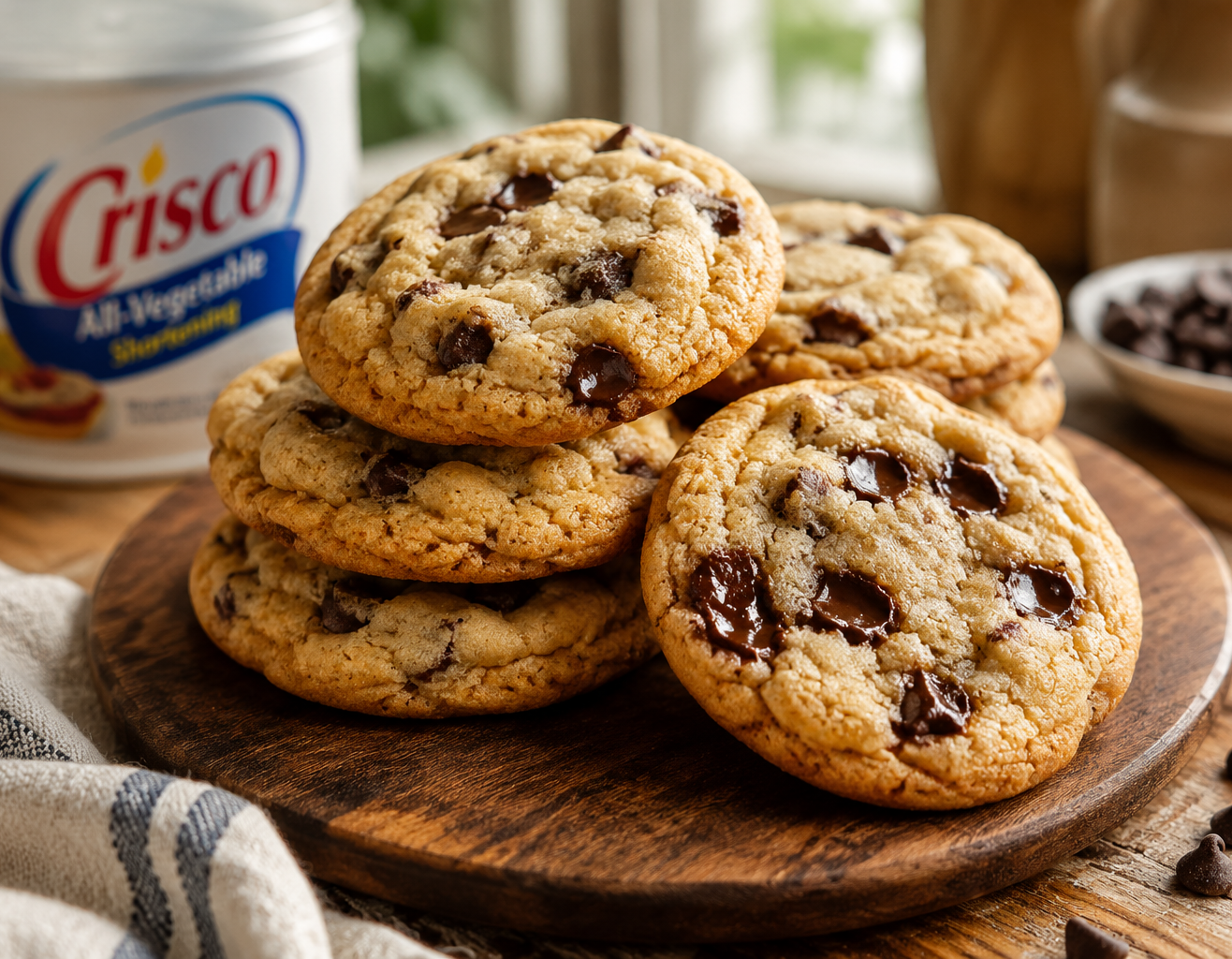
Fresh cookies in the oven can turn a hard day into a warm one, and this crisco cookie recipe is the one I come back to every single time. I started baking with Crisco after a batch of butter cookies spread too much and turned flat, and the difference was clear from the first bite. These cookies stay soft, chewy, and bakery-style even the next day, which is why I now use this method for everything from a chocolate chip crisco cookie recipe to cozy oatmeal raisin cookies. If you want easy homemade cookies that feel simple yet special, you are going to love these beginner-friendly tips and variations.
Prep Time: 15 minutes
Cook Time: 12 minutes
Total Time: 27 minutes
Servings: 24 cookies
Calories: 180 kcal
Why I Use Crisco in Cookie Recipes
What Is Crisco?
Crisco is a type of vegetable shortening that many home bakers use to make cookies soft and tender. Unlike butter, it has no water in it, so the dough holds its shape better while baking. That simple difference is why many people use Crisco for chewy cookies that stay thick and soft. In my kitchen, it works like a quiet helper that keeps every batch steady and reliable. If you want to learn more about vegetable shortening and baking basics, you can also explore the official Crisco website.
Butter gives cookies a rich taste, but it can also make them spread too fast in the oven. Crisco creates a softer texture and a lighter bite, especially in a crisco cookie recipe made for chewy centers. I still love butter in many desserts, yet shortening gives me more control when I want bakery-style cookies at home. Think of it like choosing sneakers over dress shoes when comfort matters most.
Why Crisco Makes Better Cookies
One reason I keep using Crisco is the texture it gives cookies. The outside turns lightly golden, while the center stays soft and chewy for days. That balance can be hard to get with butter alone. If someone asks me how to make cookies soft for longer, my short answer is always simple: use shortening in the dough.
Another thing I love is how fresh the cookies stay after baking. A batch made with Crisco still tastes good the next morning, which is perfect for busy families or weekend baking. I noticed this most when making oatmeal raisin cookies because they stayed moist without becoming heavy or cakey. The texture feels cozy and light at the same time, almost like a warm blanket on a cold night.
Crisco also gives more consistent baking results. The cookies spread evenly, bake at the same pace, and rarely turn thin or greasy. That matters a lot when making Crisco chocolate chip cookies for guests or holidays. Good baking should feel calm and fun, not stressful or messy.
My Personal Experience Baking with Crisco
I first switched to Crisco after ruining two trays of cookies during the holidays. The butter melted too fast, and the cookies came out flat and crisp instead of soft and thick. I remember feeling so frustrated because I wanted that cozy bakery-style texture I grew up loving. After trying shortening for the first time, the cookies finally came out soft in the center with perfect chewy edges.
Since then, this crisco cookie recipe has become one of my comfort recipes. I use it for quick family desserts, late-night baking, and even rainy weekends when the kitchen feels extra peaceful. The dough is easy to work with, which makes it beginner-friendly too. Sometimes the best recipes are not the fancy ones, but the ones that quietly work every single time.
Crisco Cookie Recipe Easy Version
Ingredients You’ll Need

- 2 cups all-purpose flour
- 1 cup brown sugar
- 1/2 cup white sugar
- 3/4 cup vegetable oil
- 1 tsp baking soda
- 1 tsp vanilla extract
- Dairy free chocolate chips
One reason I love this crisco cookie recipe is how simple the ingredient list feels. Most of these items are already sitting in the kitchen, which makes this recipe perfect for busy days or late-night cookie cravings. The basic mix includes Crisco shortening, sugar, brown sugar, eggs, vanilla, flour, baking soda, and salt. If someone asks what ingredients make cookies soft and chewy, the quick answer is Crisco shortening and brown sugar working together.
Brown sugar gives the cookies a deeper flavor and a moist texture that feels rich without being heavy. Vanilla adds warmth, while baking soda helps the cookies rise with soft centers and light edges. I learned over time that good cookies do not need fancy ingredients. They just need the right balance, like a favorite song that sounds simple but stays in your head all day.
Optional Add-Ins
This easy crisco cookie recipe also works well with fun add-ins. I often mix in chocolate chips when I want something classic and cozy. If you enjoy dairy-free desserts too, you may also love my no milk cookie recipe for soft homemade cookies with simple pantry ingredients. On colder days, I lean toward oatmeal raisin cookies with cinnamon because the smell alone makes the whole kitchen feel calm and warm.
If you want more texture, chopped nuts can add a nice crunch without changing the soft center. If you enjoy nutty cookie flavors, my coconut pecan cookie recipe is another cozy homemade dessert that pairs perfectly with coffee or tea.
One thing I enjoy about homemade cookies is how easy they are to personalize. My younger cousin loves extra chocolate chips, while my mom prefers raisins and cinnamon. That flexibility makes this recipe feel welcoming for almost everyone. The short answer is simple: you can easily adjust this dough to match your mood or the season.
Kitchen Tools Needed
You do not need expensive tools to make great cookies at home. I usually grab two mixing bowls, a baking sheet, a cookie scoop, and a cooling rack. A cookie scoop helps keep the cookies the same size, which means they bake more evenly. If someone asks what tools are best for beginner cookie baking, these basics are more than enough.
I learned this the hard way after trying to shape dough with random spoons from the drawer. Some cookies baked too fast, while others stayed raw in the middle. Once I started using a scoop, every tray came out more even and consistent. Small tools can make a big difference, just like a good playlist can change the mood of a long drive.
Step-by-Step Crisco Cookie Recipe
Step 1: Prepare the Dough

Start by creaming the Crisco shortening with white sugar and brown sugar until the mixture looks light and fluffy. This step adds air into the dough, which helps create soft and chewy cookies later. Then mix in the eggs and vanilla until smooth. The quick answer is this: properly creamed dough helps cookies bake evenly and stay tender.
In another bowl, stir together the flour, baking soda, and salt before adding them slowly to the wet mixture. I like mixing dry ingredients separately because it spreads everything evenly through the dough. That small step keeps the cookies from turning dense or salty in random spots. Good cookie dough should feel soft, smooth, and easy to scoop.
Step 2: Shape the Cookies
Scoop the dough into small balls and place them on a lined baking sheet with space between each one. I usually keep about two inches of space so the cookies can spread without touching. Medium-sized dough balls work best because they bake evenly while keeping the center soft. If someone asks how to shape cookies evenly, the easiest answer is using a cookie scoop.
Sometimes I press a few extra chocolate chips on top before baking because it makes the cookies look more homemade and inviting. It is a tiny detail, but people always notice it first. Homemade baking is full of small touches that quietly make food feel special. That is part of the charm I love most.
Step 3: Bake Until Perfect
Bake the cookies at 350°F until the edges turn light golden brown. Most batches take around 10 to 12 minutes, though ovens can vary a little. The centers may still look soft when you remove them, and that is completely normal. The short answer is this: slightly underbaked cookies become perfectly chewy as they cool.
I used to wait until the whole cookie looked fully baked, but that often made them dry the next day. Now I trust the process and pull them out while the middle still looks a little soft. The cookies finish baking from the heat of the tray itself. It feels almost like magic the first time you see it happen.
Step 4: Cool and Serve
Let the cookies rest on the baking sheet for a few minutes before moving them to a cooling rack. This short resting time helps the centers set without losing that soft texture. If you move them too early, they may break apart while still hot. The quick answer is simple: resting keeps cookies soft, stable, and chewy.
Fresh from the oven, the cookies smell warm, sweet, and comforting in the best way. I still remember sharing a batch with friends on a rainy evening while the windows fogged up from the oven heat. Good cookies do more than fill a plate. They turn ordinary moments into memories that stay warm for a long time.
Chocolate Chip Crisco Cookie Recipe Variation
How I Make Them Extra Soft
When I want the softest cookies possible, I always turn this crisco cookie recipe into a chocolate chip version. I use semi-sweet chocolate chips because they balance the sweetness without making the cookies feel too heavy. The rich chocolate melts into the soft dough and creates that classic bakery-style texture people love.
If you enjoy rich fruity flavors too, these soft chewy cherry chip cookies are another cozy dessert perfect for cookie lovers.
One small trick changed everything for me. I started taking the cookies out of the oven when the centers still looked slightly soft and pale. At first, I thought they were underdone, but after cooling, the texture turned perfectly chewy. Good cookies are a little like good stories. They need a soft center to feel comforting and memorable.
Flavor Tips
Brown sugar is one of the biggest reasons these soft chocolate chip cookies taste warm and rich. It adds moisture and gives the cookies a deeper caramel-like flavor that white sugar alone cannot create. I also like sprinkling a tiny pinch of sea salt on top before baking. The short answer is this: sea salt makes chocolate flavor stand out even more.
The first time I added flaky sea salt, my family noticed it right away. The cookies tasted sweeter, richer, and somehow more balanced at the same time. It reminded me of how a little rain can make the smell of fresh earth stronger and more beautiful. Tiny details often create the biggest difference in homemade baking.
Common Mistakes to Avoid
One common mistake is overmixing the dough after adding flour. Too much mixing can make cookies dense and tough instead of soft and chewy. I usually stop mixing as soon as the flour disappears into the dough. If someone asks why homemade cookies turn hard, the fast answer is often overmixed dough.
Overbaking is another problem many beginner bakers face. The cookies may look slightly soft in the center when they come out, but they continue cooking on the hot tray. I learned this after making a batch that turned crunchy by the next morning. Now I trust the soft center, and the results feel much more bakery-style every time.
Oatmeal Raisin Cookies with Crisco
Why Crisco Works Well for Oatmeal Cookies
I also love using this crisco cookie recipe for oatmeal raisin cookies because the texture stays soft without becoming cakey. Oats naturally absorb moisture, so Crisco helps keep the cookies tender and chewy at the same time. That balance is hard to get with butter alone. The simple answer is this: Crisco helps oatmeal cookies stay moist for longer.
There is something comforting about oatmeal raisin cookies fresh from the oven. The smell of cinnamon and warm oats fills the kitchen in the gentlest way. It reminds me of quiet evenings, warm tea, and rainy afternoons at home. Some desserts feel fancy, but oatmeal cookies feel familiar, like an old sweater that still fits perfectly.
Extra Ingredients for Oatmeal Raisin Cookies
For this version, I mix rolled oats, raisins, and cinnamon into the dough. Rolled oats give the cookies texture, while raisins add soft little bites of sweetness in every mouthful. Cinnamon ties everything together with a warm flavor that feels cozy and nostalgic. If someone asks what makes oatmeal raisin cookies taste better, my quick answer is cinnamon and brown sugar together.
Sometimes I soak the raisins in warm water for a few minutes before adding them to the dough. That tiny step makes them softer and juicier after baking. I learned this trick from an older neighbor who baked cookies almost every weekend. The best baking tips often come from simple kitchen moments shared with other people.
My Favorite Texture Trick
One of my favorite tricks is letting the dough rest before baking. I usually chill it for about twenty to thirty minutes so the oats can absorb some moisture. This helps the cookies bake thicker with a softer center and better flavor. The short answer is simple: resting cookie dough improves both texture and taste.
I used to skip this step because I was impatient and wanted cookies right away. But once I tested both versions side by side, the difference became very clear. The rested dough made cookies that felt softer, richer, and more balanced. Sometimes waiting a little longer gives homemade food the comfort and depth people remember most.
Expert Tips for Perfect Cookies Every Time
Measure Flour Correctly
One small mistake can completely change a cookie recipe, and flour is usually the reason. Too much flour makes cookies dry, thick, and heavy instead of soft and chewy. I always spoon flour into the measuring cup and level it gently with a knife instead of scooping straight from the bag. The quick answer is simple: correct flour measuring helps cookies stay soft and balanced.
I learned this after making a batch that felt more like little bread rolls than cookies. At first, I blamed the oven, but the real problem was packed flour. Baking can feel a bit like music. Even one extra note can change the whole song.
Chill the Dough When Needed
Sometimes the best thing you can do for a crisco cookie recipe is simply let the dough rest in the fridge. Chilling helps the fat firm up, so the cookies spread less while baking. This creates thicker cookies with softer centers and richer flavor. If someone asks how to stop cookies from spreading too much, my short answer is always: chill the dough first.
Expert Tip:
Slightly underbake the cookies and let them rest on the tray for soft bakery-style centers.
I usually chill the dough for about twenty to thirty minutes when the kitchen feels warm. It may sound like a tiny step, but the texture difference is easy to notice. The cookies come out thicker, calmer, and more bakery-style. Good baking often rewards patience in the sweetest way possible.
Use Fresh Baking Soda
Fresh baking soda matters more than many people think. Old baking soda loses strength over time, which can leave cookies flat and dense. I replace mine every few months because soft cookies need a good rise to stay light and tender. The simple answer is this: fresh baking soda helps cookies bake evenly and stay chewy.
I once baked two batches side by side using old and fresh baking soda. The difference shocked me right away. One tray looked flat and tired, while the other looked soft, golden, and full of life. Tiny ingredients can quietly decide whether a recipe succeeds or fails.
Rotate Baking Sheets Midway
Ovens often bake unevenly, especially near the back corners. That is why I rotate my baking sheet halfway through baking. This helps all the cookies brown evenly instead of leaving one side darker than the other. If someone asks how to bake cookies evenly, rotating the tray is one of the easiest tricks.
I started doing this after noticing one side of my cookies always baked faster. It felt frustrating at first because every tray looked uneven. Once I began rotating the sheet, the results looked much more consistent. Sometimes small habits create the biggest improvements in baking.
How to Store and Freeze Crisco Cookies
Storing at Room Temperature
One thing I love about this crisco cookie recipe is how well the cookies stay soft after baking. I store them in an airtight container at room temperature to keep the texture fresh and chewy. Most batches stay good for about four to five days without drying out. The short answer is simple: airtight containers help homemade cookies stay soft longer.
I usually place a small slice of bread inside the container too. The cookies absorb moisture from the bread and stay softer for longer. My grandmother taught me that trick years ago, and it still works beautifully today. Old kitchen tips often survive because they truly help.
Freezing Cookie Dough
Freezing dough is one of my favorite baking shortcuts. I scoop the dough into balls, place them on a tray until firm, then move them into freezer bags. That way, I can bake fresh cookies anytime without making a whole new batch from scratch. If someone asks how to freeze cookie dough properly, the easy answer is freezing pre-shaped dough balls.
This trick saved me during busy holidays and family visits more times than I can count. Warm cookies can make guests feel welcome in minutes. Fresh dough waiting in the freezer feels a little like keeping comfort ready for a rainy day.
Reheating Tips
Cold cookies can still taste fresh if you warm them the right way. I usually microwave one cookie for about ten seconds before serving. The chocolate turns soft again, and the center feels warm and chewy like it just came out of the oven. The quick answer is this: gentle reheating brings back that fresh-baked texture.
Sometimes I reheat cookies late at night with a cup of tea after a long day. The smell alone can make the kitchen feel peaceful again. Homemade cookies carry comfort in a very quiet way. That warmth is part of why I keep returning to this easy crisco cookie recipe.
Frequently Asked Questions
Is Crisco better than butter for cookies?
Crisco is better for soft and chewy cookies because it creates less spread during baking. Butter adds more flavor, but shortening helps cookies stay thicker and softer longer. I often use Crisco when I want bakery-style texture with chewy centers. The short answer is this: Crisco gives softer texture, while butter gives richer flavor.
Can I use half butter and half Crisco?
Yes, and it works very well. Using half butter and half Crisco gives you the rich taste of butter with the soft texture of shortening. I sometimes use this mix when I want a balance between flavor and chewiness. It is one of the easiest ways to customize a crisco cookie recipe.
Why are my cookies too flat?
Flat cookies usually happen because the dough is too warm, the flour is undermeasured, or the butter melts too fast. Chilling the dough often fixes the problem quickly. I also check that my baking soda is fresh because old leavening can affect texture. The quick answer is simple: warm dough and too little flour often cause flat cookies.
Can I freeze Crisco cookie dough?
Yes, this dough freezes very well. I often freeze extra dough balls so I can bake small batches whenever I want fresh cookies. Frozen dough usually stays good for up to three months in a sealed freezer bag. The short answer is this: Crisco cookie dough is freezer-friendly and easy to bake later.
What makes cookies soft and chewy?
Brown sugar, Crisco shortening, and slightly underbaking the cookies all help create a soft texture. Resting the cookies after baking also keeps the centers tender and chewy. I learned that tiny timing changes can completely change the final texture. Soft cookies usually come from moisture, balance, and patience working together.
Can I make oatmeal raisin cookies with this recipe?
Absolutely. This crisco cookie recipe works beautifully with oats, raisins, and cinnamon added into the dough. The cookies stay soft without becoming too cakey or dry. Oatmeal raisin cookies made with Crisco often stay fresh longer too.
Nutrition Information
Calories: 180
Carbohydrates: 24g
Fat: 8g
Sugar: 12g
Protein: 2g
Final Thoughts
This crisco cookie recipe has become one of the most dependable recipes in my kitchen because it stays simple, soft, and beginner-friendly every single time. Whether I make chewy chocolate chip cookies variations or cozy oatmeal raisin cookies, the texture always comes out warm and chewy in the best way. The dough is easy to handle, the ingredients are simple, and the results feel comforting without needing fancy baking skills. The short answer is this: Crisco helps homemade cookies stay soft, thick, and reliable.
I truly hope this recipe brings the same comfort to your kitchen that it brings to mine. Bake a batch for family movie nights, rainy weekends, or those quiet evenings when you just need something warm and sweet. Fresh cookies and cold milk still feel like one of life’s simplest joys. Sometimes the best memories begin with nothing more than a warm tray of homemade cookies cooling on the counter.

