
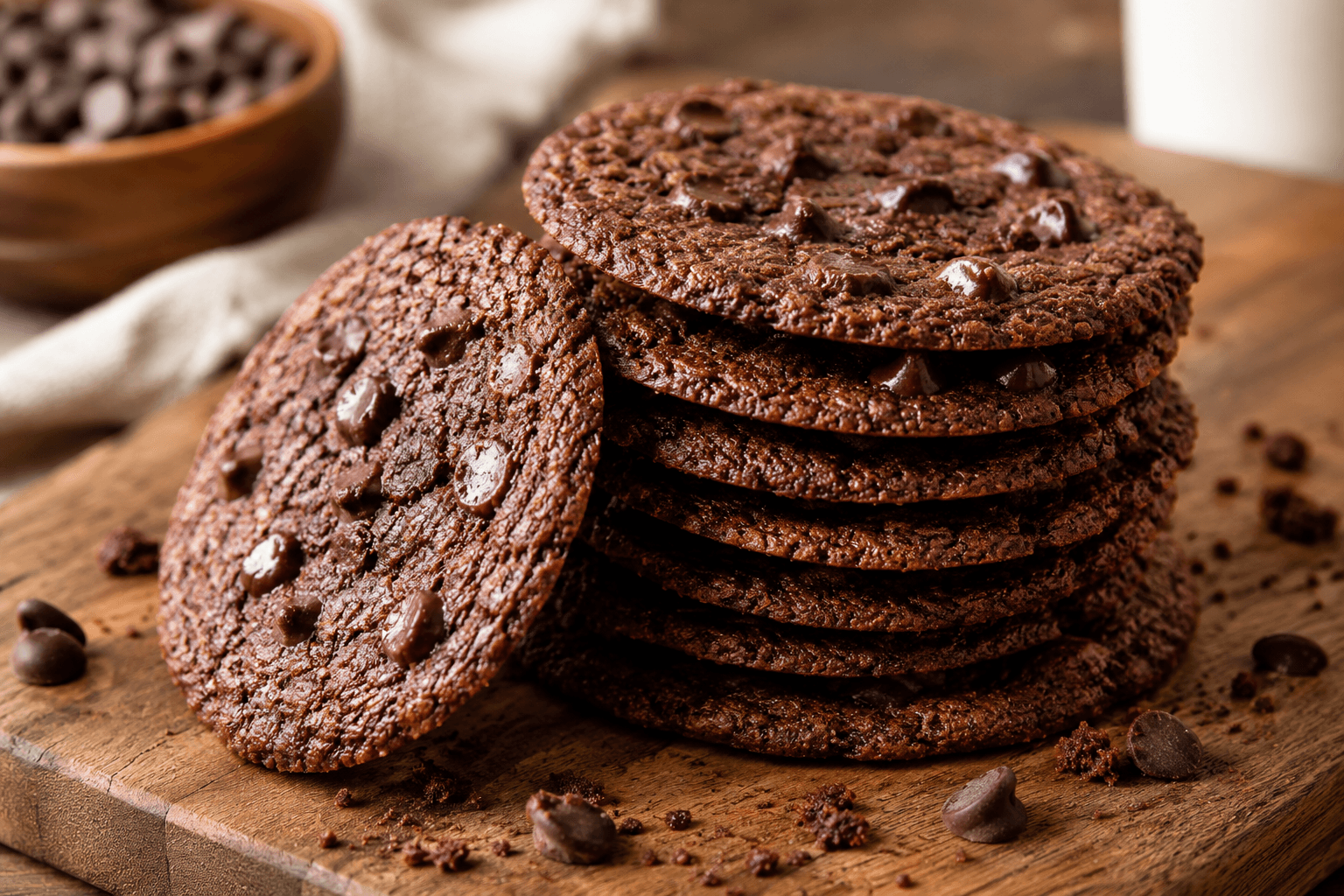
There is something special about a crispy chocolate cookie recipe. The thin, crunchy edges and rich chocolate flavor make every bite satisfying. Many people enjoy crispy cookies because they have a light crunch that soft cookies cannot match.
Over the years, I have tested many chocolate cookie recipes in my own kitchen. I learned that small changes can affect the texture. The type of sugar, the amount of butter, and the baking time all play a big role. These simple lessons helped me create cookies that stay crisp and flavorful.
In this guide, I will show you how to make crispy chocolate cookies from scratch. You will learn what makes cookies crunchy and how cocoa powder affects the final texture. I will also share tips for creating Famous Amos-style crunchy chocolate chip cookies at home.
If you want a reliable crispy chocolate cookie recipe that delivers great results, you are in the right place. Follow along and discover the simple secrets behind perfectly crunchy chocolate cookies.
Why You’ll Love This Crispy Chocolate Cookie Recipe
This crispy chocolate cookie recipe is all about texture and flavor. The cookies have crisp edges, a light crunch, and a rich chocolate taste. If you enjoy cookies with a satisfying snap, this recipe is for you.
One thing I love about this recipe is how simple it is. You do not need fancy ingredients or advanced baking skills. Most of the ingredients are common pantry staples that many home bakers already have on hand.
I have baked these cookies for family gatherings, holiday trays, and weekend treats. They are beginner-friendly, yet they still deliver bakery-style results. The steps are easy to follow, and the texture is consistently crisp.
Another reason I return to this recipe again and again is its flexibility. You can prepare the dough ahead of time or store the baked cookies for later. That makes it perfect for busy schedules and last-minute dessert cravings.
If you enjoy classic homemade cookies, you might also like this Cherry Chip Cookie Recipe, which offers a softer texture and a fruity twist.
What Makes Chocolate Cookies Crispy?
Many people wonder why some cookies come out crunchy while others stay soft and chewy. The answer comes down to moisture, sugar, and baking time.
If you enjoy learning about baking science, Serious Eats explains how ingredients influence cookie texture and spread: Serious Eats.
Crispy cookies contain less moisture and usually bake longer than soft cookies.
When these factors work together, they create the light, crunchy texture that many cookie lovers enjoy.
Sugar plays a major role in the final texture. White sugar helps cookies spread during baking and encourages crispness. Brown sugar contains more moisture, which creates a softer and chewier bite.
Using more white sugar is one of the easiest ways to make cookies crispier.
Butter also affects the way cookies bake. As it melts, it helps the dough spread across the baking sheet. The right balance of butter and moisture creates thin cookies with crisp edges.
Cookie thickness matters as well. Thin cookies lose moisture faster in the oven, which helps them become crunchy throughout.
Thin cookies are usually crispier than thick cookies.
When I want extra crunch, I flatten the dough slightly before baking. It is a simple trick, but it works surprisingly well.
If your cookies stay soft, excess moisture is often the cause. Too much brown sugar, underbaking, or inaccurate measurements can all affect texture.
Soft cookies usually contain more moisture or need additional baking time.
Ingredients You’ll Need
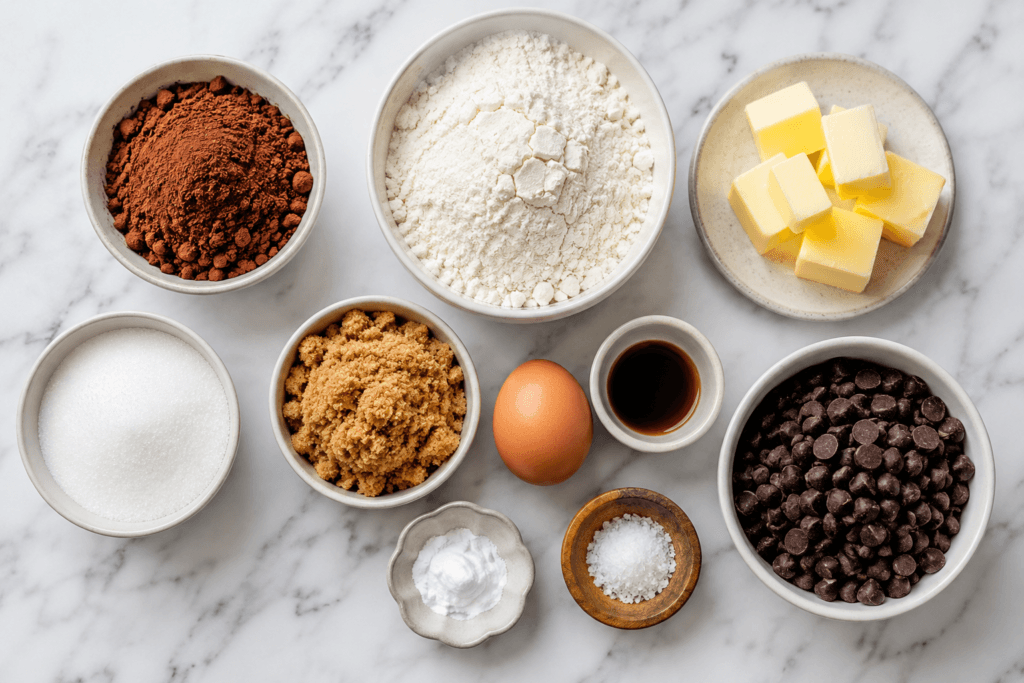
The best crispy chocolate cookie recipe starts with simple ingredients that work together to create the perfect balance of flavor and texture.
Main Ingredients
All-Purpose Flour
Flour provides structure and helps the cookies hold their shape. I prefer all-purpose flour because it creates a balanced texture without making the cookies heavy or dense.
Cocoa Powder
Cocoa powder gives these cookies their rich chocolate flavor. It also helps reduce moisture in the dough, which supports a crisp texture.
Butter
Butter adds flavor and helps the cookies spread while baking. For the best results, use real butter rather than margarine.
Granulated Sugar
Granulated sugar is one of the key ingredients in a crispy chocolate cookie recipe. It encourages spreading and helps create a light, crunchy texture.
Brown Sugar
Brown sugar adds depth of flavor and a small amount of moisture. Using less brown sugar helps maintain the crisp texture while still adding richness.
Egg
The egg binds the ingredients together and helps create structure. One egg is usually enough to keep the dough balanced.
Vanilla Extract
Vanilla enhances the chocolate flavor and adds warmth to every bite. It may seem like a small ingredient, but it makes a noticeable difference.
Baking Soda
Baking soda helps the cookies spread and contributes to a lighter texture during baking.
Salt
Salt balances sweetness and helps the chocolate flavor stand out.
Chocolate Chips
Chocolate chips add pockets of melted chocolate throughout the cookies. Dark chocolate chips create a richer flavor, while milk chocolate chips provide a sweeter taste.
Ingredient Notes and Substitutions
Choosing the right cocoa powder can affect both flavor and texture.
Natural unsweetened cocoa powder is often the best choice for crispy chocolate cookies.
It creates a rich chocolate flavor and works well with the other ingredients in this recipe. Dutch-process cocoa powder can also be used if you prefer a darker and smoother taste.
Both salted and unsalted butter work well. However, I usually choose unsalted butter because it gives me better control over the final flavor.
When it comes to chocolate chips, the choice depends on personal preference. Dark chocolate chips create a deeper chocolate flavor, while milk chocolate chips make the cookies sweeter and more classic.
For readers looking for dairy-free alternatives, this Dairy-Free Cookie Recipe includes simple substitutions that work well in many homemade cookie recipes.
If you want to experiment, you can replace some or all of the chocolate chips with chocolate chunks. Just avoid substitutions that add extra moisture, as that can reduce the crisp texture.
Kitchen Tools Needed
You do not need expensive equipment to make a crispy chocolate cookie recipe. A few basic kitchen tools are enough. In fact, I baked my first batches with simple tools that most people already have at home.
The essential tools for crispy chocolate cookies are mixing bowls, measuring cups, a baking sheet, parchment paper, and a cooling rack.
Mixing Bowls
A large mixing bowl makes it easier to combine ingredients without spilling. I like using separate bowls for wet and dry ingredients because it helps everything mix evenly.
Measuring Cups and Spoons
Accurate measuring is one of the most important parts of baking. Even a small mistake can change the texture of your cookies. Too much flour can make them thick, while too little can cause them to spread too much.
Baking Sheet
A sturdy baking sheet helps cookies bake evenly. Thin baking sheets can create hot spots, which may lead to uneven browning. I have found that heavy baking sheets produce more consistent results.
Parchment Paper
Parchment paper prevents sticking and helps cookies bake more evenly. It also makes cleanup much easier. Once I started using parchment paper regularly, I noticed better results with every batch.
Cooling Rack
A cooling rack may seem simple, but it plays a big role in texture. It allows air to circulate around the cookies as they cool. This helps preserve the crisp texture that makes a crispy chocolate cookie recipe so satisfying.
Crispy Chocolate Cookie Recipe
If you want cookies with crisp edges, rich chocolate flavor, and a satisfying crunch, this recipe delivers exactly that. The ingredients are simple, and the steps are easy to follow.
This crispy chocolate cookie recipe creates thin, crunchy cookies with deep chocolate flavor.
Preparation Time, Cook Time & Yield
- Preparation Time: 15 minutes
- Cook Time: 10–12 minutes
- Cooling Time: 15 minutes
- Total Time: About 40 minutes
- Yield: 20–24 cookies
Step-by-Step Instructions
Prepare Ingredients
Start by measuring all ingredients before you begin. This simple habit keeps the baking process smooth and stress-free. It also helps prevent mistakes.
Mix Wet Ingredients
In a large bowl, cream the butter, granulated sugar, and brown sugar until smooth. Add the egg and vanilla extract. Mix until everything is fully combined.
Combine Dry Ingredients
In a separate bowl, whisk together the flour, cocoa powder, baking soda, and salt. This step helps distribute the ingredients evenly throughout the dough.
Form the Dough
Gradually add the dry ingredients to the wet mixture. Stir until a soft dough forms. Fold in the chocolate chips and stop mixing once everything is combined.
Shape Cookies for Maximum Crispiness
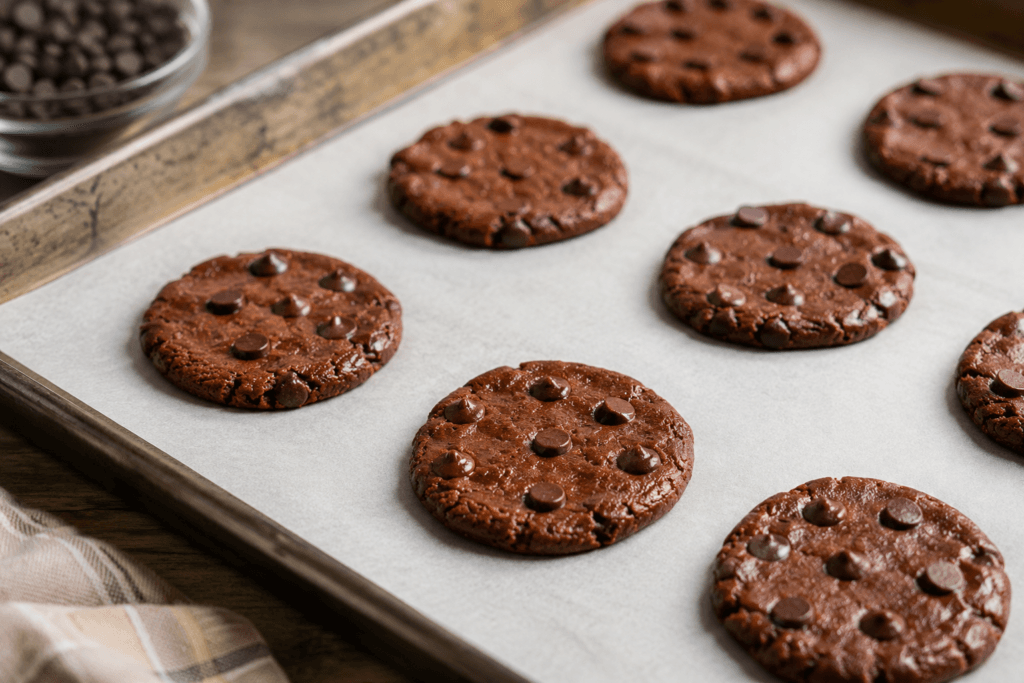
Scoop portions of dough onto the prepared baking sheet. Flatten them slightly before baking.
Thin cookie dough spreads more during baking, which helps create a crisp texture.
This is one of the simplest tricks I use when making crunchy chocolate cookies.
Bake Correctly
Bake at 350°F (175°C) for 10 to 12 minutes. The edges should look firm and lightly browned when they are ready.
For crispy cookies, bake until the edges are golden and set.
Cool Completely Before Serving
Allow the cookies to cool on the baking sheet for a few minutes. Then transfer them to a cooling rack.
Many bakers think cookies become crispy in the oven. In reality, much of the final crunch develops as they cool.
Expert Tips for Perfect Crispy Cookies
Over the years, I have learned that small details often make the biggest difference. A few simple adjustments can take a good cookie and turn it into a great one.
Measure Flour Accurately
Too much flour can make cookies thick and dry. I always spoon flour into the measuring cup and level it off rather than scooping directly from the bag.
Do Not Overmix
Mix the dough only until the ingredients come together. Overmixing can create a tougher texture and reduce the delicate crunch.
Flatten Dough Slightly
Flattening the dough before baking encourages spreading.
Thin cookies are usually crispier than thick cookies.
This small step consistently improves texture.
Space Cookies Properly
Leave enough space between each cookie on the baking sheet. This allows heat to circulate evenly and prevents cookies from merging together.
Allow Complete Cooling
Patience is important when baking cookies. Warm cookies may seem soft at first.
Cookies become crisp as they cool and release excess moisture.
Store Correctly for Lasting Crunch
Store cookies in an airtight container once they are completely cool. Adding warm cookies to a container can trap moisture and soften them.
The best way to keep cookies crunchy is to store them only after they have cooled completely.
Crispy vs Soft Chocolate Chip Cookies
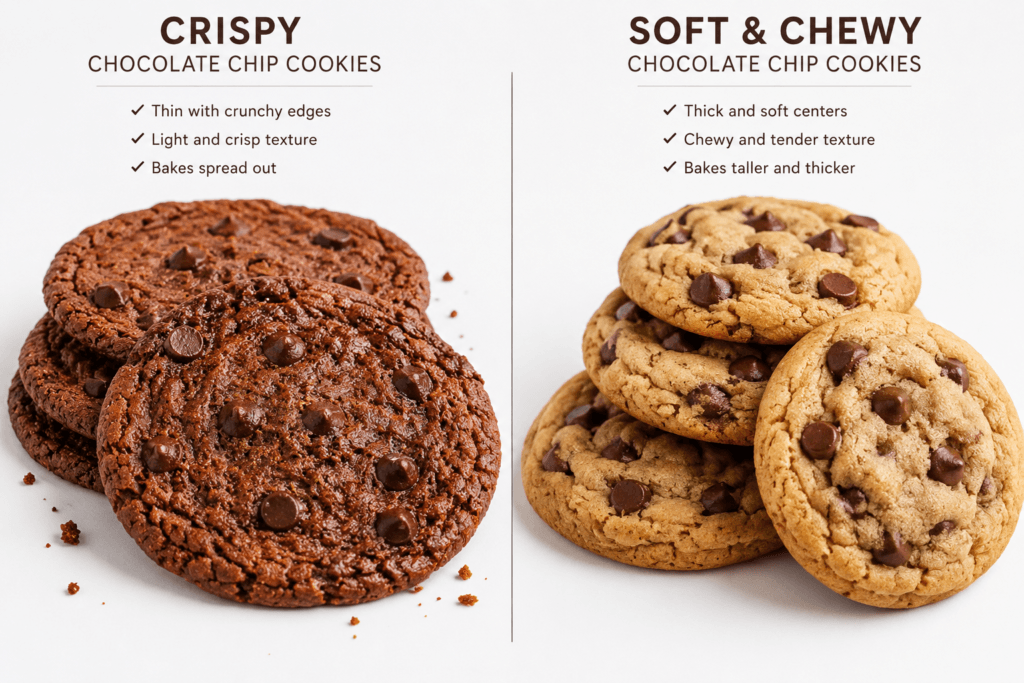
Many people wonder why one cookie is crunchy while another is soft and chewy. The answer comes down to ingredient ratios, moisture levels, thickness, and baking time.
Crispy cookies contain less moisture and usually bake longer than soft cookies.
| Feature | Crispy Cookies | Soft Cookies |
|---|---|---|
| Sugar Type | More white sugar | More brown sugar |
| Texture | Crunchy | Chewy |
| Thickness | Thin | Thick |
| Moisture | Low | Higher |
| Baking Time | Longer | Shorter |
White sugar helps cookies spread and become crisp. Brown sugar contains more moisture, which creates a softer and chewier texture.
Cookie thickness also matters. Thin cookies lose moisture faster during baking. That is why many crunchy chocolate chip cookies, including Famous Amos-style cookies, have a thinner shape.
Baking time is the final piece of the puzzle. Just a few extra minutes in the oven can make a noticeable difference.
For the crunchiest results, use more white sugar, flatten the dough slightly, and bake until the edges are golden brown.
Crispy Chocolate Cookie Recipe with Cocoa Powder
If you love deep chocolate flavor, cocoa powder is one of the best ingredients you can use. It adds rich taste without adding extra moisture. That is one reason it works so well in a crispy chocolate cookie recipe.
Cocoa powder helps create rich chocolate flavor while supporting a crisp texture.
I often use cocoa powder when I want cookies that taste intensely chocolatey without feeling heavy. It blends into the dough and gives every bite a balanced flavor. The result is a cookie that feels rich but still light and crunchy.
The type of cocoa powder you choose can affect the final result. Natural cocoa powder gives a classic chocolate taste, while Dutch-process cocoa creates a smoother and darker flavor.
Natural cocoa powder is usually the best choice for crispy chocolate cookies.
When adding cocoa powder, remember that it absorbs moisture. If the dough seems too dry, avoid adding extra liquid right away. Small adjustments often work better than large changes.
Flavor Differences
Chocolate chips and cocoa powder bring different flavors to cookies. Chocolate chips create pockets of melted chocolate, while cocoa powder spreads flavor throughout the entire cookie.
Cocoa powder delivers a more even chocolate flavor in every bite.
I like combining both ingredients because they complement each other. The cocoa powder builds the base flavor, while the chocolate chips add bursts of sweetness.
Texture Adjustments
Cocoa powder naturally dries the dough slightly. That can help create the crisp texture many bakers want.
Less moisture often leads to crispier cookies.
However, too much cocoa powder can make cookies dry instead of crunchy. Finding the right balance is important. Through trial and error, I learned that moderation produces the best texture.
Best Cocoa Powders for Baking
Natural unsweetened cocoa powder works well in most recipes. It creates a classic chocolate flavor and supports crispness.
Dutch-process cocoa powder is another option. It offers a darker color and a smoother taste. Both work well, but natural cocoa powder is often the better choice for a traditional crispy chocolate cookie recipe.
For a deeper look at cocoa varieties, King Arthur Baking provides a helpful guide to natural and Dutch-process cocoa powders: King Arthur Baking.
How to Make Famous Amos-Style Crunchy Chocolate Chip Cookies
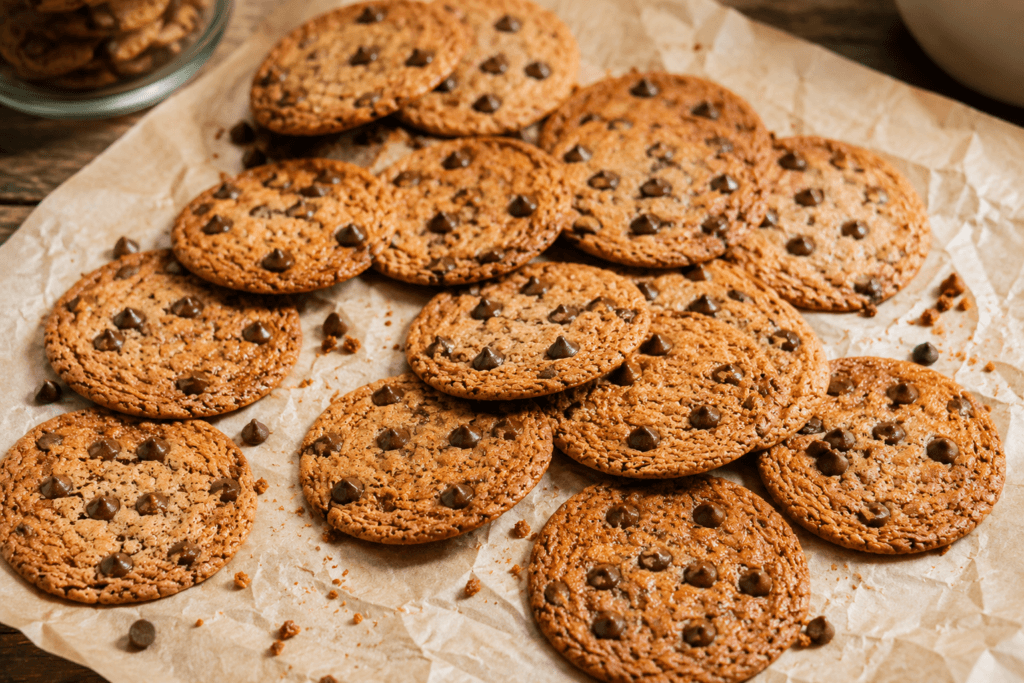
Many people search for the secret behind Famous Amos cookies. Their popularity comes from a simple combination of flavor and texture.
Famous Amos-style cookies are known for being thin, crunchy, and packed with chocolate flavor.
The first time I tried to recreate that texture, I focused only on baking time. Later, I realized the real secret was a combination of ingredient ratios and cookie thickness.
What Makes Famous Amos Cookies Unique?
Unlike thick bakery cookies, Famous Amos cookies are small and crisp. They have a delicate crunch that breaks easily with every bite.
Their texture feels light rather than dense. That signature crunch is what makes them so memorable.
Thin and Crunchy Texture
Thin cookies lose moisture faster during baking. As a result, they become crisp throughout rather than staying soft in the center.
Thin cookies are usually crunchier than thick cookies.
This is why I flatten the dough slightly before baking when I want a Famous Amos-style result.
Ingredient Ratio Adjustments
White sugar plays a bigger role than many people realize. It encourages spreading and helps create a crisp texture.
Using slightly more white sugar and slightly less brown sugar can help mimic the texture of classic crunchy chocolate chip cookies.
Baking Techniques for Similar Results
Bake cookies until the edges turn golden brown. Let them cool completely before judging the final texture.
Most crispy cookies become crunchier as they cool.
That simple step often makes a bigger difference than changing the recipe itself.
Recipe Variations
One thing I enjoy about this crispy chocolate cookie recipe is how easy it is to customize. A few small changes can create a completely different cookie experience.
Double Chocolate Crispy Cookies
Add extra chocolate chips or chocolate chunks to the dough. This variation creates a richer chocolate flavor without changing the crisp texture too much.
If you love rich chocolate desserts, you may also enjoy this Chocolate Mint Cookie Recipe, which combines chocolate flavor with a refreshing mint finish.
Double chocolate cookies offer more chocolate flavor while keeping the same crunch.
Dark Chocolate Crunch Cookies
Use dark chocolate chips instead of milk chocolate chips. The slightly bitter notes balance the sweetness and create a more grown-up flavor.
I often make this version when serving cookies with coffee.
Nutty Crispy Chocolate Cookies
Add chopped walnuts, pecans, or almonds to the dough. The nuts add another layer of crunch and flavor.
Nuts can make crispy cookies even crunchier.
Mini Crispy Chocolate Cookies
Shape the dough into smaller portions before baking. Smaller cookies bake faster and often become even crispier.
They are perfect for parties, snack trays, or afternoon treats.
Common Mistakes to Avoid
Even a great recipe can produce disappointing results if a few key details are overlooked.
Most crispy cookie problems come from moisture, measuring errors, or baking mistakes.
Underbaking
Underbaked cookies may look done on the outside but remain soft inside. Give them enough time to develop a golden edge.
Overusing Brown Sugar
Brown sugar adds moisture to cookie dough. Too much can turn a crispy cookie into a chewy one.
More brown sugar usually creates softer cookies.
Incorrect Flour Measurements
Adding too much flour can make cookies dense and dry. Accurate measuring creates more consistent results.
Removing Cookies Too Early
Cookies continue to set after leaving the oven. Removing them from the baking sheet too soon can affect texture.
Patience often leads to better results.
Poor Storage Practices
Warm cookies release steam. If that steam gets trapped inside a container, the cookies may lose their crunch.
Always cool cookies completely before storing them.
What to Serve with Crispy Chocolate Cookies
A crispy chocolate cookie recipe becomes even better when paired with the right drink or dessert.
Coffee
The slight bitterness of coffee balances the sweetness of chocolate cookies beautifully. This is my favorite pairing on quiet mornings.
Milk
Milk and cookies remain a classic combination for a reason. The creamy texture contrasts perfectly with the crunchy cookie.
Hot Chocolate
For serious chocolate lovers, hot chocolate creates a rich and comforting pairing.
Ice Cream
Crumble crispy cookies over vanilla ice cream for added texture and flavor.
Crispy cookies add crunch to soft desserts like ice cream.
Dessert Platters
Serve cookies alongside brownies, fruit, and small pastries. The variety of textures makes dessert platters more enjoyable.
Storage and Freezing Tips
Proper storage helps maintain the crisp texture you worked hard to create.
The best way to keep cookies crispy is to protect them from moisture.
How to Keep Cookies Crispy
Store cookies in an airtight container at room temperature. Make sure they have cooled completely before storing.
A dry environment helps preserve their crunch.
How Long They Last
Most crispy chocolate cookies stay fresh for about five to seven days when stored properly.
Properly stored cookies can remain crispy for nearly a week.
Freezing Baked Cookies
Allow cookies to cool completely before freezing. Place them in a freezer-safe container or bag.
They can usually be frozen for up to three months.
Freezing Cookie Dough
Cookie dough also freezes well. Portion the dough before freezing so you can bake only what you need later.
This is one of my favorite tricks because it makes fresh cookies available anytime with very little effort.
Nutrition Information
The exact nutrition values can vary based on the ingredients and portion size you use. Different brands of chocolate chips, butter, and cocoa powder may slightly change the numbers.
On average, one crispy chocolate cookie contains about 120–150 calories.
| Nutrient | Approximate Amount Per Cookie |
|---|---|
| Calories | 120–150 |
| Carbohydrates | 16–20g |
| Fat | 5–7g |
| Protein | 1–2g |
| Sugar | 8–10g |
These numbers are estimates rather than exact values. If you follow a specific diet plan, it is always best to calculate the nutrition using the exact ingredients you use.
For detailed ingredient nutrition data, you can search the USDA FoodData Central database: USDA FoodData Central.
Nutrition values may vary depending on ingredient brands and serving size.
Frequently Asked Questions
Why are my chocolate cookies not crispy?
The most common reason is excess moisture or underbaking. Too much brown sugar can also make cookies softer.
Cookies usually stay soft because they contain too much moisture or need more baking time.
Try baking them for an extra minute or two and make sure they cool completely before judging the texture.
How do I keep cookies crunchy for several days?
Store the cookies in an airtight container at room temperature. Make sure they are completely cool before storing them.
The best way to keep cookies crunchy is to keep moisture away from them.
I learned this lesson the hard way after storing warm cookies and losing all that wonderful crunch overnight.
Can I make crispy cookies without brown sugar?
Yes, you can. Many bakers use only white sugar when they want extra crunch.
White sugar creates a crispier texture than brown sugar.
However, using a small amount of brown sugar can add depth of flavor without making the cookies overly soft.
Can I use cocoa powder instead of chocolate chips?
Yes, but the result will be different. Cocoa powder flavors the entire cookie, while chocolate chips create pockets of melted chocolate.
Cocoa powder can replace chocolate chips for flavor, but not for texture.
For the best results, I like using both together.
What is the secret to Famous Amos-style crunchy cookies?
The secret is a combination of thin dough, more white sugar, and proper baking time.
Thin cookies with less moisture create the classic Famous Amos-style crunch.
Allowing the cookies to cool completely is also important because the final texture develops after baking.
Can I make these cookies gluten-free?
Yes, you can use a quality gluten-free flour blend designed for baking.
If you are looking for plant-based baking ideas, check out this Vegan Oatmeal Cookie Recipe for another easy homemade option.
A gluten-free flour blend can work well in this crispy chocolate cookie recipe.
Keep in mind that the texture may vary slightly depending on the flour blend you choose.
Should cookie dough be chilled before baking?
For this recipe, chilling is optional. Chilling can reduce spreading and create slightly thicker cookies.
If you want thinner and crispier cookies, chilling is usually not necessary.
When I want maximum crunch, I often bake the dough shortly after mixing.
How do I make cookies crispier after they soften?
Place the cookies on a baking sheet and warm them in a 300°F (150°C) oven for a few minutes.
A short time in the oven can help restore lost crispness.
Allow them to cool again before serving. The texture often improves significantly.
Looking for more cookie inspiration? Browse our collection of recipes, including Coconut Pecan Cookies, Amish Sugar Cookies, and Almond Macaroon Cookies.
Conclusion
A great crispy chocolate cookie recipe is all about balance. The right mix of ingredients, proper baking time, and good storage habits work together to create that irresistible crunch.
For the best crispy cookies, use more white sugar, avoid excess moisture, and bake until the edges are golden brown.
Over the years, I have learned that small changes often make the biggest difference. A slightly flatter dough ball, a few extra minutes of cooling, or a better storage method can transform an ordinary cookie into something special.
Do not be afraid to experiment with different chocolate chips, cocoa powders, and baking times. Every kitchen is a little different. That is part of the fun of baking. With a little practice, you can create a crispy chocolate cookie recipe that feels like your own signature treat.

